Club Meeting: 27 May 2026
Report by: Jacqui Oxenbridge
This term’s theme is “added value”. Demo was around embellishing. The first piece was influenced by Pop Art and Minimalism.
Pop Art was a push back against abstract expressionism (pale colours, minimal shapes) and was about making art out of everyday life. It is bold, bright, eye catching. Emma mentioned that also likes to leave the raw natural wood exposed for contrast.
Minimalism crosses over with Pop Art, uses primary colours, very precise, clean-cut lines to look good. It is art stripped right back.
Emma had a bowl she passed around – the shape reflected the 50’s and 60’s with black pyro lines and blue, yellow, red sections (being the primary colours). When considering the embellishment, it is important to look at the grain direction, work across lines to highlight.
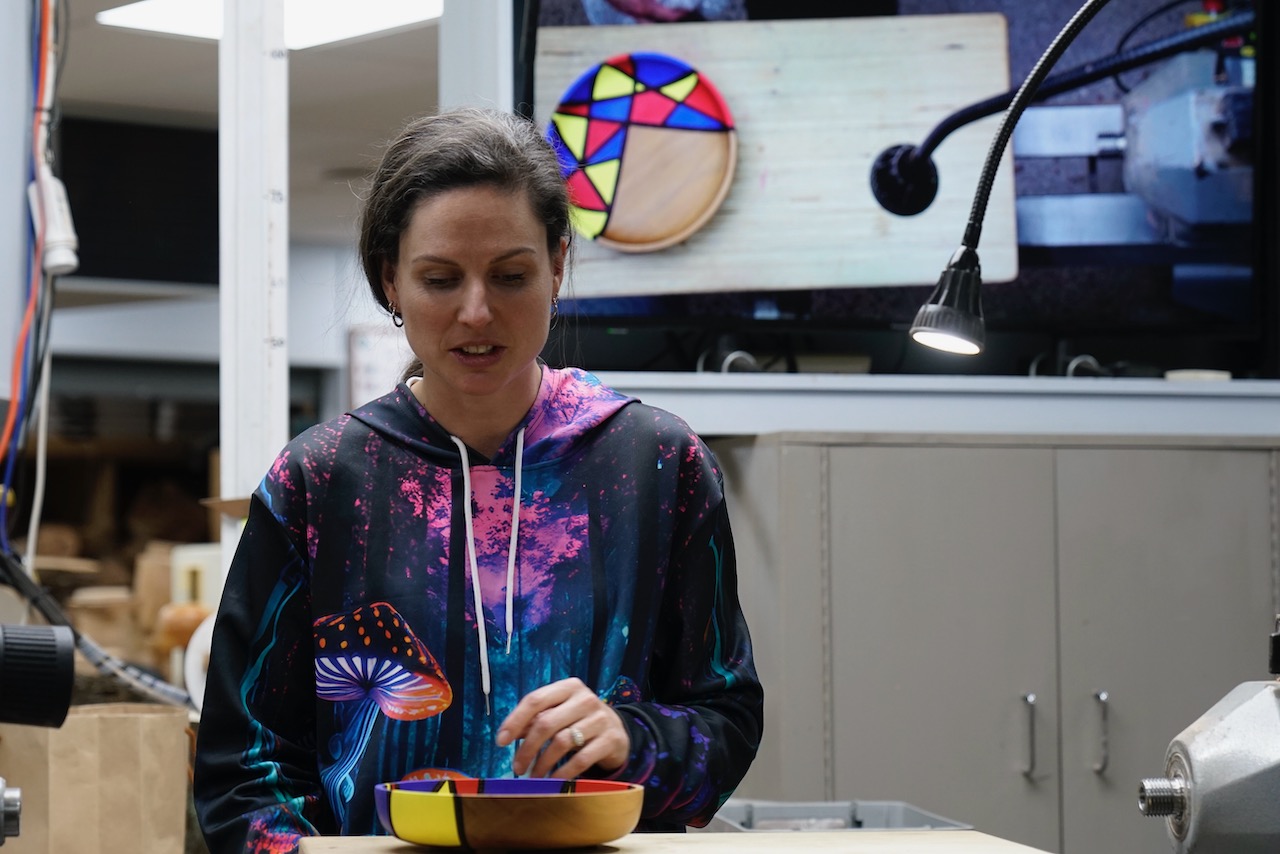
The demo was on Box Elder which is a pale timber.
In the demo Emma was asked how she does the black line & pyrography from the rim to the centre. Emma used a ruler to draw parallel lines approximately 50mm apart. Use a soft pencil and do not push too hard as this can bruise the wood. Draw more lines at angles. As a rule, start the new line from the centre of an existing line and rule out to the outside. If you are using several colours, it can be helpful to create a numbered grid before you commence painting to avoid having two sections with the same colour next to each other.
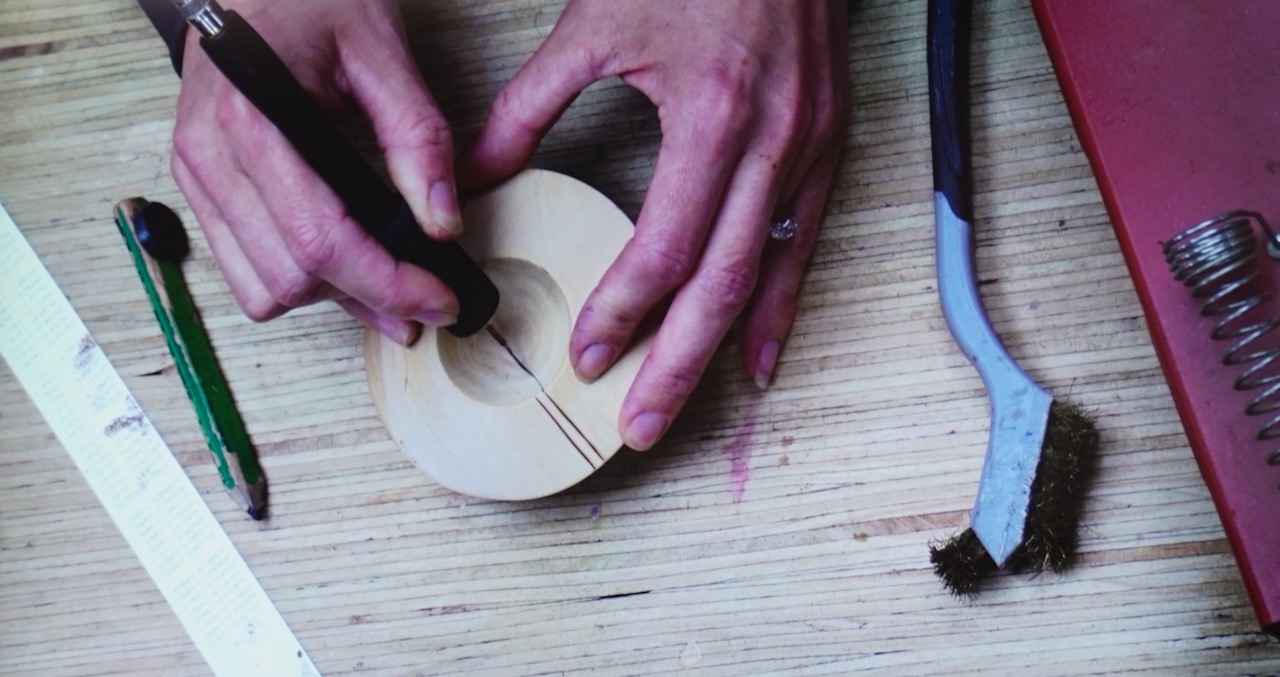
With a Razertip blade tip (HD14L – heavy duty) pyro the lines. To get an even line determine the heat required, try to keep constant movement, burn well down on the blade to avoid “blobs”. If you get blobs, go back with the blade and smooth the line/blobs out. If possible, it is best not to cross over the lines.
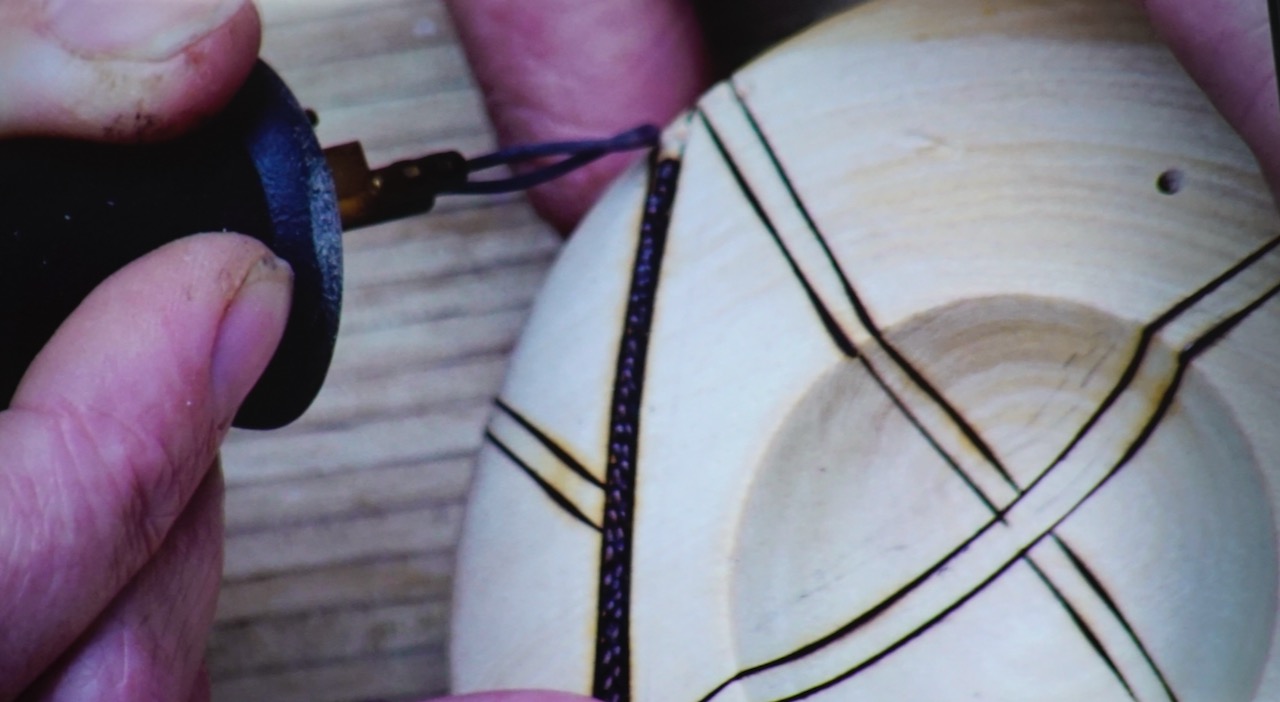
To fill in between the two edges of the lines Emma uses a bent nichrome wire to dot the space. On the Burnmaster she turned up the temperature to 6, using her “pinky” on the bowl to stabilise Emma randomly filled in the space (even though only a couple of dots wide do not want to be uniform).
Any overburn can be removed with acetone, nail polish remover or 400 grit sandpaper. It was noted that if you are painting the item most paints (not yellow) will also cover overburn.
Dots are common in Pop Art (Ben-Day dots) so this fits with the theme very well.
If desired, you can paint over the pyrography with black.
Remove any remaining pencil marks.
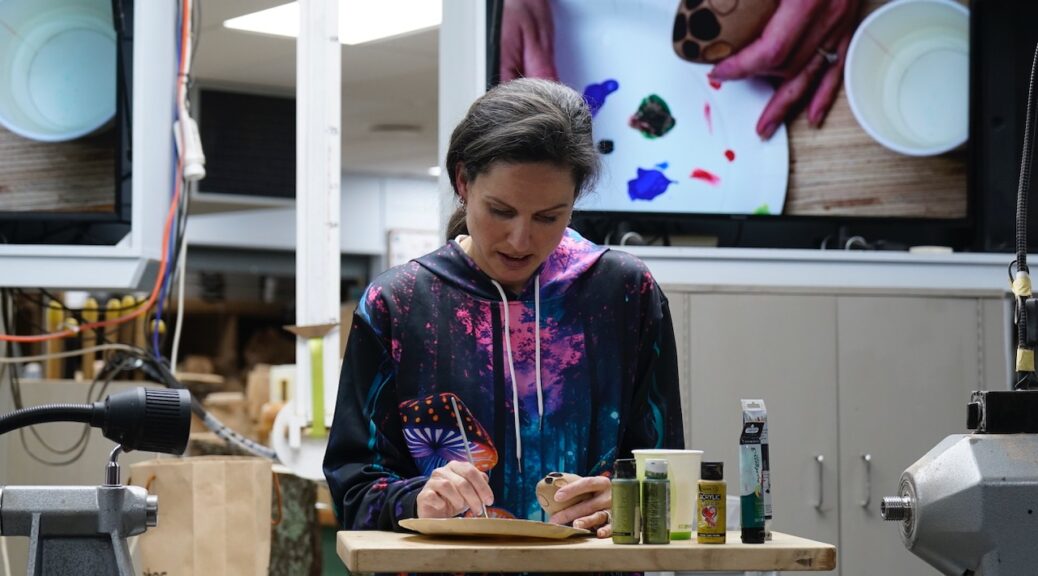
Painting: need clean water, paint, palette, brush and a dabbing cloth.
The primary colour paints Emma used are “Golden Soflat Acrylic Paint” which are matt and aligns with the Pop Art movement.
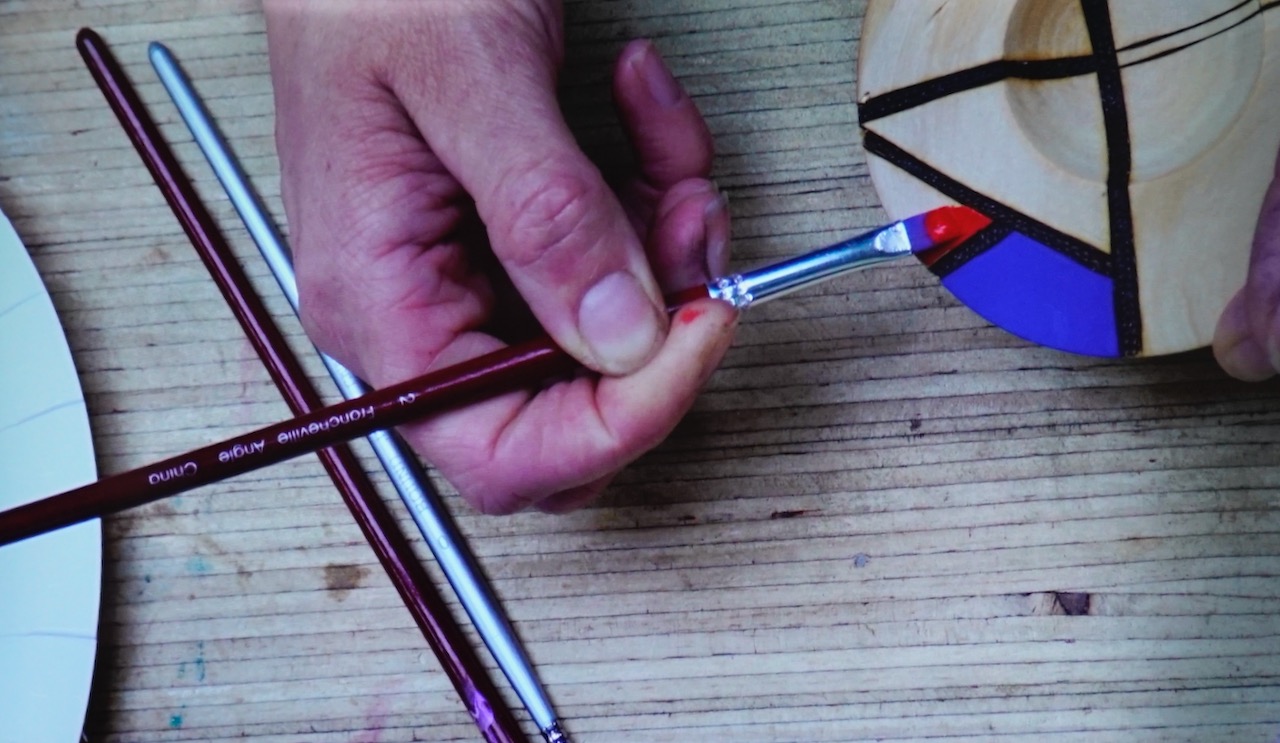
Brushes are important – get a good quality brush. Hog hair bristles are for oil paint, synthetic, soft bristles are for acrylic paint. Always clean your brush after use, remove from the water, squeeze out excess liquid, reshape and dry flat. The shape of the brush can also be important. For this demo Emma used a square ended brush with a slight angle so that she can get a clean, crisp edge against the pyrography lines.
To avoid contamination of the paint it is best to use a clean stick and put a small amount of paint on a palate. For a matte, opaque finish need to apply 2-3 coats.
The consistency of the paint is important, and it may be necessary to add water (or acrylic medium) to get paint that is “relaxed”.
The Golden Soflat is a good consistency out of the bottle (Gordon Harris stocks) but acrylic in tubes often needs water. Dip brush in water, mix paint on palette, repeat up to 6 or 7 times until consistency is softened – but not runny.
Wet the brush, dab on cloth, pick up paint with the brush. Starting in a corner, go along the edges of the line. Turn the brush as required when the paint is depleted. Use the pinky to steady the hand. If paint does overlap the black lines it is possible to go back & reburn.
Emma was asked about sanding sealer – she does not use this as it can interfere with some products.
Finish with lacquer or other wax.
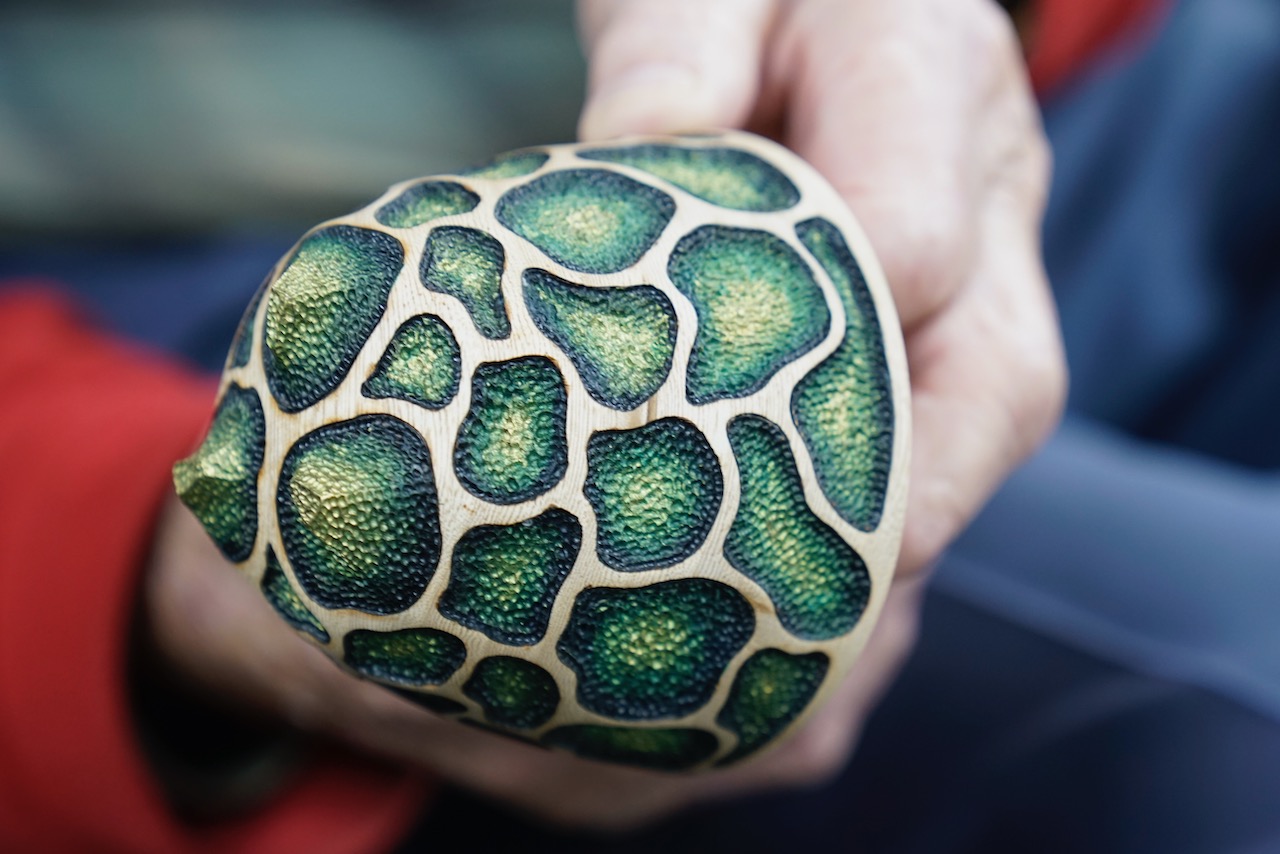
Dragon Egg
This technique can be used on the outside of hollow forms, vessels, on the rim of a bowl or on a dragon’s egg.
First step is to lay out the pattern – this should be random and drawn with pencil. Look for any interesting wood features which you want to highlight or anything you want to hide. Cover the entire surface with the shapes. Some shapes can be closer together, all are nonuniform.
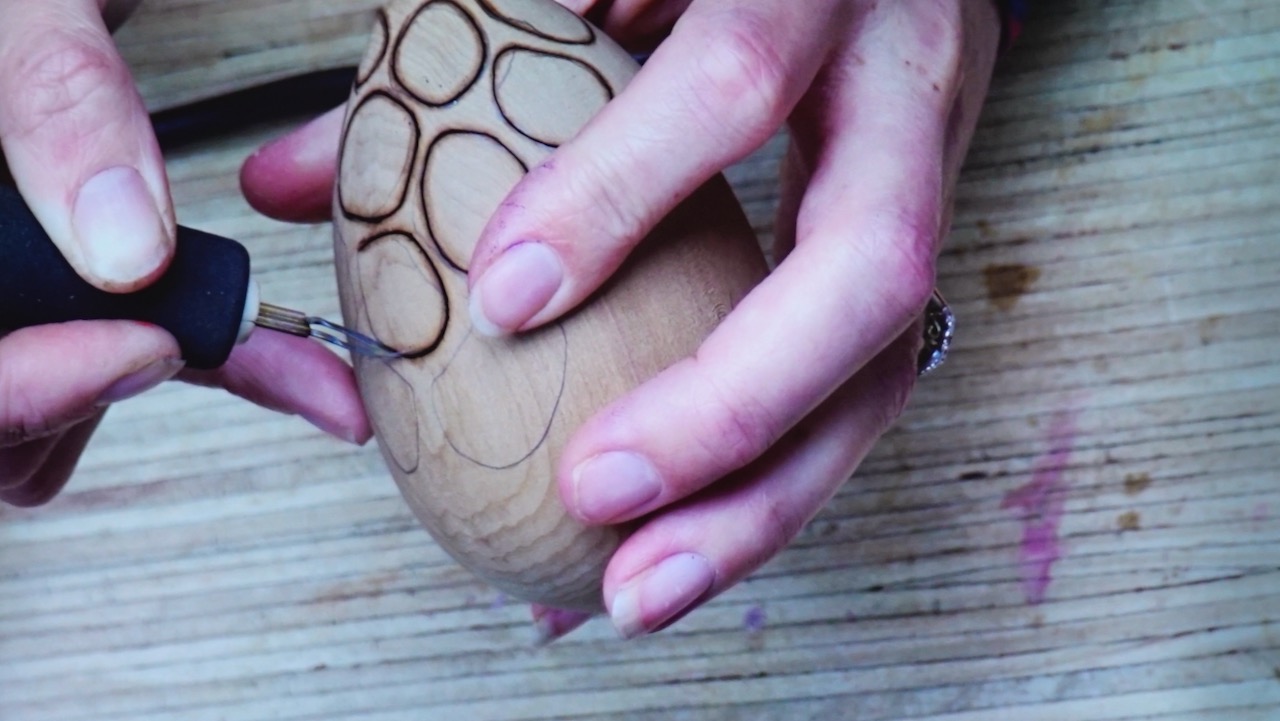
Using the Razertip at 2-3 temperature, use the pinky on the wood for stability, go over the pencil lines. Going around corners – go up on to the tip of the blade to keep the line smooth. Move the piece and the Razertip together. Aim for a consistent speed to give consistent heat and smooth lines.
Smaller blades can bend; however, they can be carefully straightened with narrow nose pliers.
Once all shapes have been outlined remove the pencil lines with a rubber. Then with a Dremel “scoop out” the centre of the shape. Trace around the edge first then remove the middle. Emma was using a “green hedgehog” bit. Smooth out the indented surface.
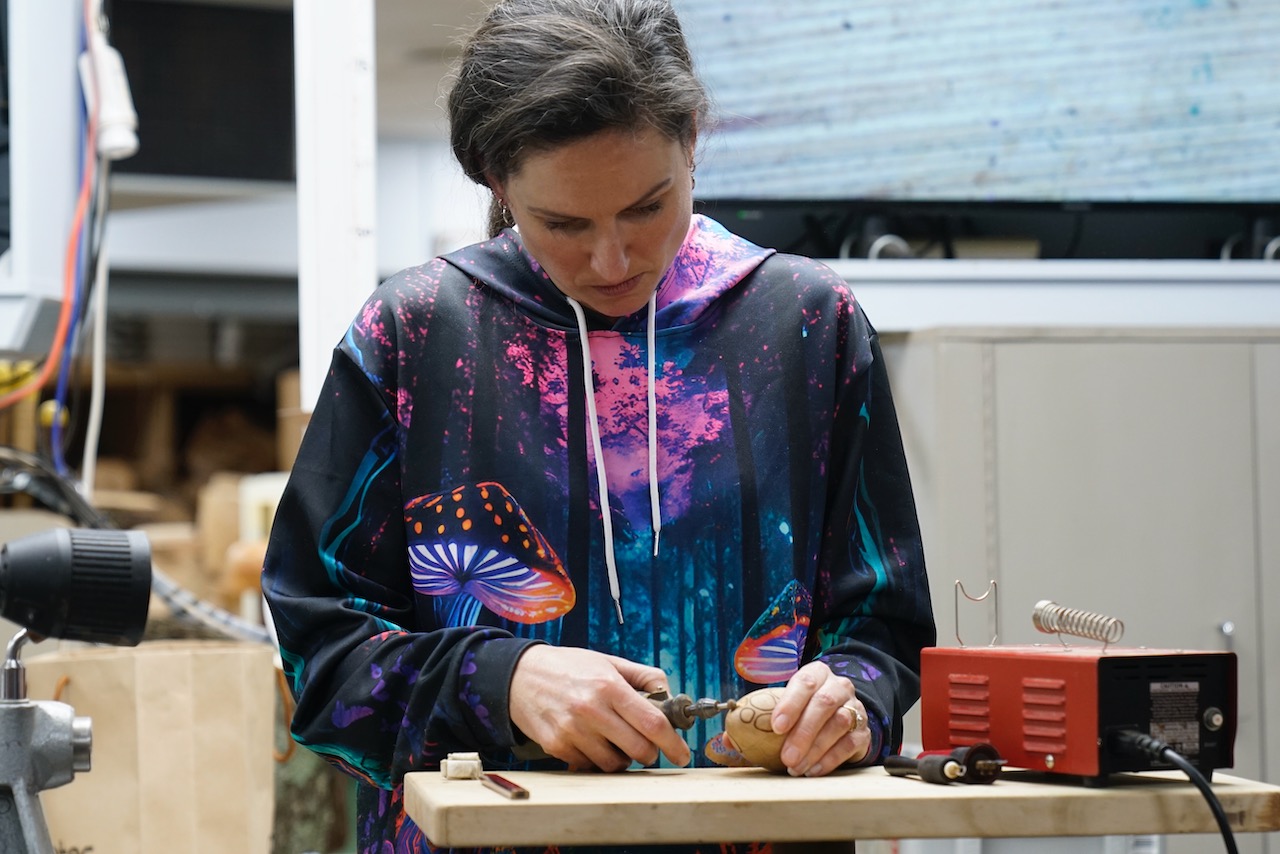
Option 1 – Dots:
With the nichrome tip put dots in the shape. Start around the edge to make a border and keep the edge clean. Note: a writing tip could be used for the dots.
Any patterning can be used in the centre once the border of dots is complete. A sample board can help with working out which pattern to use, how quick it is, whether it is suited to a larger area.
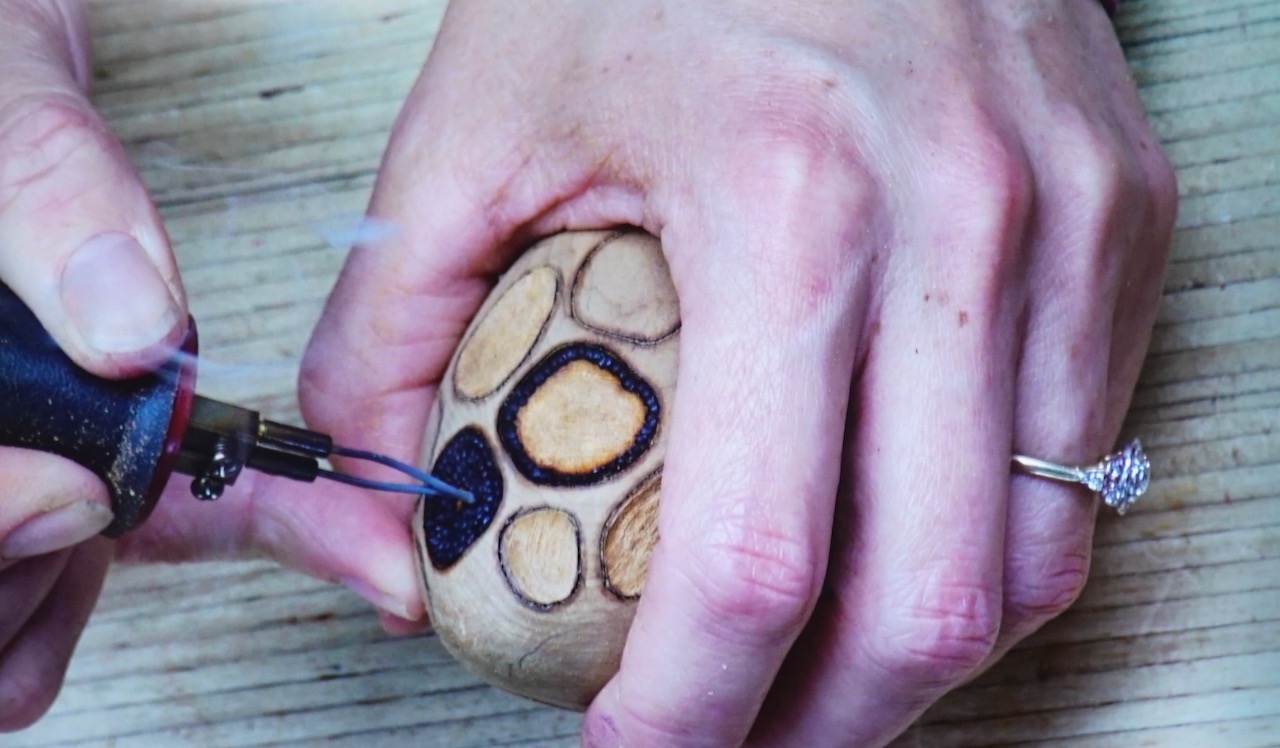
Note: gummy timbers can result in inconsistent burn, so it is important to have a wire brush handy to clean the tip.
Paint – use metallic paint. Remember to look at the consistency. Emma used a Size 0, round brush with a fine tip.
As this is dots in the shape the painting will move in rings around the shape, move from the outside to the inside. Blend them together in a more circular motion.
Option 2 – Star:
Using the Razertip blade go from the centre of the shape and make a basic star shape within the indented area. A light touch gives a finer line. Keep drawing the lines until the space is nearly full then go from the outside into finish. This avoids going over the edge of the shape.
Heavy pressure will give texture, and this is required for any paint application.
With a very fine drill bit you can add a hole at the centre of the star for a focal point.
Paint – use metallic paint. Remember to look at the consistency. For this piece Emma used a Size 0, round brush with a fine tip.
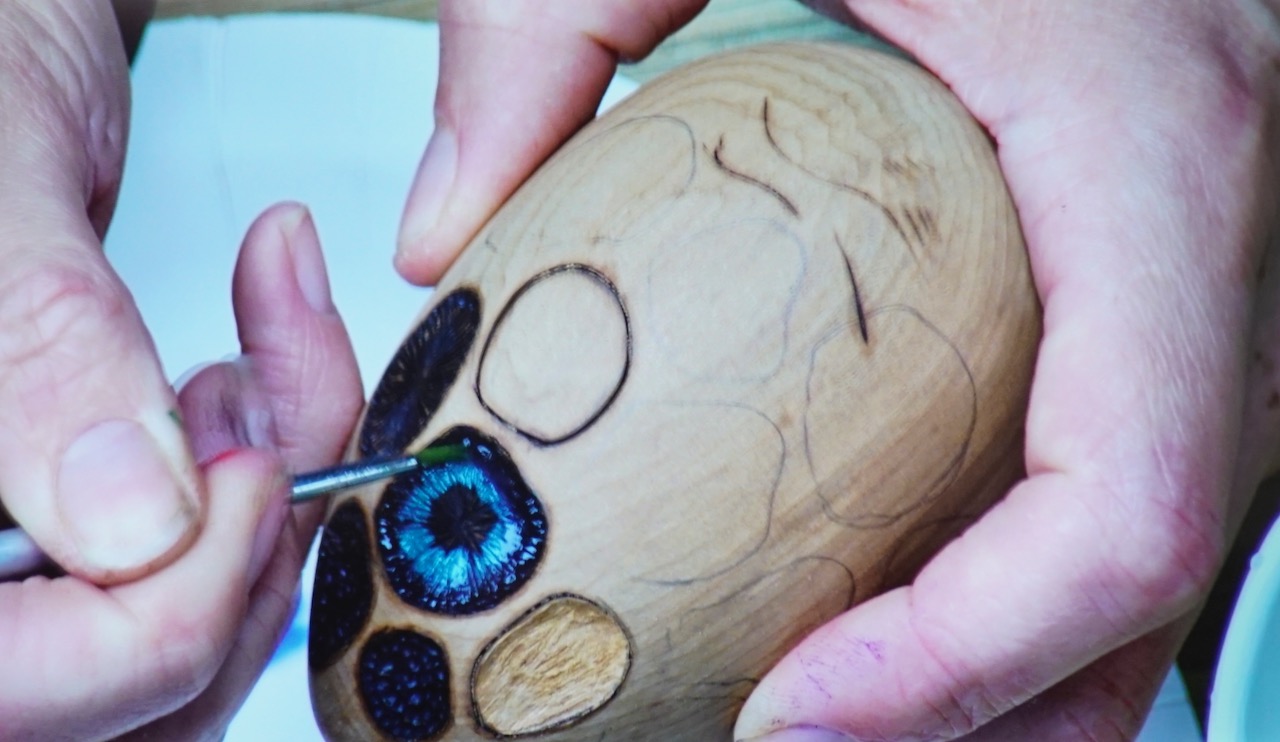
Wet the brush, dab dry, start with black and do the outline. Will be painting dark to light. Apply a light coat around the edge. The next colour was Verde green. Apply carefully trying not to touch the black. Wash the brush and dry then with light touches blend the two colours together moving out on the lines of the star. Add more colour as required. Now add the third colour to the inside. It should still be possible to see the texture. Blend the colours, working with the star, brush the colours together.
Add a dot of gold to the central point with a very fine brush then move towards the edge. The aim is to lead the eye into the centre.
Blending must be done while the paint is still wet, so it is necessary to complete each shape one at a time.
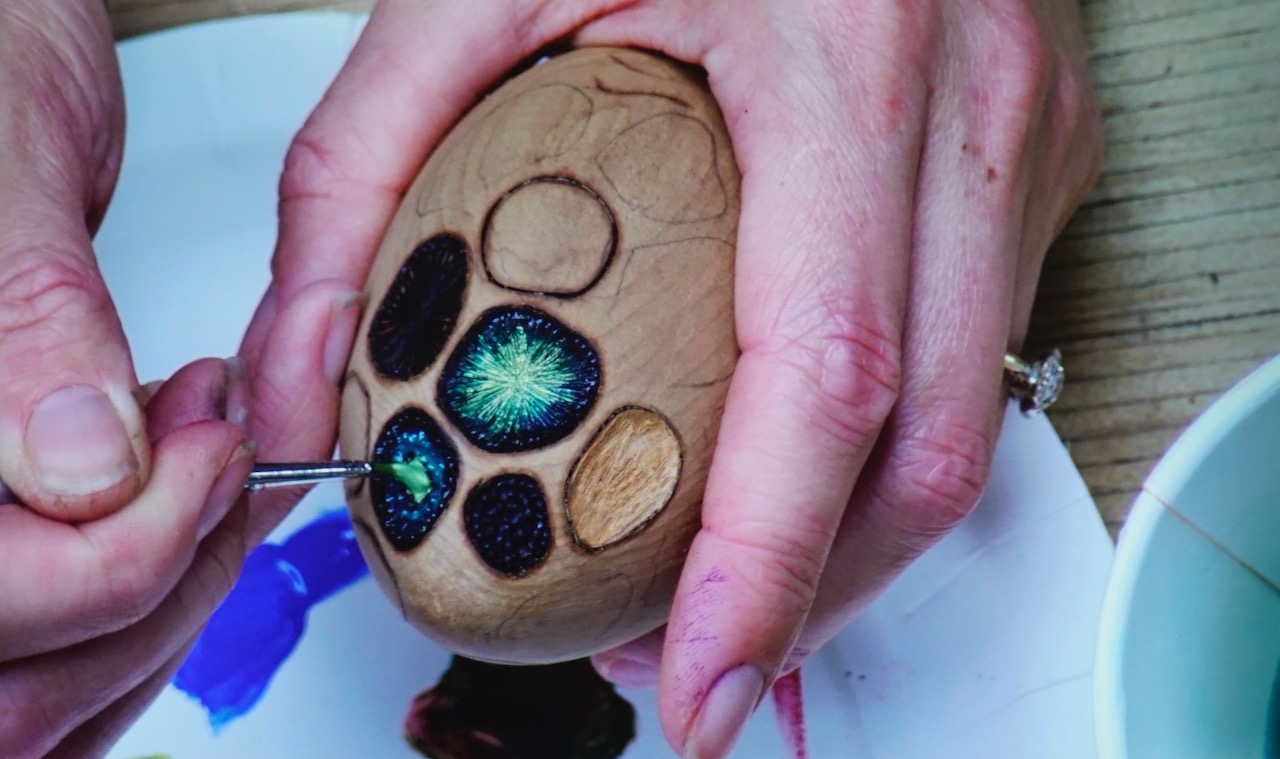
Possible colour combinations:
Black Dark Blue Light Blue White
Black Dark Purple Light Purple White
Interference Paint
This is more vivid on a black background. Only a very small amount is required, and it is best to water the paint down to avoid a “white” look. These paints can be used over other colours for a flash of colour e.g. purple over green. Not much is achieved by putting gold interference paint over gold metallic paint.
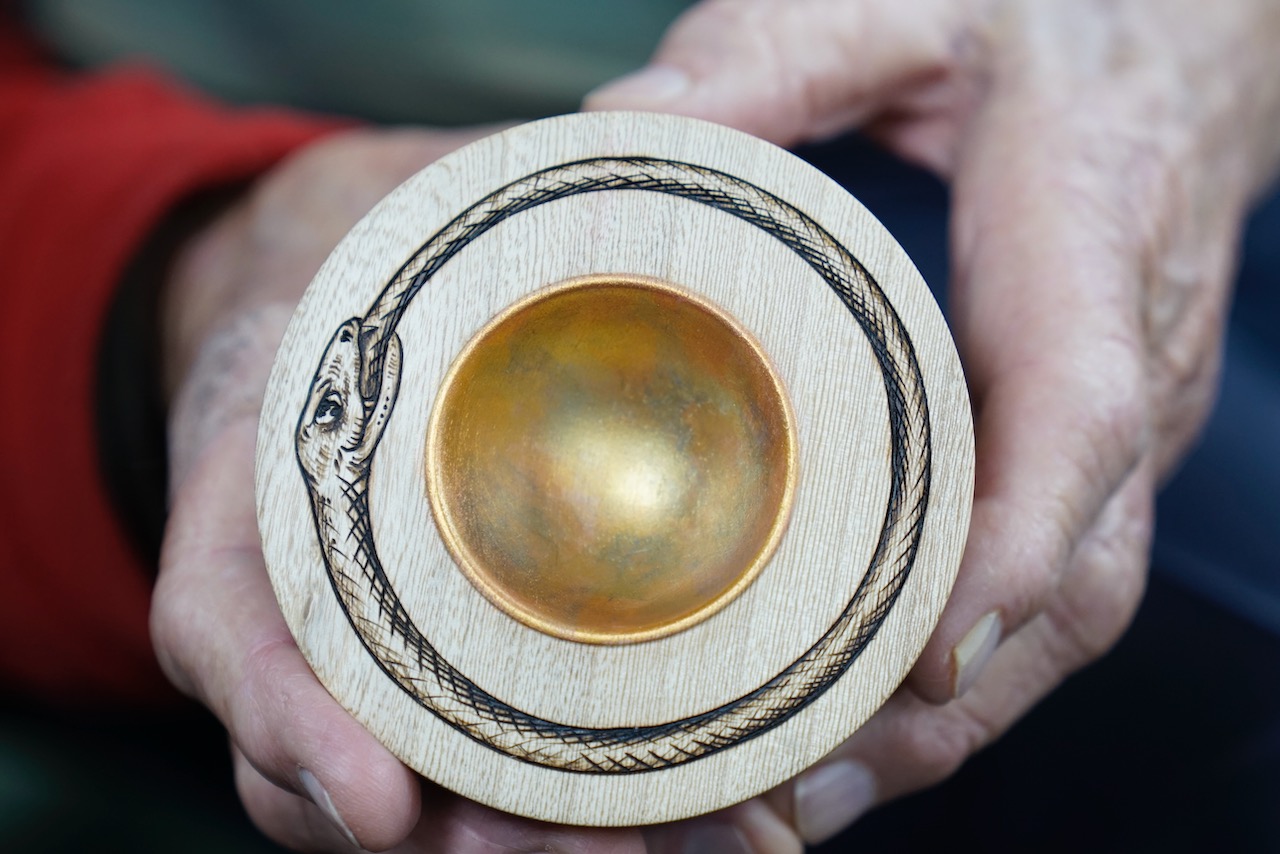
Gold patina in centre of bowl
This is a fake patina that is possible using a variety of colours. Emma used bronze, gold, sunset pink, purple, green. Copper and Rose Gold are a good combination to try.
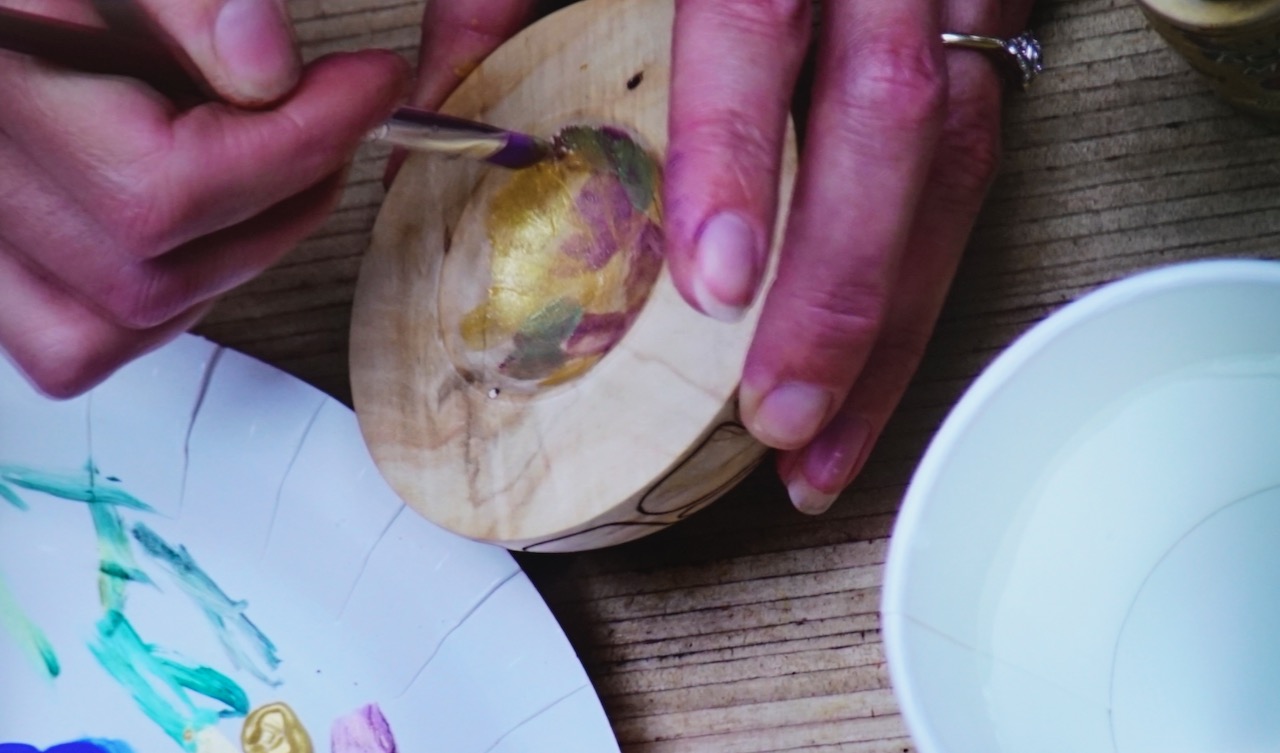
Often done over black gesso base. Using a round nose brush dab on some gold paint. Do not paint the entire surface. Next dab on some purple, then green then blend slightly. Try to avoid making brush marks. Pull up from the middle. This is not about mixing the colours, rather blending them. With a wet brush blend as the paint dries. Dry with a hairdryer then repeat going up to the edge of the centre.
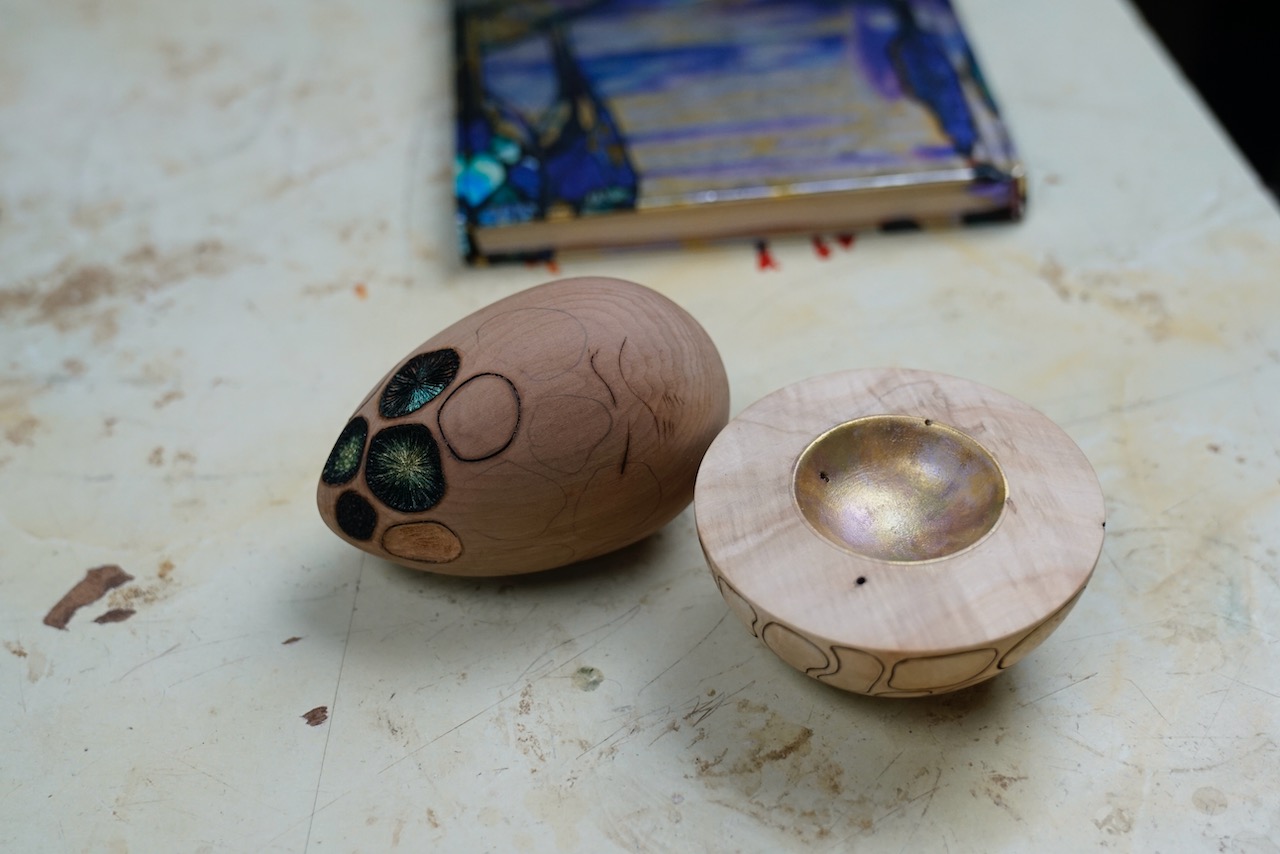
Very gently brush up to the lip to highlight the lip. Finally add interference paints. Again, it is best to use complimentary colours. Use a small brush, minimal amount of paint. Remember to wet the brush then dab. Layer until happy with the look. Note: can use fingers to blend.