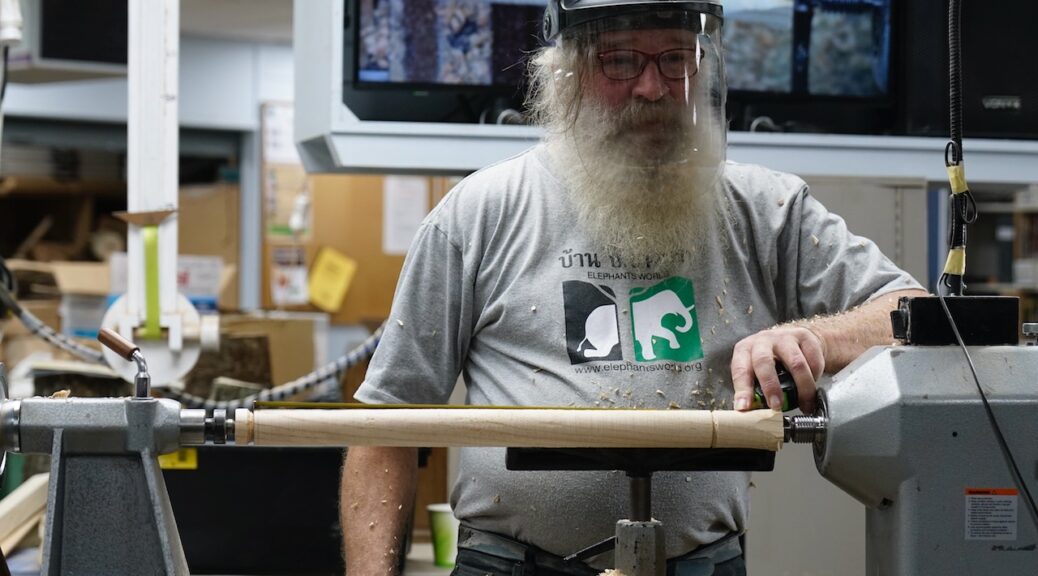
Club Meeting: 3rd June 2026
Report by Bob Yandell
Dave Anderson, Life Member of West Auckland Woodturners Guild, demonstrated how to make a Baluster. It was Dave’s third demonstration on this subject to our Club and 18 years since his last which saw members, both past and present, make the Balusters that adorn the wall and sides of our demonstration seating area.
Dave served an 8,000-hour apprenticeship followed by 19 years working in the furniture industry before seeing the relaxation of import restrictions on the importation of furniture and the demise of domestic production. Dave now spends his time producing replacement Balusters for the restoration of older villas and buildings plus bespoke balusters for new builds. Regulations have seen changes to heights of stairway rails and gaps between balusters so if we are thinking of doing any check the regulations – replacement is different from whole new staircases.
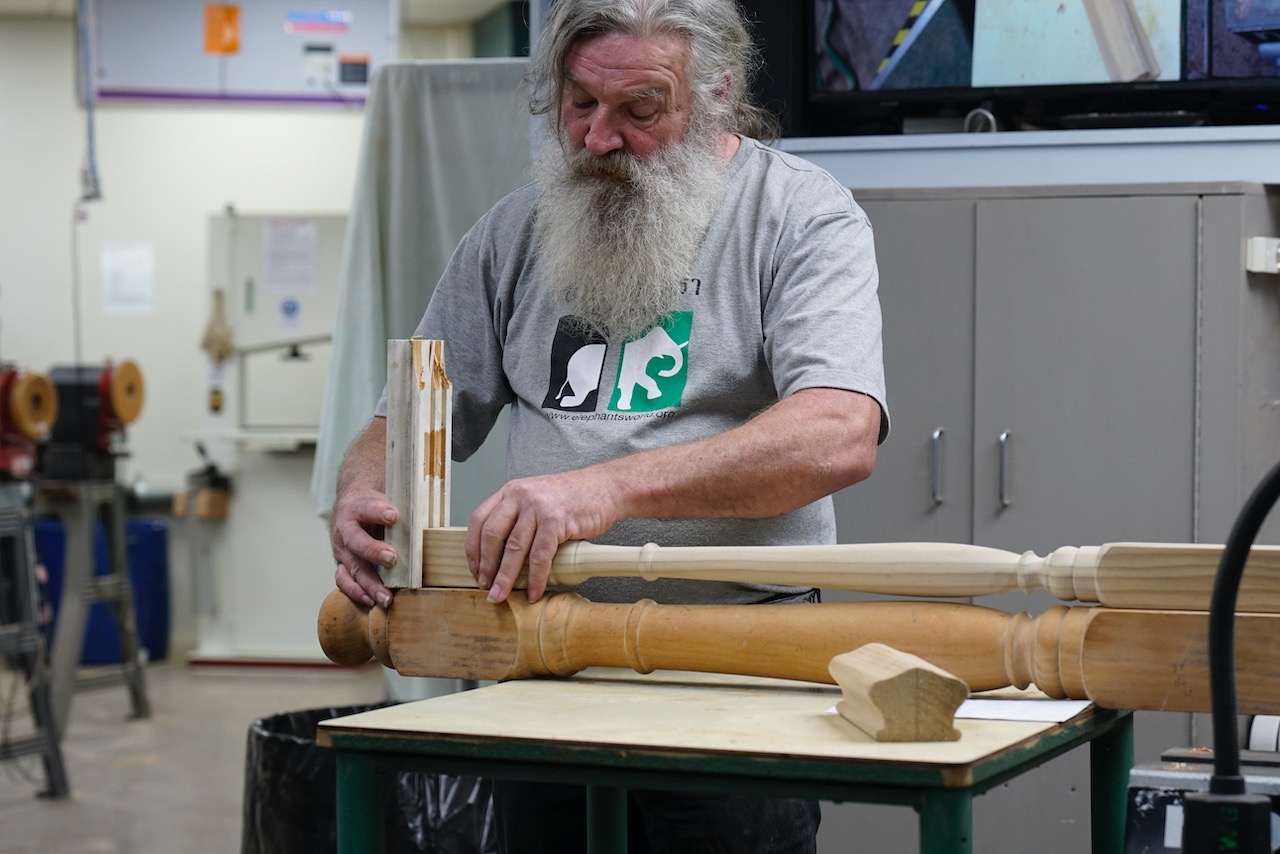
The profile of a Baluster is either symmetrical or asymmetrical. The asymmetrical bottom half tis a mirror image of the top. The squared end at the top is shorter than the bottom.
The wood used in demonstrating the process was H3 pine dressed 4 sides and 75mm square. Dave uses supplied timber at 75, 65 or 58mm square and 950mm in length for standard balusters. Bespoke dimensions are determined according to need.
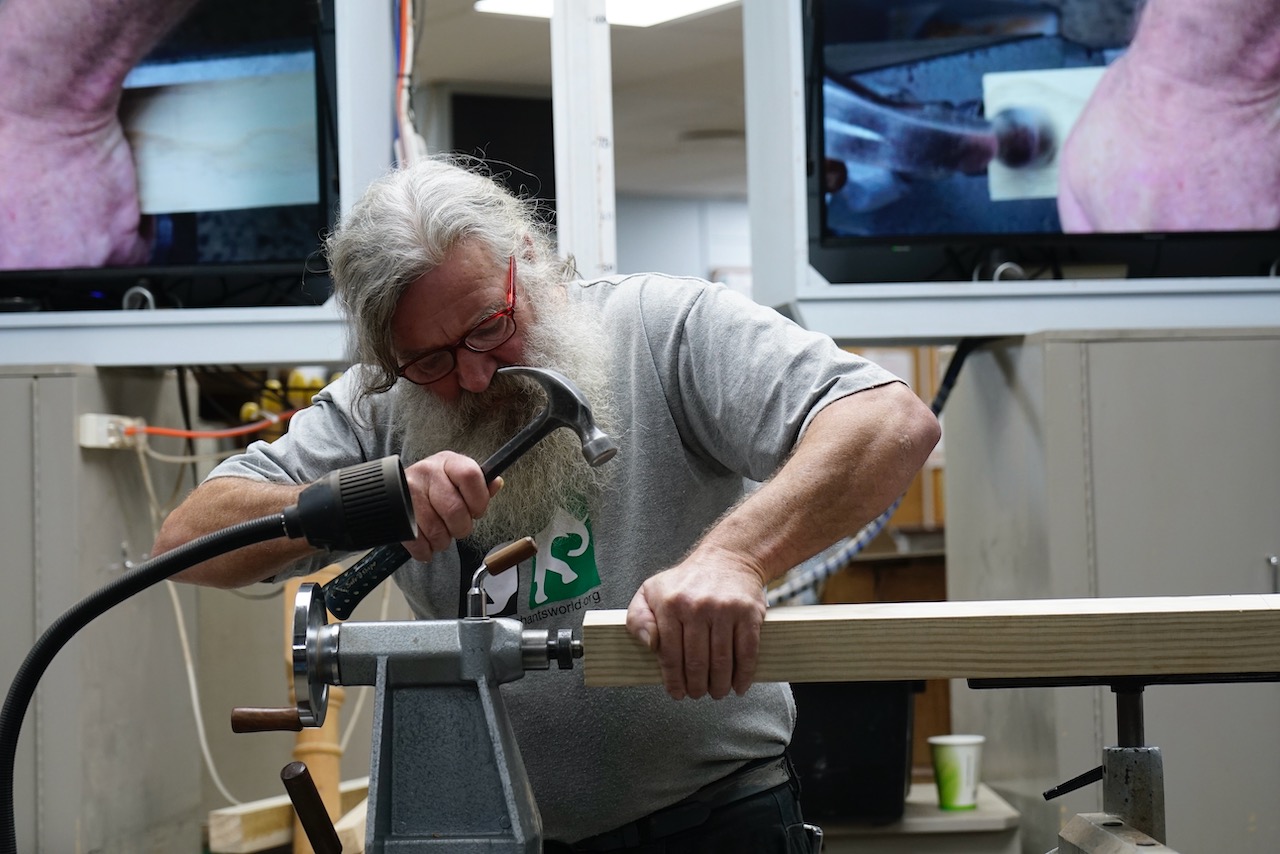
The wood is mounted between centers and alignment defined by visual and adjusted by tapping with a hammer. The top end of the baluster is at the Headstock end. Mark the length of the top end by putting a notch/cut with the skew.
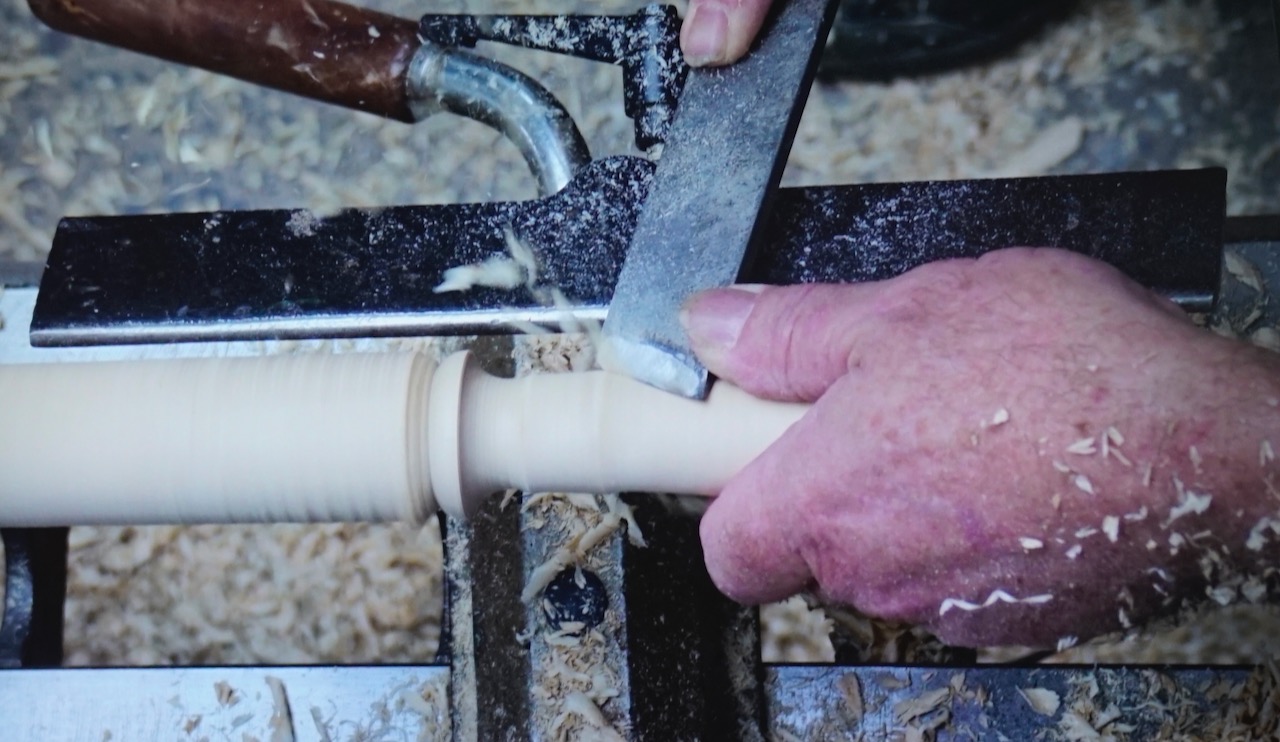
Using the Roughing Gouge round the between section. Mark the profile change points. Working along the rounded shaft mark all the high points. Shape using a combination of Roughing Gouge, Spindle Gouge. Leave the low points last to ensure strength. To assist making a smooth cut. Dave used the thumb of the hand nearest to the cutting edge to hold the tool onto the wood. The design is a combination of fillets, coves, beads and tear shaped curves.
Tip from Dave –
To determine the balance and esthetics of items such as table legs to make and stand it up: step back and view from a height and distance appropriate for the finished product. Adjust profile to achieve balance then proceed to produce the remaining 2/3.
View Balusters and Finials on the old Villas in the older suburbs to get an appreciation of what works,
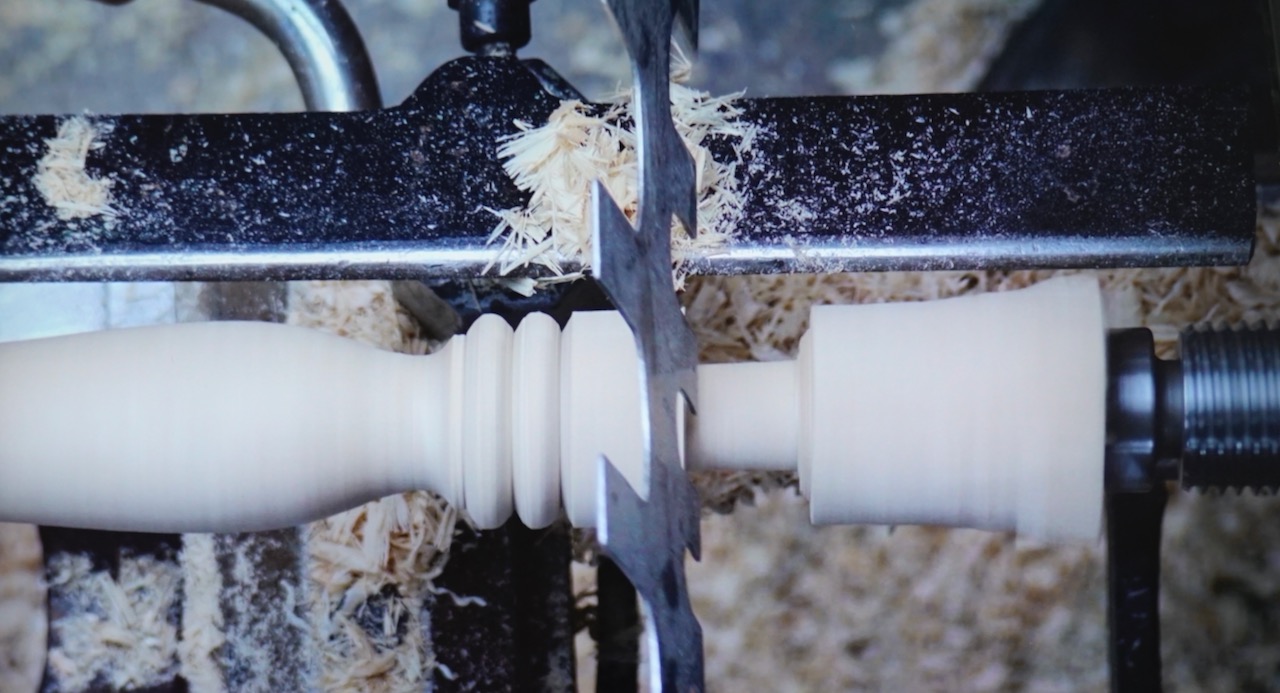
Dave used a spigot gauge to ensure that the spigot was constant in diameter (an open-ended spanner will also do), Chamfer the end and cutting a groove in the spigot will allow trapped air in the drilled hole escape when the baluster is inserted.
Project –
Members are challenged to make a Baluster to be added to the existing. The specifications are:
Finished length 500mm; squared ends 75 x 75mm; 20mm spigots at each end.