Club Meeting: 22 July 2026
Report by: Kieran FitzGerald
On a cold winters evening, on a train bound for nowhere, I met up with …… oops, wrong song.
On a cold winters evening, too cold for the two Jims, the Ngatea bus trundled into Papatoetoe and unbundled its scruffy load. No gun totin’ gamblers these, just hard livin’ turners from the hinterland folks call the Hauraki Plains, a low lying flat countryside where the fog nourishes everything and the sun struggles to send its rays to the cold earth.
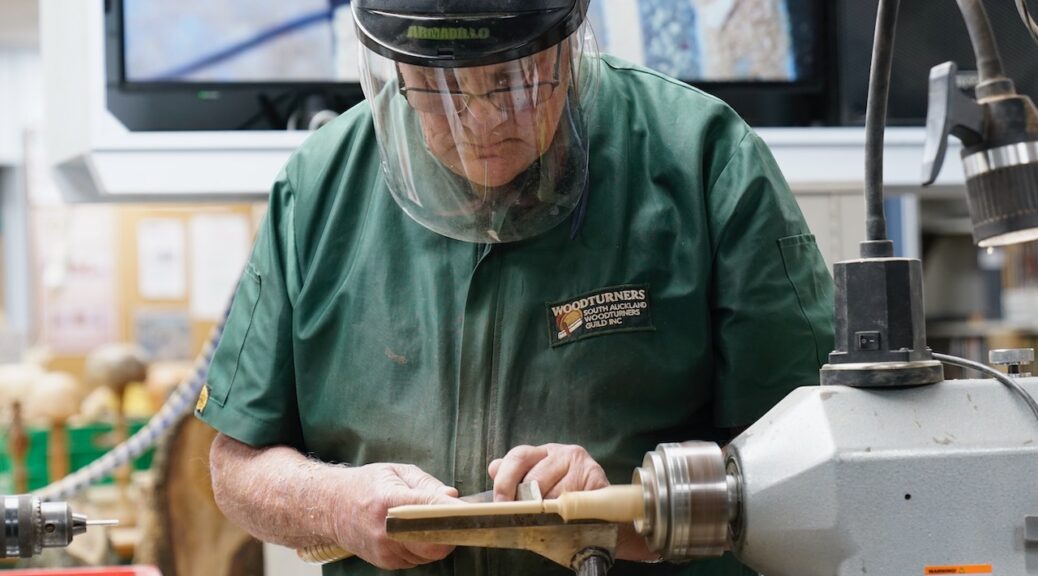
Bryan steps down from the bus, hefts his toolbox from the boot and carries it into the clubrooms. The audience waits in wonderment and anticipation, because although Bryan is listed as the demonstrator for the evening, he has not disclosed what he is about to do. “It’ll be an easy cleanup” he announces. For Bryan is going to demonstrate the project called “Simple Pen” on the SAWG project pages. But wait, there’s more – for Bryan will add some novel and creative features to improve the basic pen. Lets get under way.
Some informal chatter preceded the demo, as members discussed the use of pens in the visitors packs, pens as complementary gifts, the origins of the pen tradition, and the tricks played on former member Rex H. The casual talk set the tone for a boisterous and fun demonstration.
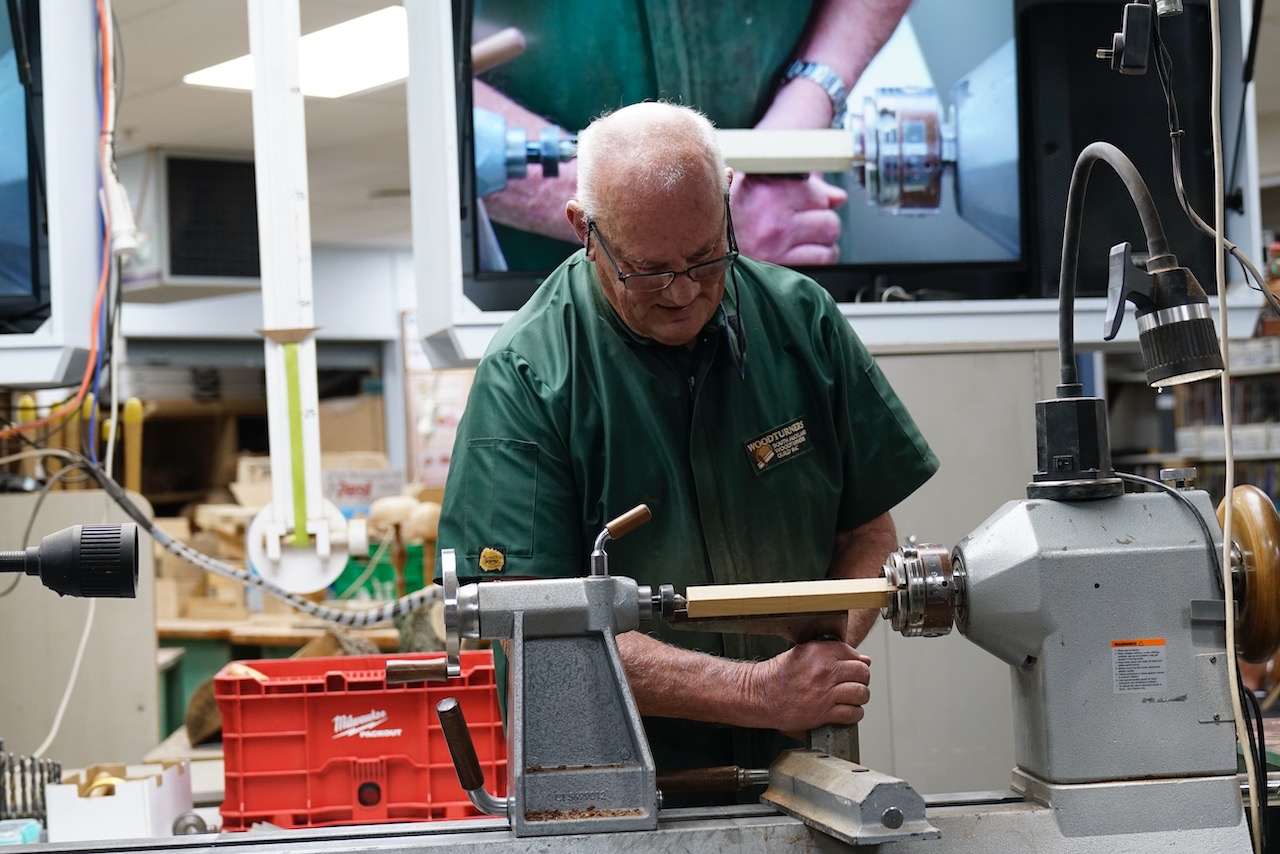
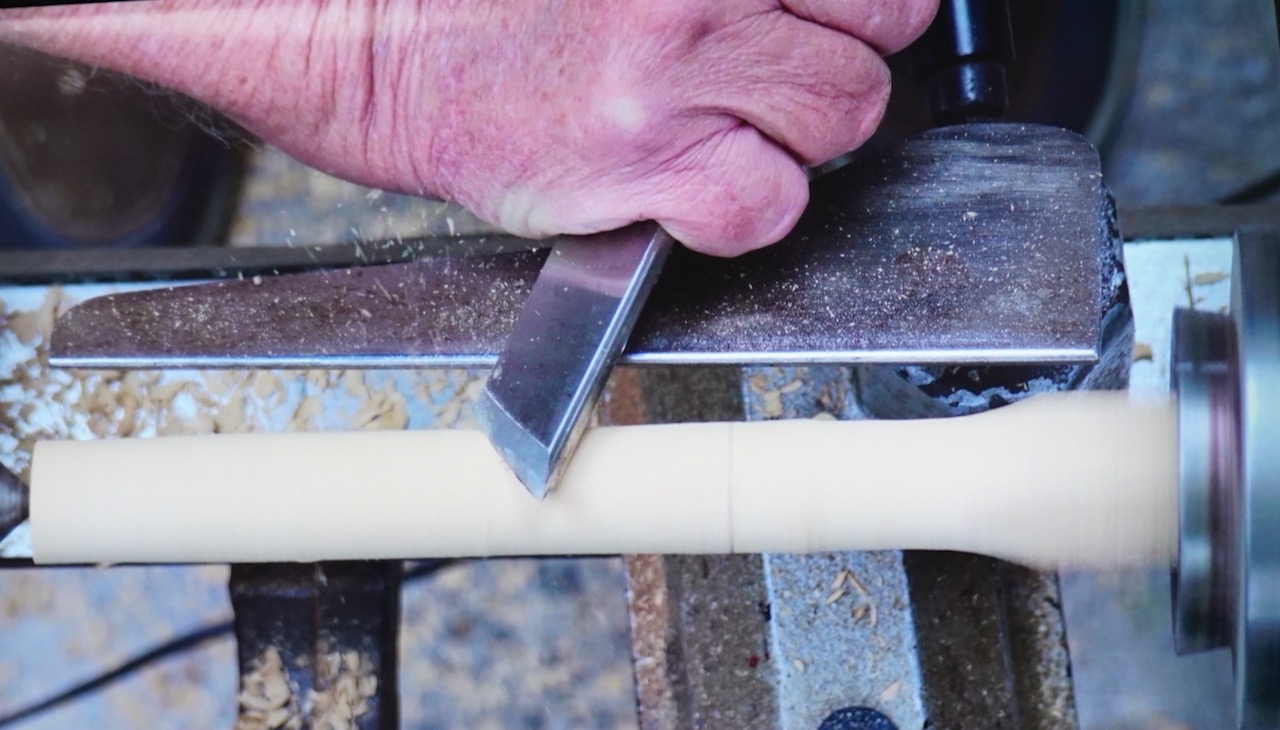
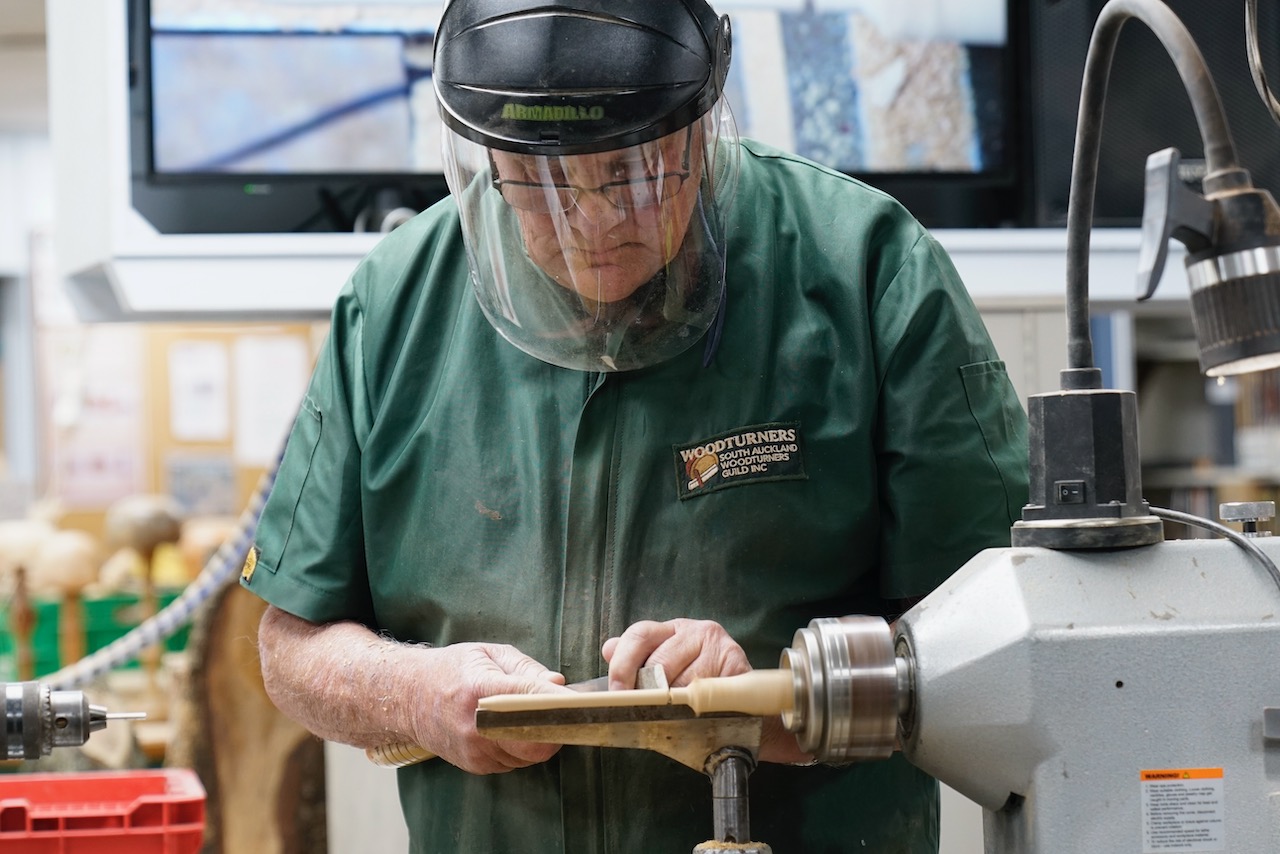
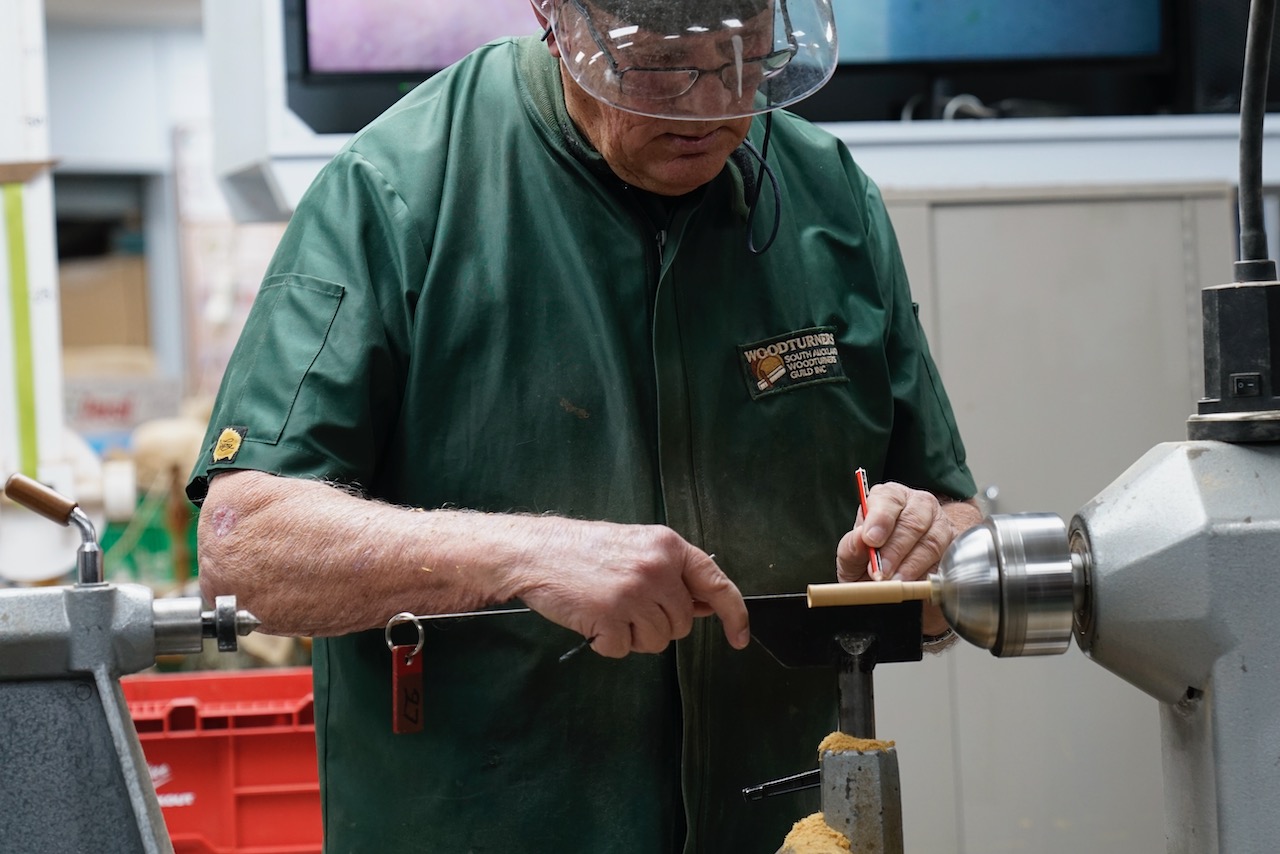
Bryan started with a blank which looked to be about 20 x 20 x 220. Just guessing here. It was slim enough to be held securely in the centre of a 50mm chuck. Bryan brought up the tailstock and knocked the corners off the blank with a spindle roughing gouge. He jacked up the speed and rounded it down to near finished size with a skew. The length of the pen will be approx. the length of the refill plus about 10mm. Without turning off the lathe he turned the speed down to about 1500 and gently withdrew the tailstock. It is important that the piece continues to run true.
The next step is the tricky part and the key to a successful pen. With a long series 3.5mm handled drill make a hole down the length of the blank which is slightly longer than the refill. About 130mm should do it. The drill will be very inclined to wander off centre as it follows the grain of the wood, so hold it parallel to the bed and on centre, and push it gently in just a few mm at a time before withdrawing to remove the swarf. Doing it by hand is easier and more successful than using a Jacobs chuck. Then drill a 4mm hole into the first 10mm of the wood to accommodate the shoulder just beyond the nib of the refill. This will hold the refill securely.
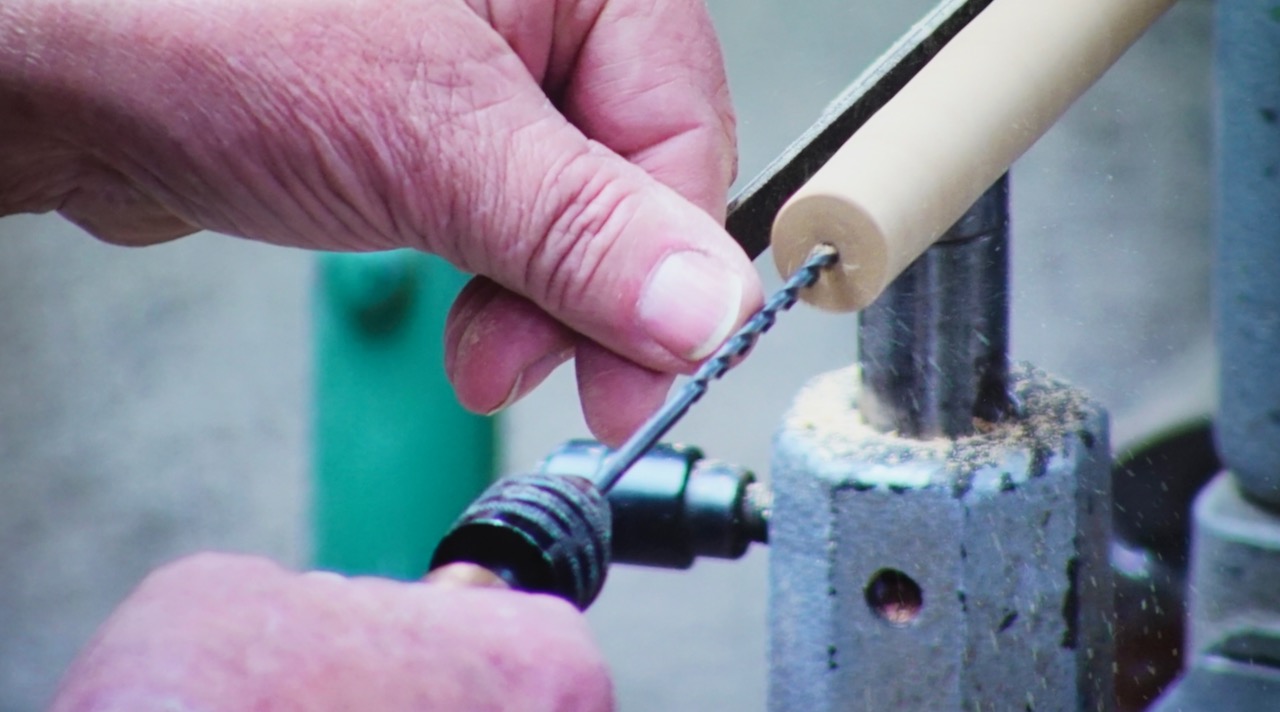
To complete the turning, Bryan took a 4mm drill bit and put it into the Jacobs chuck backwards, and brought up the tailstock again. The drill bit slots into the hole and holds the blank nicely. (An alternative is to use a 4mm pop rivet as described on the project page, but Bryan reckons his way is better.) Turn the pen down to its finished shape, sand and part off. Insert the refill, put a finish on, and that’s your job done. But here’s where Bryan added extra oomph by showing us several ways of enhancing the concept of a simple pen. These certainly raised the bar.
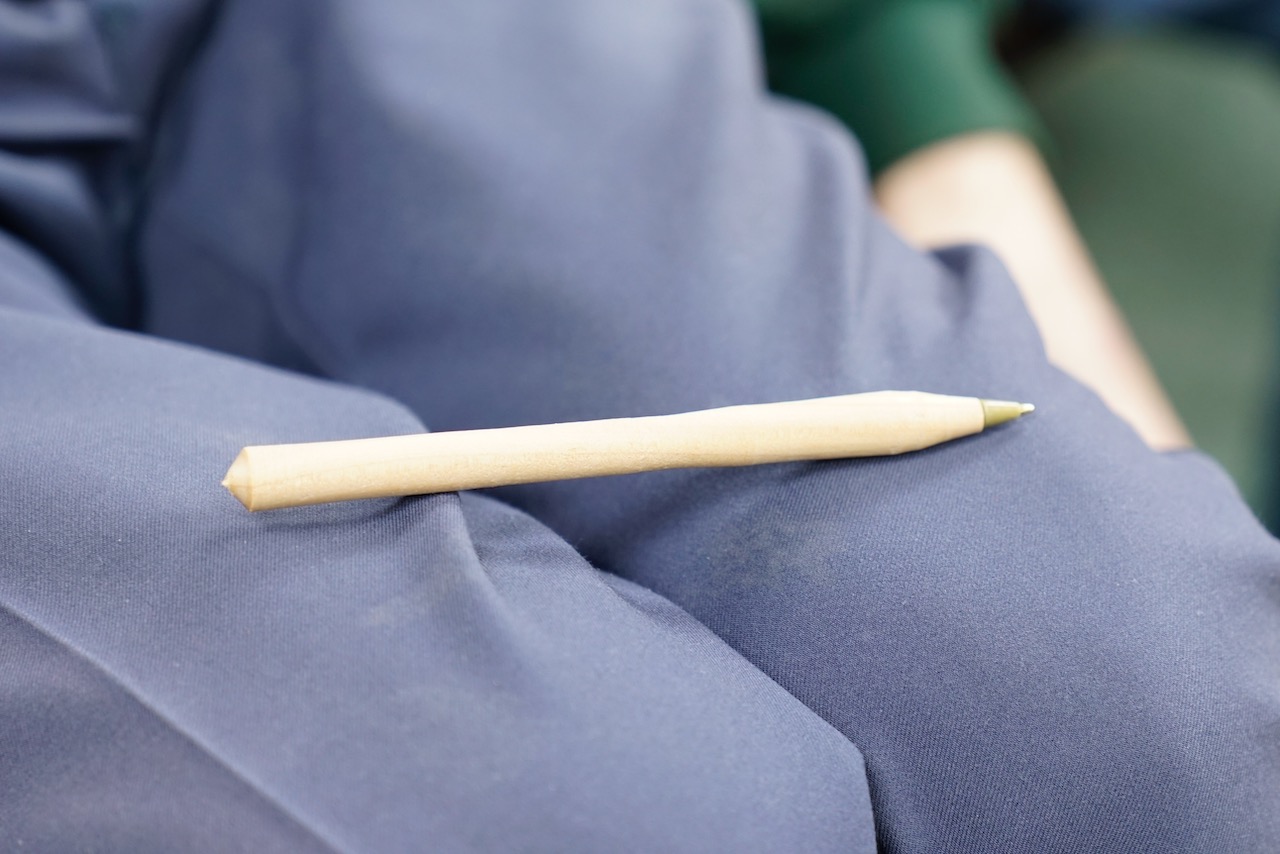
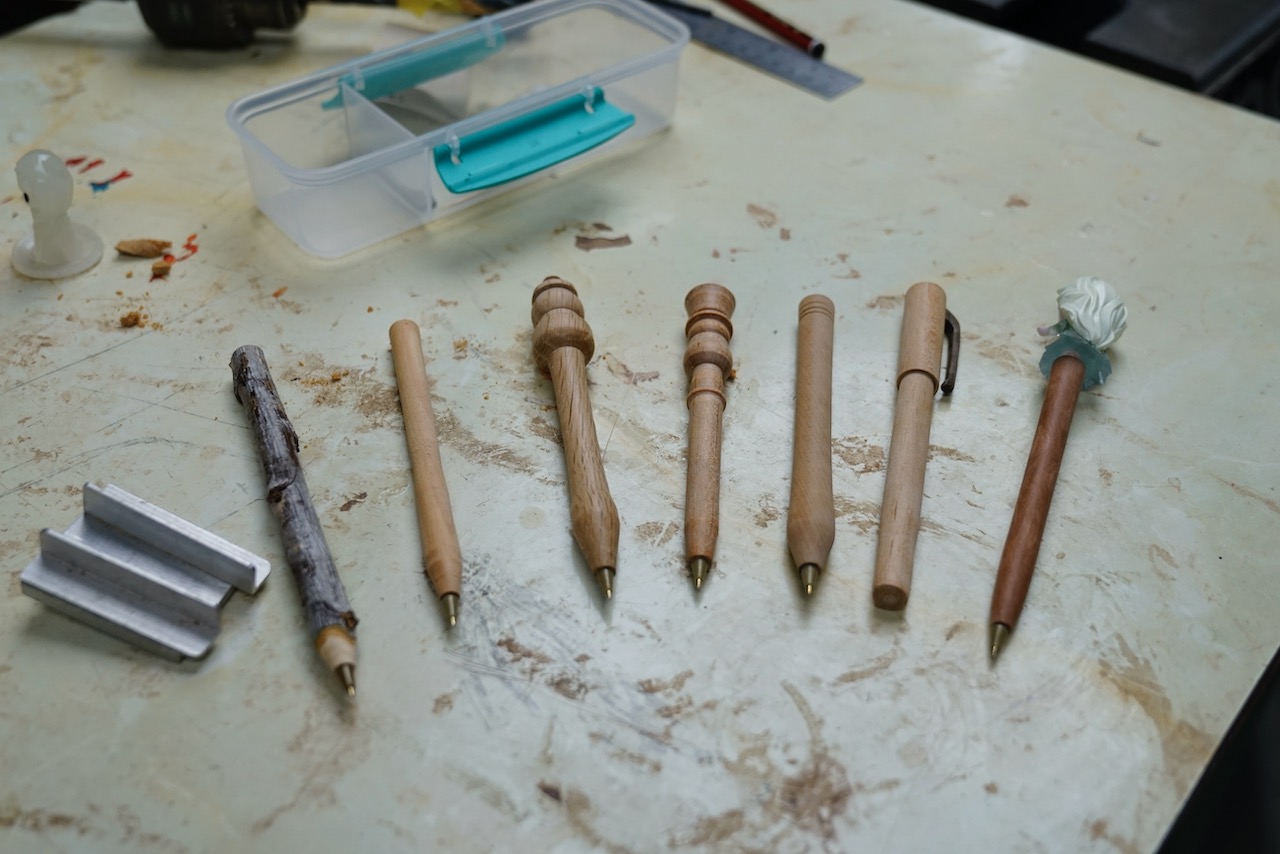
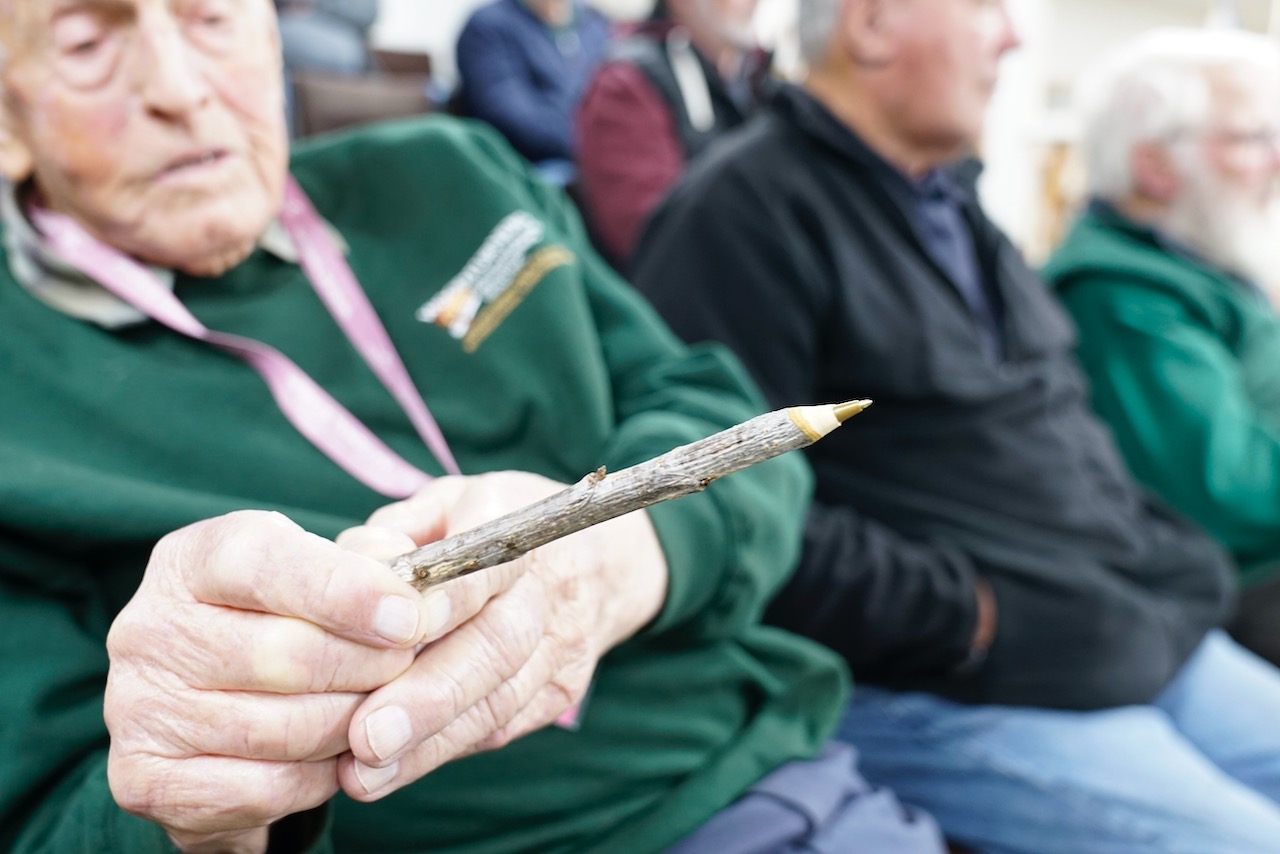
First off, he passed around several pens which he had previously made, and these were totally original. Number 1 was a pen made from a small branch of apricot tree and it still had all the bark and growth nodes. It was very cool. Next up was a figure of a man with a hat turned into the end of the pen, and painted. Anyone would love that. There were a few pens with different designs turned on the end, and even a pen with a Woolworths giveaway figure on the end. Bryan was very excited about that one. “It was free!”
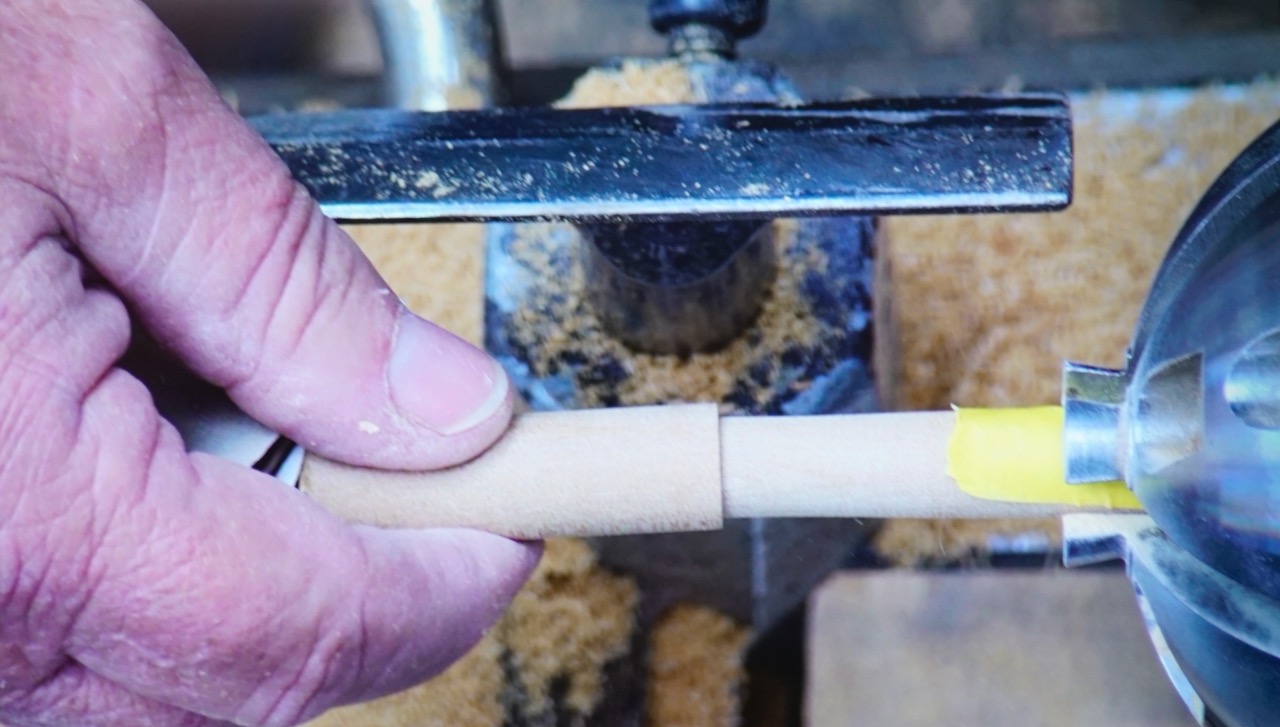
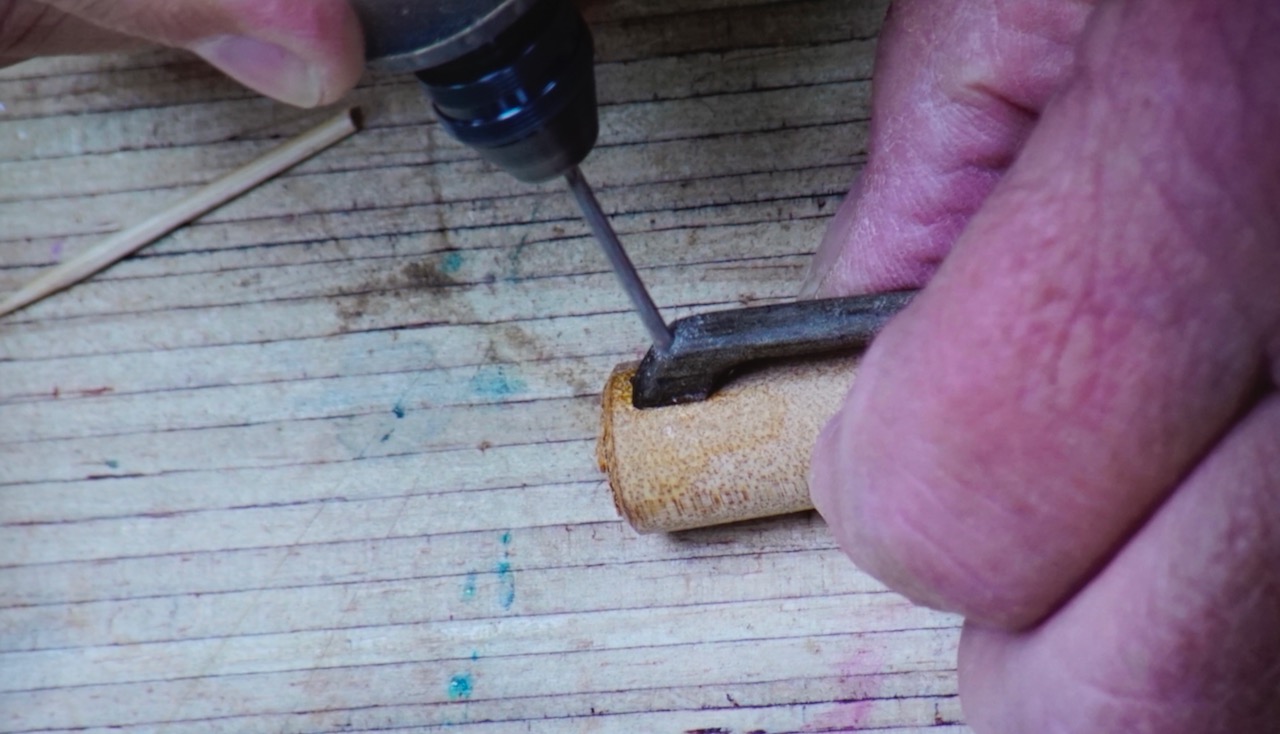
To cap it off (note the pun), Bryan demonstrated how to turn a cap for the pen he had turned. Taking the parted offcut, Bryan turned it around and slotted it in the chuck. He made an entry hole in the end with a gouge, and then drilled in about 40mm with an 11.5mm drill (use a drill sized to match the diameter of your pen). With the live centre in the tailstock just kissing the end of the blank, Bryan turned it down to a thin wall of approx. 1 – 1.5mm. He parted it off at about 50mm. Next he test fitted it on the pen – it required the pen to be re-inserted in the chuck and carefully sanded down til it fitted smoothly. Then he superglued on a clip that he had already fashioned, and secured it with a pin made from a toothpick. The end result looked really classy and lifted the basic pen to another level.
This was a very enjoyable demo with a lot of crowd involvement and laughter. Bryan generously gave away 5 packs made up of the long 3.5mm drill bit and a bunch of refills. These all went to some of the newer turners with a hope that they will enjoy making pens and perhaps make some for the club’s visitors packs. Bryan also donated a handful of refills to the club.
Thanks Bryan, we enjoyed that a lot.