Club Meeting: 16 September 2026
Report by: Eoin Jury
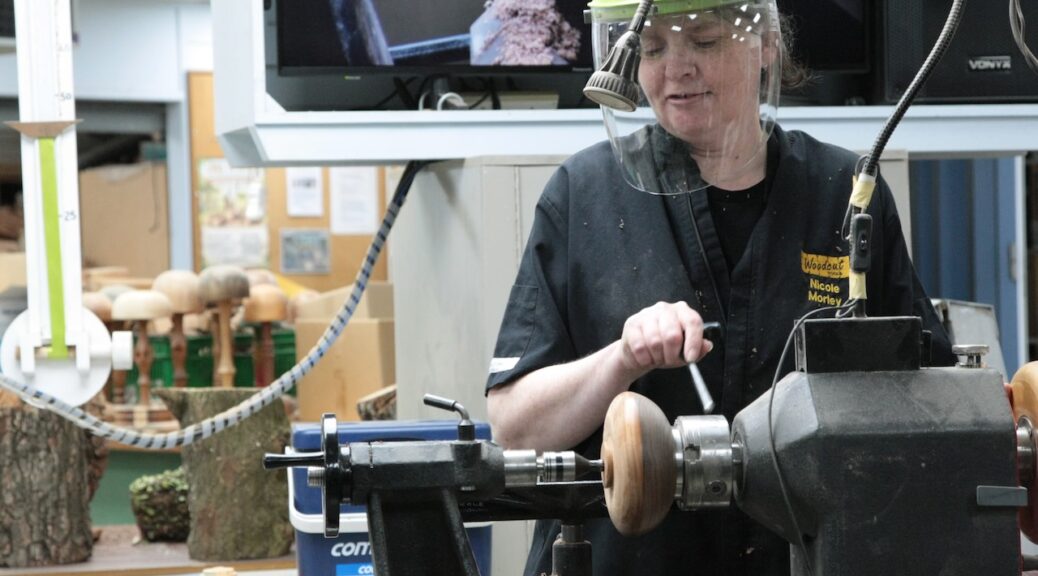
Nicole’s mystery project begins with two blocks of wood, one about 40mm thick and the other 50mm thick, both turned down to about 160mm diameter with a spigot added to each. Put each piece in your chuck and flatten the face. They are then glued together with the spigots facing out. The wood type is optional, but in this case includes expensive wood purchased from Rosenfeld Kidson purloined from mum’s collection!
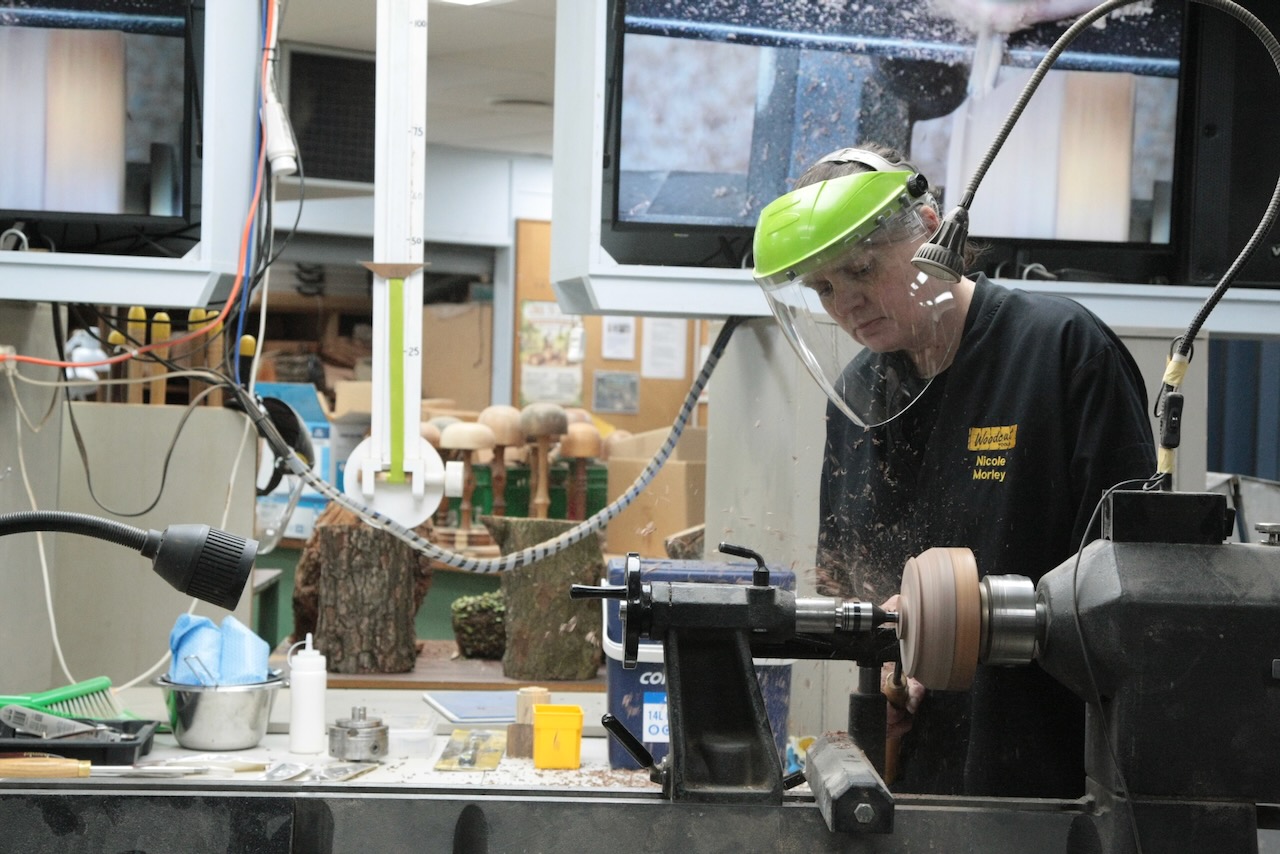
The shorter end is secured in the chuck, and lines marking 75 and 80mm diameter are made on the face, and then the face is rounded off from the join in the pieces through to just outside the 80mm line. The tailstock is disengaged so the spigot can be removed and a hole put in the centre with a 26mm Forstner bit, around 20mm deep.
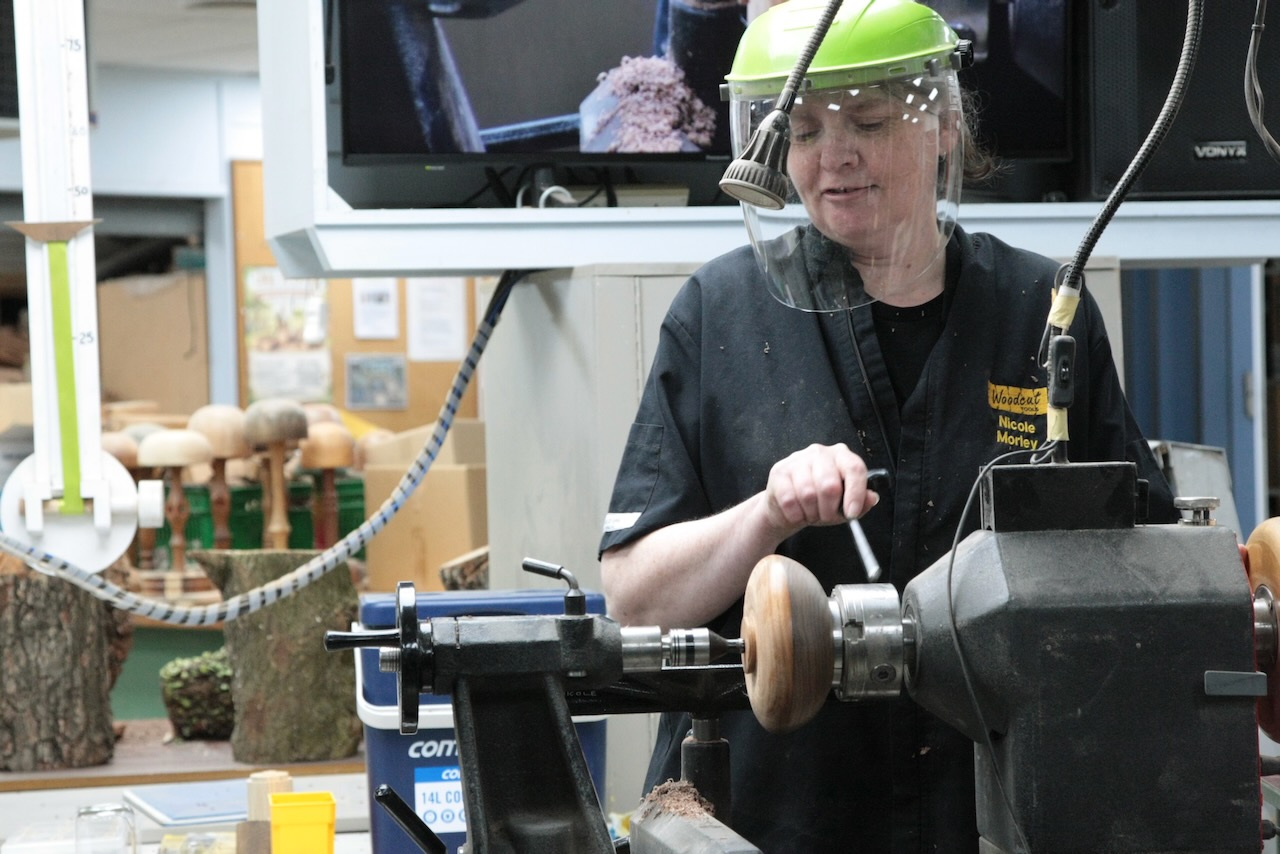
Nicole then cut a groove with the parting tool around 5mm deep between the 75 and 80mm lines and rounded off the centre to the groove. The piece is removed from the chuck and the chuck replaced with one that can grip the piece by the 26mm hole just created. Now the bottom can be rounded off and spigot removed. With the bottom rounded and sanded, a light pencil line is made to mark 50mm from centre. This circle is divided with six equal sections and every second marked for drilling holes.
Now a 20mm square piece of wood about 80mm long is put into the chuck and rounded off. The dowel is marked at 10mm, 40mm and 55mm from end.
The end is rounded off from the 10mm mark to end. Between the 40mm mark to the 55mm mark, the piece is machined down to 8mm, then the portion in the middle is shaped down in a curve leaving a slight ridge at 40mm, then parted off at 55mm. Two more pieces the same are made.
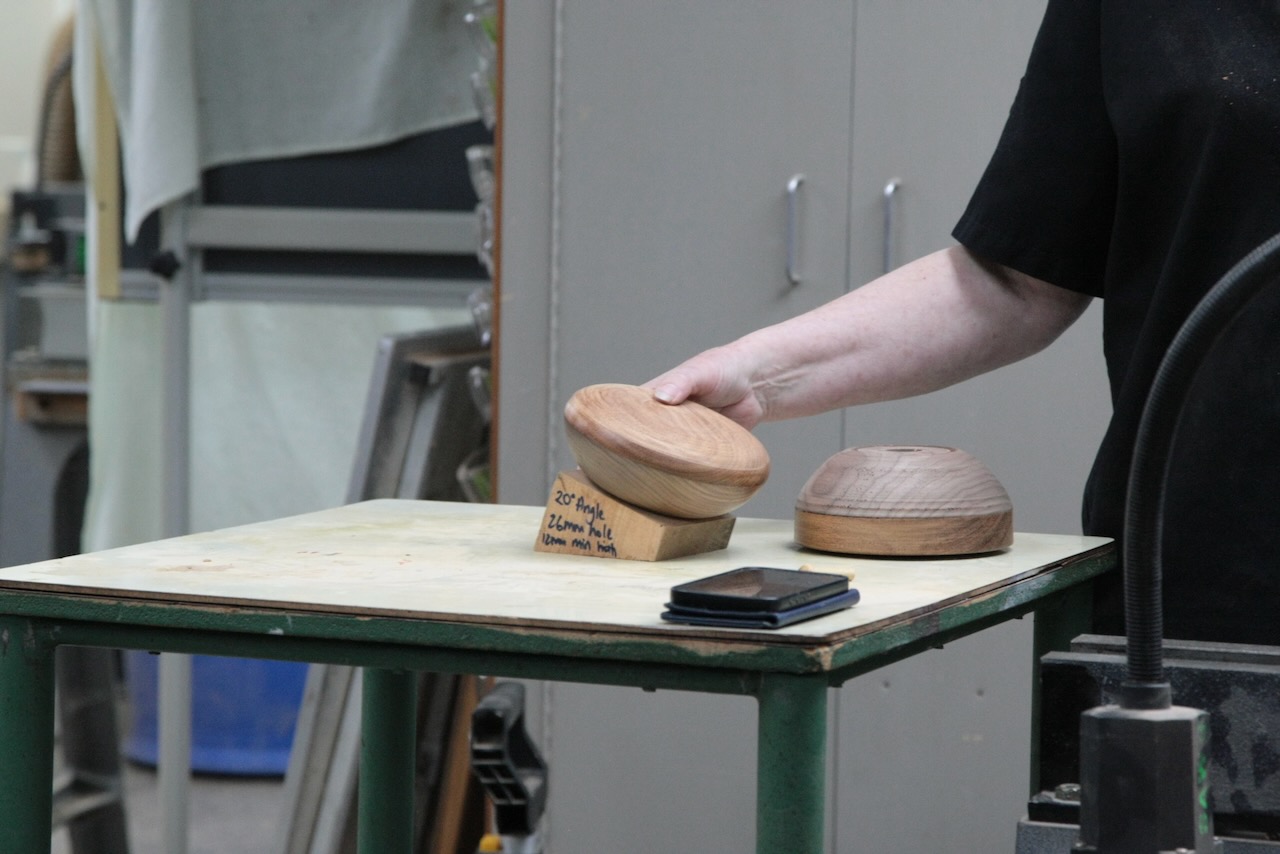
Nicole made a jig out of a block of wood with a 20˚ tilt on the top face and a 24mm dowel in the middle. The piece is put on the jig, base side up and a 10mm wide hole using a w-point wood bit is drilled in the drill press at every second mark to make 3 holes. (Depth of 20mm) The small dowels made in the previous step are inserted and it has legs!
A piece of pine approximately 120mm x 50mm is turned down to 40mm, then the portion from 60mm to 75mm is turned down to 24mm. Nicole rounded off the end and added some shaping to the middle part, sanded end and parted off at 75mm.
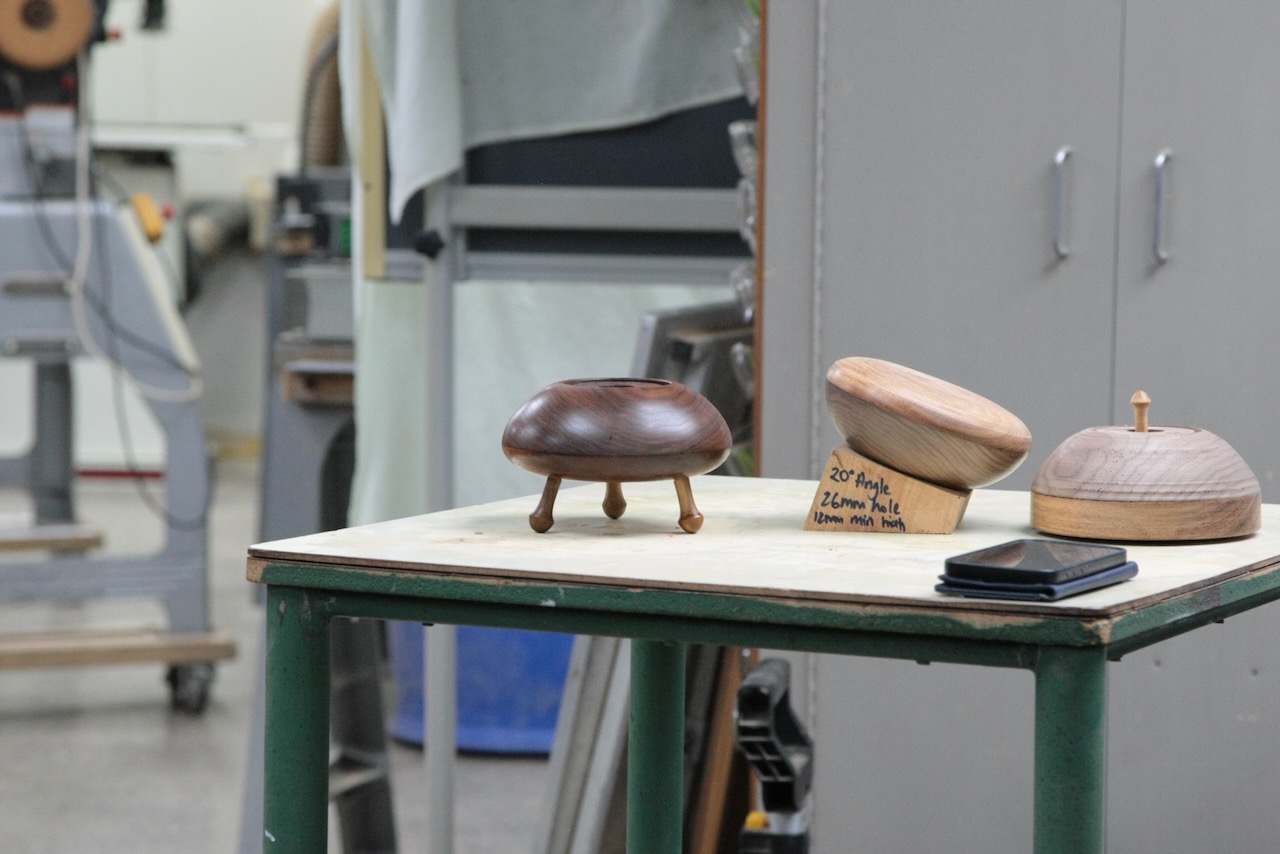
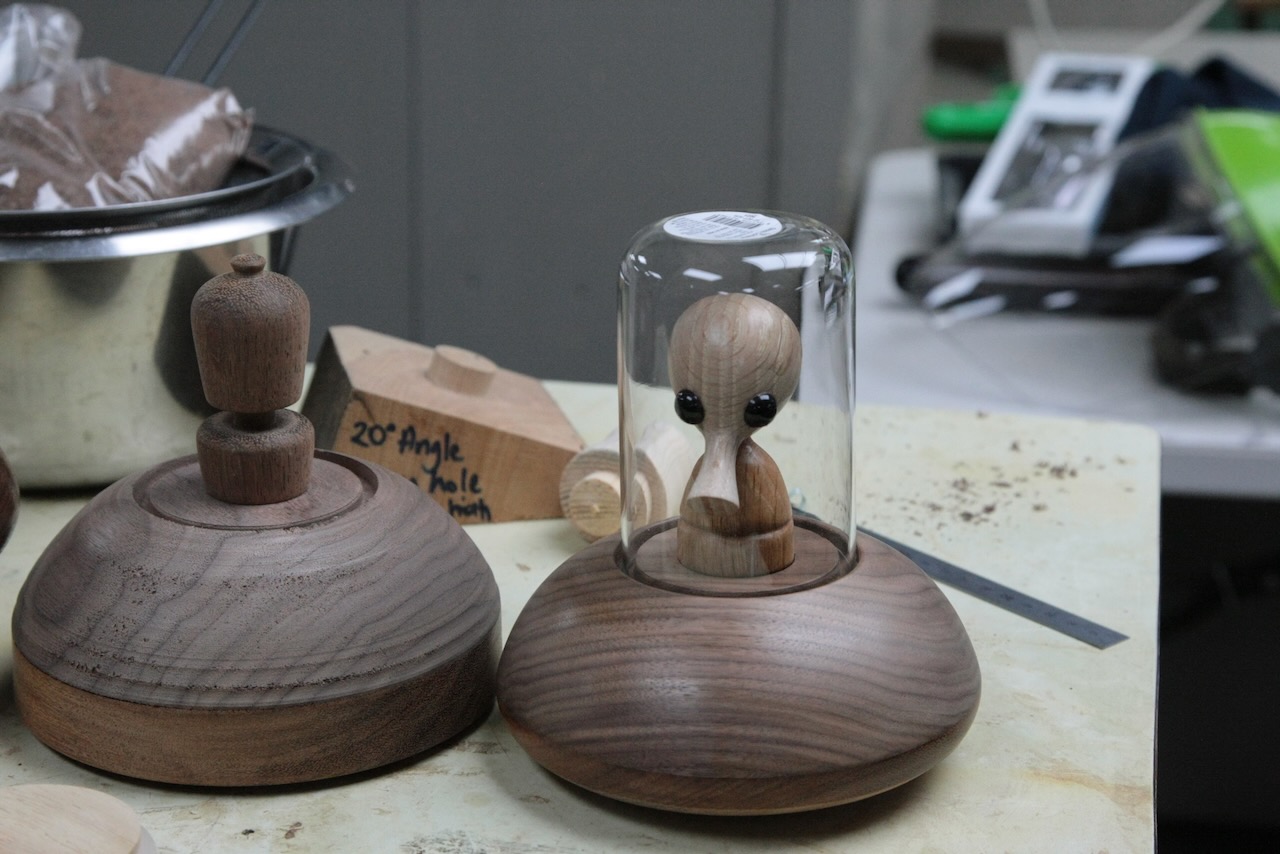
Nicole had some sawdust that she had sifted, by applying PVA to this piece, she could coat it with sawdust, and draw some eyes. This piece goes into the top hole of the main part (with legs), a small glass jar (purchased from Kmart) is inserted into the top groove and voila, we see a flying saucer!
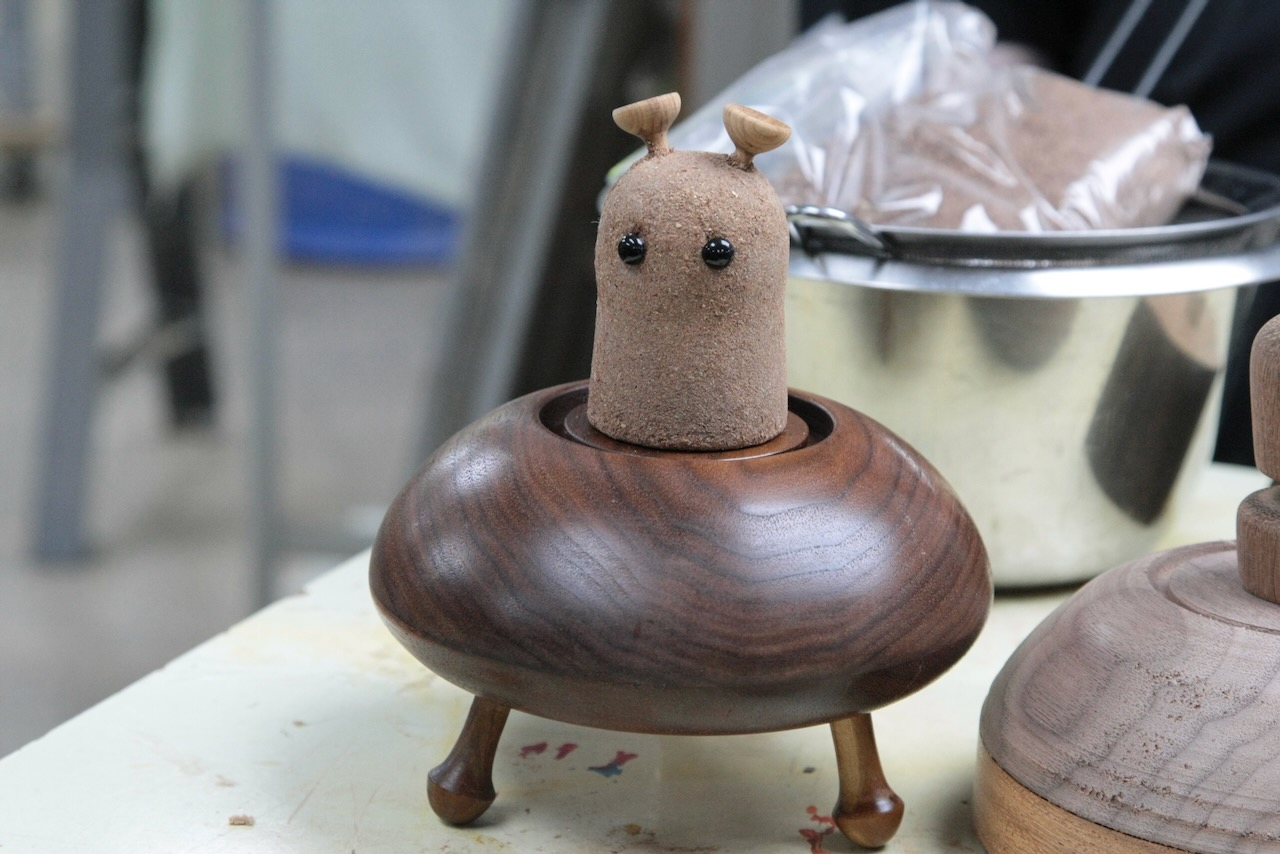
Nicole also had some variations of the alien she had made earlier.