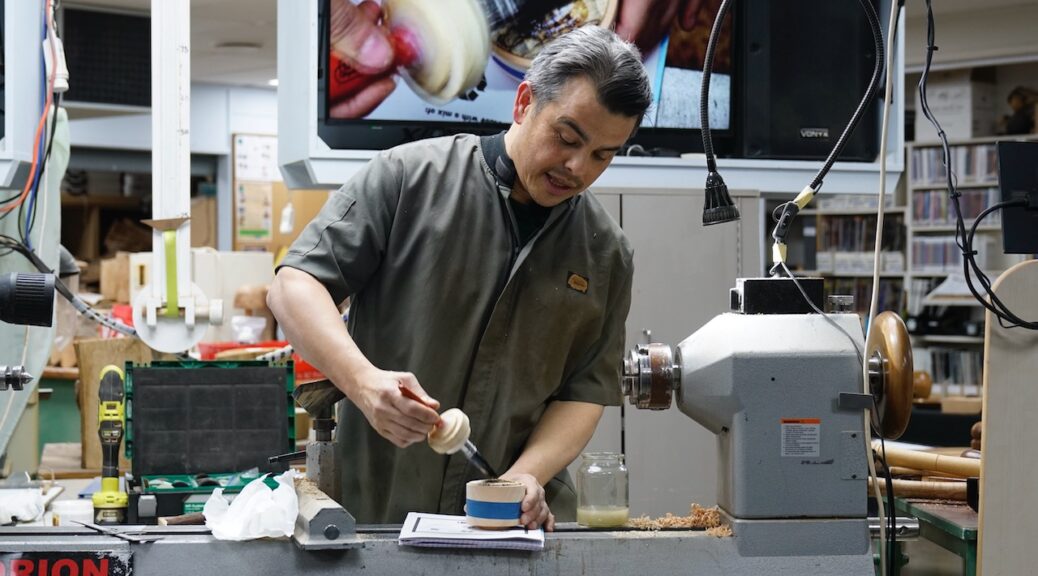
Club demo: 28 May 2025
Report by: Kevin McFall
Jonathans demo of doing inlays into the lids of lidded boxes was creative and practical.
The Box
Jonathan started with a 90×90 block of Macrocarpa. This had the centre of each end marked and was placed between centres on the lathe and rounded off.
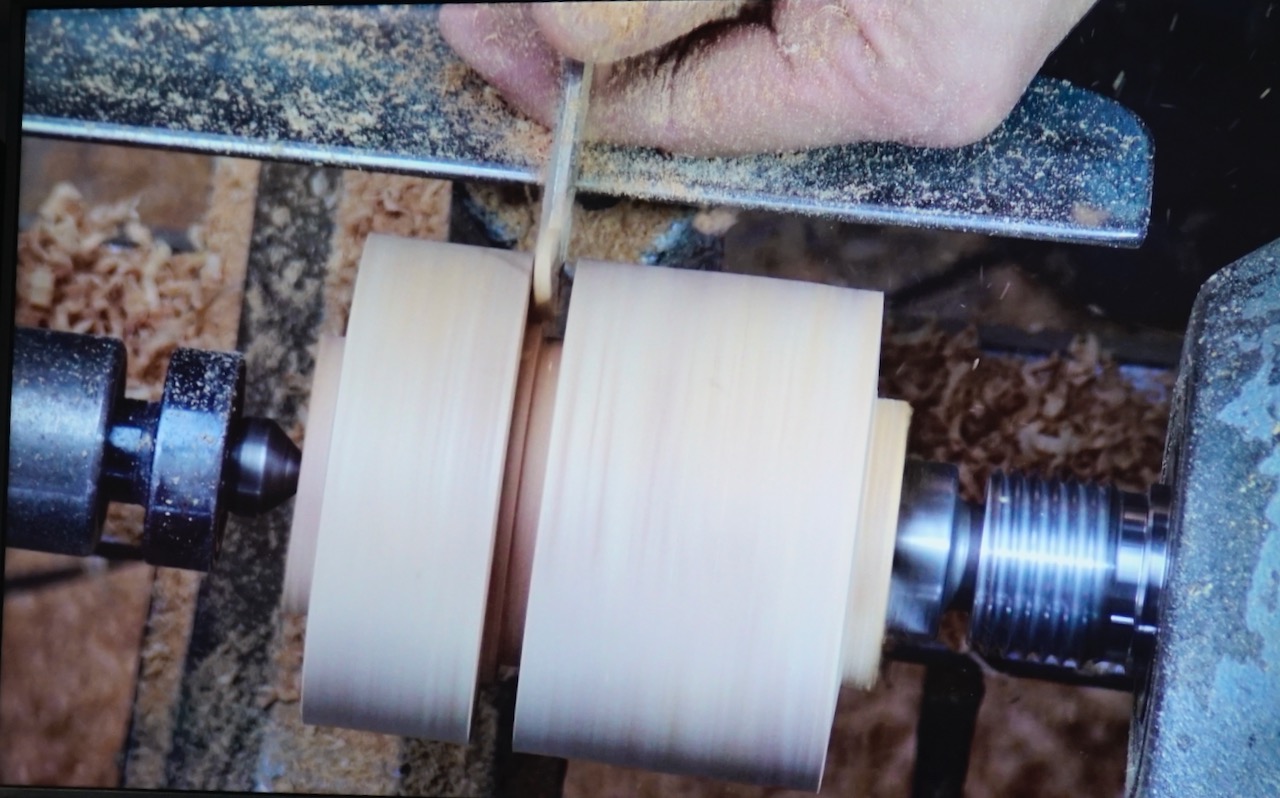
The rounded blank was then marked up where the tenons for the lid and base would be and where it would be paired off to separate the lid and base (Note the lid needs to be extra thick so was made about 12mm). A parting tool was then used to make the spigots at both ends and the lid and base of the box were then separated using the parting tool where he had previously marked it.
Jonathan then brought out a pre-turned box base, mounted the lid in a chuck and turned this to have a tight fit on the box, but ensuring the lid was about 10mm thick at this stage.
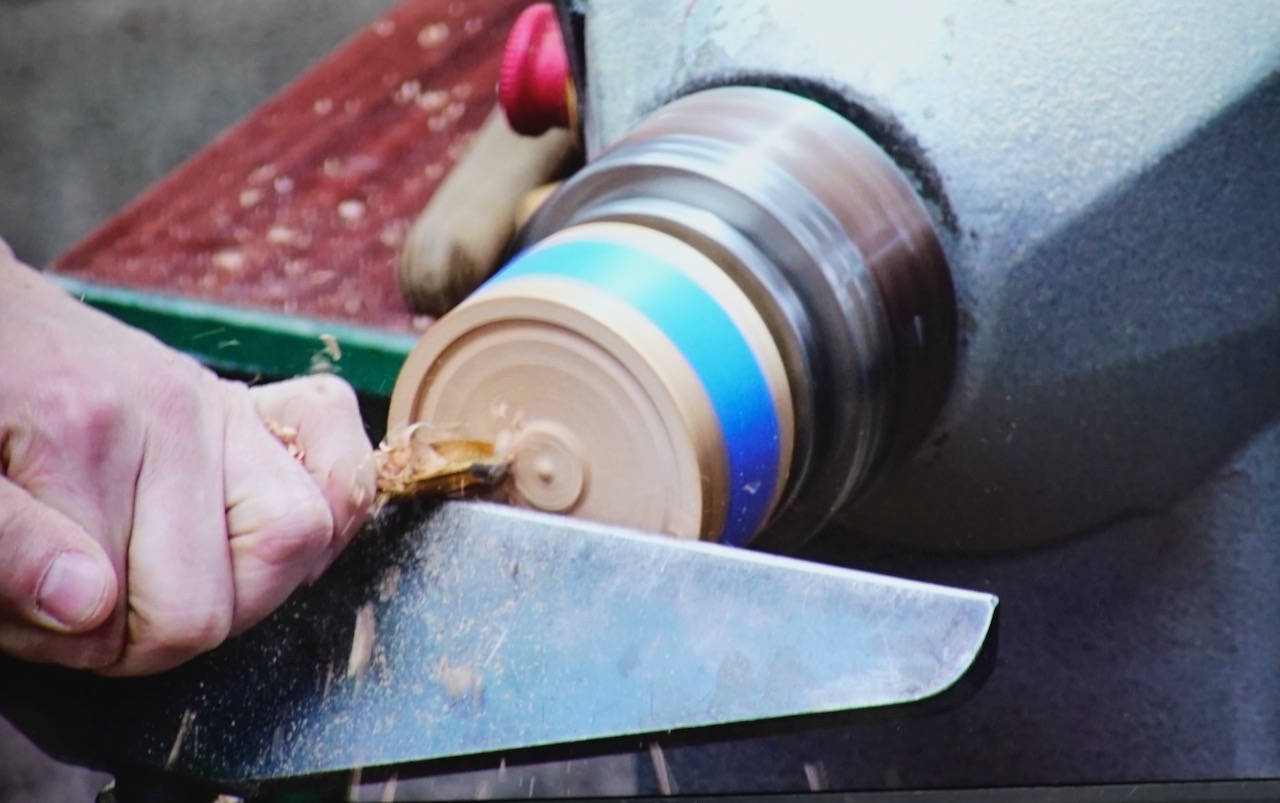
The Box was mounted in the chuck and the lid fitted on and taped into place for added security. He then turned off the tenon from the top of the lid and cut the rebate for the inlay. This rebate left a 5mm rim and was about 5mm deep.
The Inlay
The inlay was glued to another piece of wood that was to be a spigot for the inlay. This had been pre-turned to size. Once the glue had set the inlay was placed into the chuck.
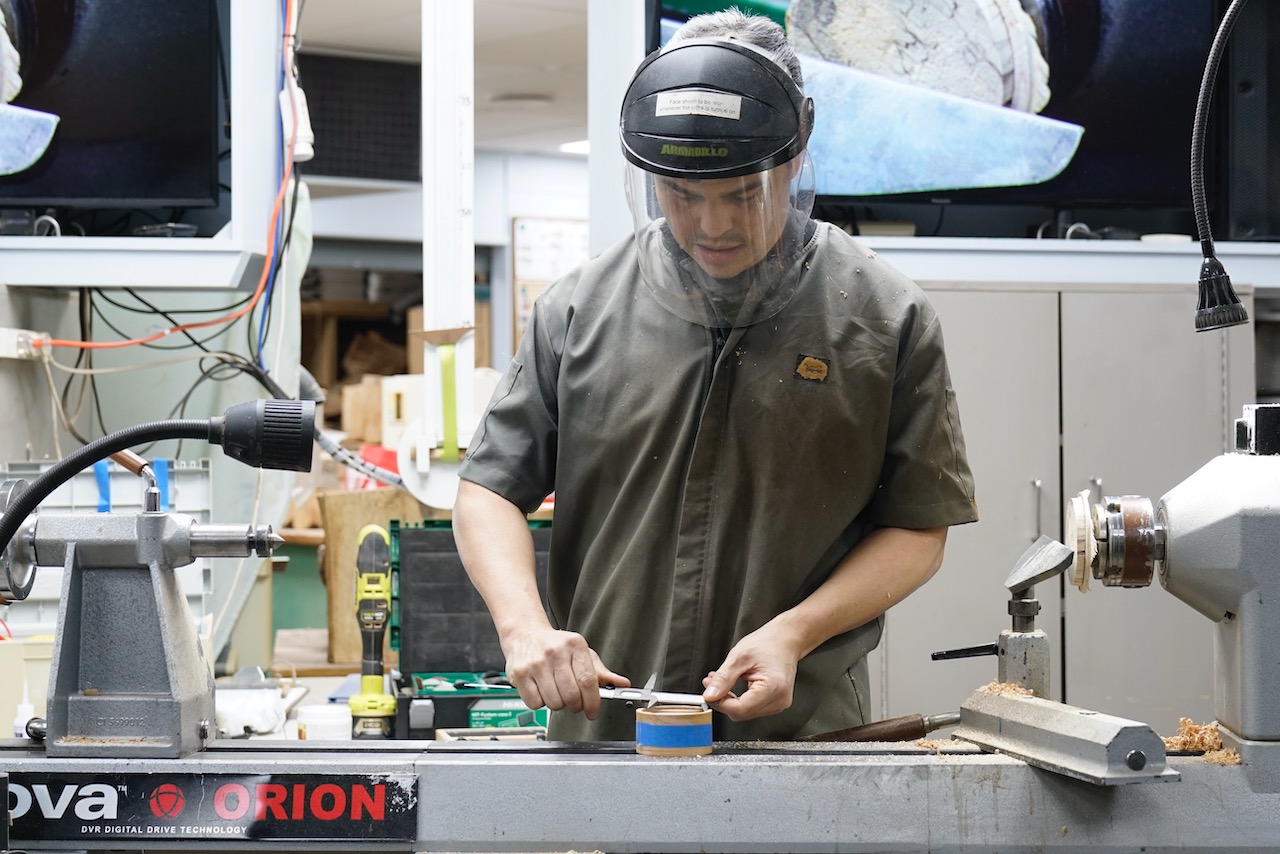
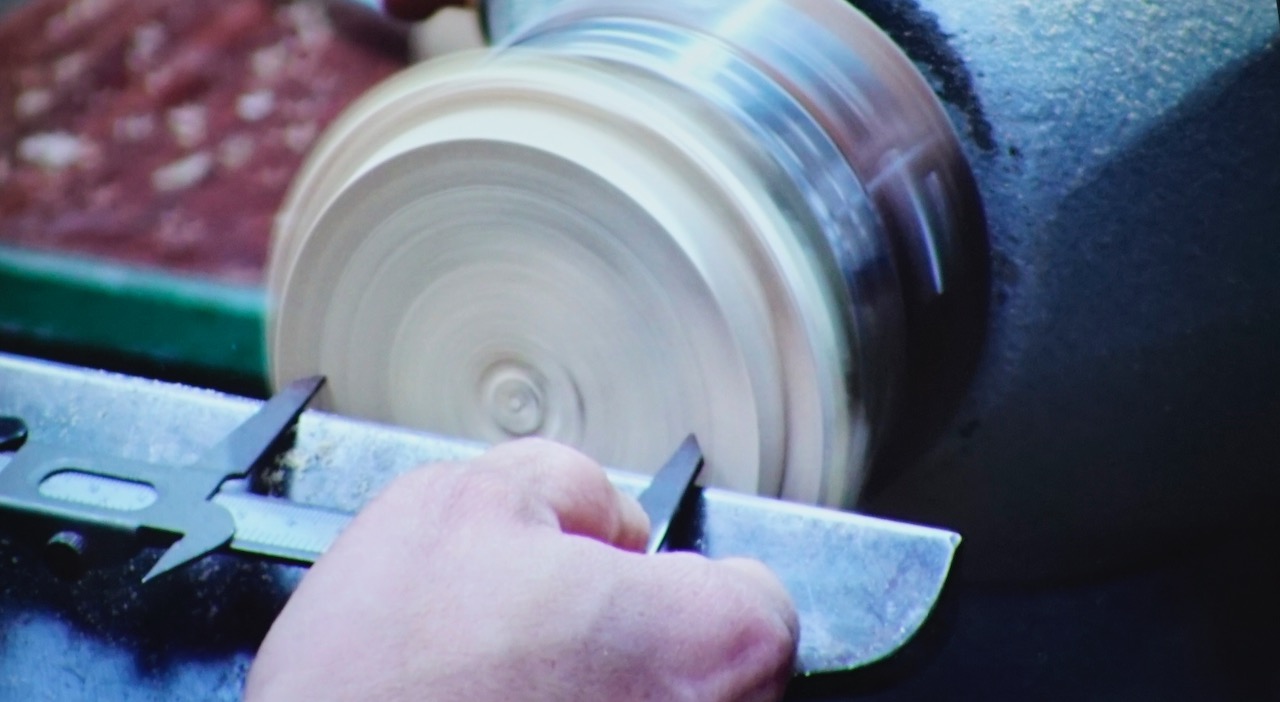
The inlay was then turned to size checking regularly with the rebate in the lid. You need to make sure the chisel is very sharp so that if the inlay wood is ply or spalted, it will not tear out. Taper the inlay slightly to get a tight fit.
The inlay was then glued into place using Tightbond (or another similar glue can be used). Once set the lid was put back onto the box and taped for safety and the waste wood (the spigot for turning the inlay) was turned off.
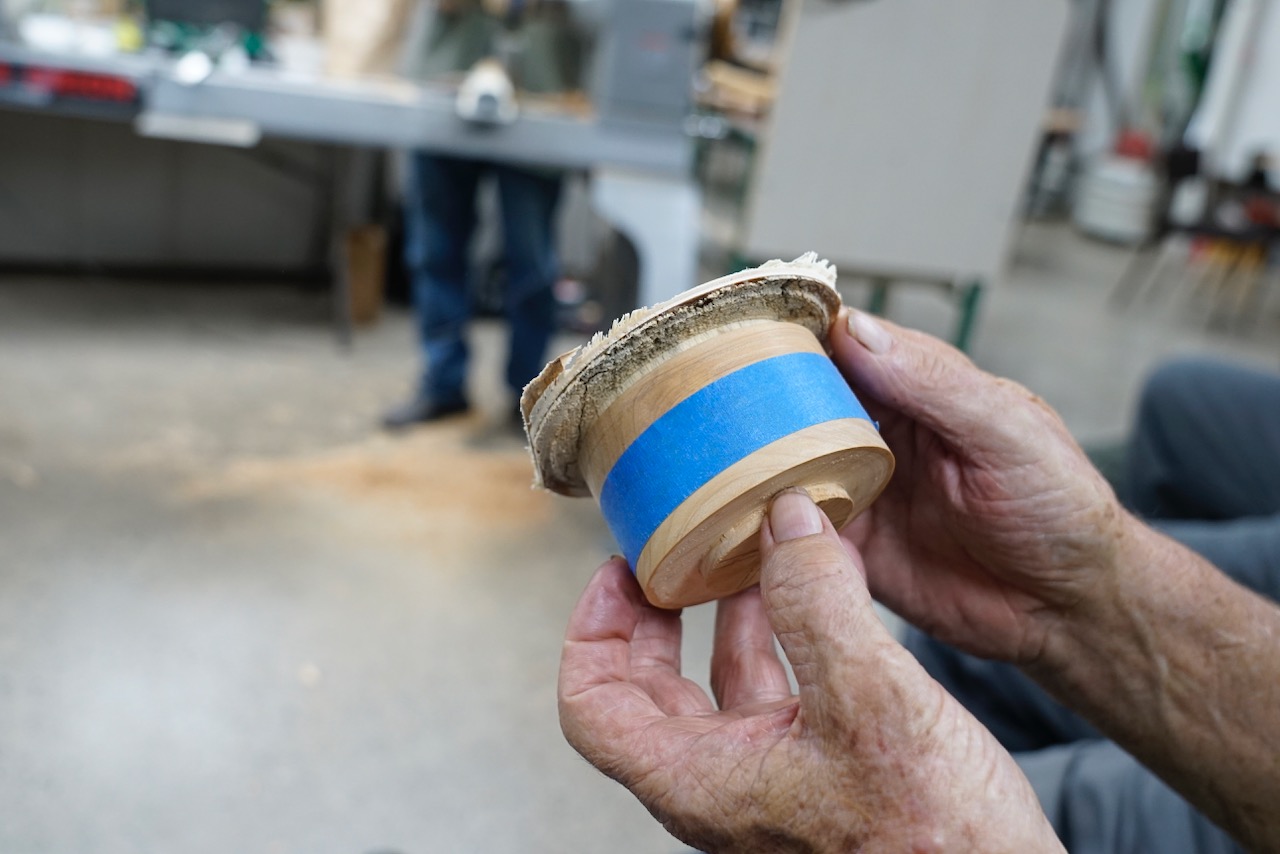
The inlay was trimmed up to flat, in this case as Jonathan was using spalted wood superglue was dripped into it first to stabilise the wood, but sanding sealer can also be used.
Jonathan also showed a few other inlay lids he has completed. Some of these were done with soft grain woods (such as Norfolk Pine) where some of the grain is burned away first and brushed or sanded out the burnt soft wood. These can then be coloured or finished with wax or oils depending on the look desired.
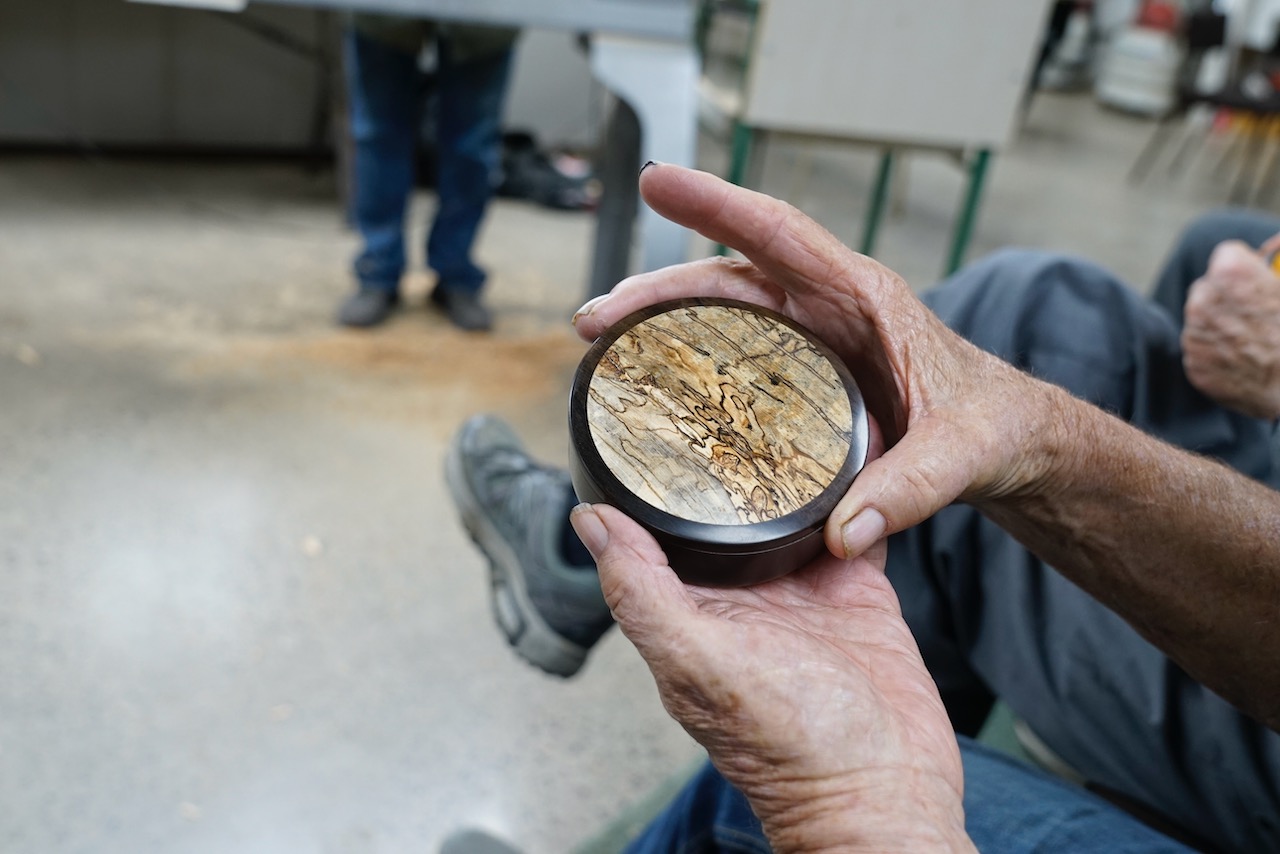
Jonathan did an awesome demo and really showed great ways to make a box look special and have some additional artistic flare.