Club Meeting: 11 November 2026
Report by: Bill Alden
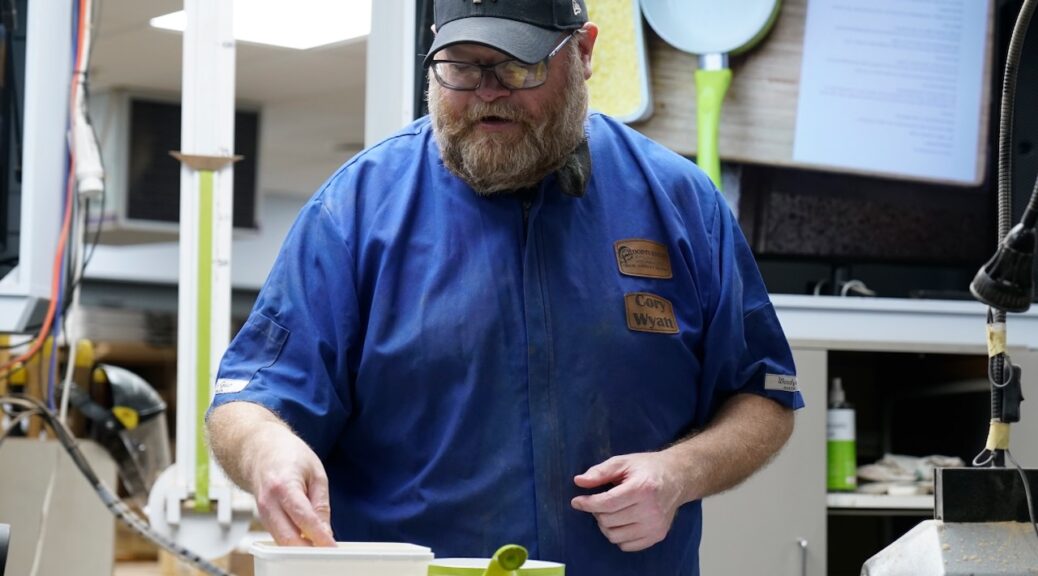
Cory opened with the confession that he stole most of the recipes included here from other members.
Overview
Cory showed how to make a range of woodturning finishes from scratch, using inexpensive, food-grade ingredients. Six preparations were covered: a basic beeswax finish, an abrasive wax (“Triple E”), beeswax fire starters, a homemade Danish oil, charcoal, and an ebonising solution. Ratios are given by weight unless stated.
Background
- Cory has a chemistry background and chose food-grade mineral oil purchased from a company called Pure Nature. and beeswax because they are sold for human use and he has had no recorded allergy issues with them.
- Oils go rancid at different rates. Canola, soybean and extra virgin olive oil can go rancid in under a year. Rice bran, avocado, coconut and grape seed oils last roughly 2-3 years. Mineral oil lasts roughly 3-5 years.
- Boiled linseed oil is vacuum-boiled so the volatile components are removed, which is why it cures more reliably than raw linseed.
- Tung oil has caveats (see Tips). Check what you are actually buying, as some “tung oil” products are blends.
Oil shelf-life figures are Cory’s rough guide not tested values.
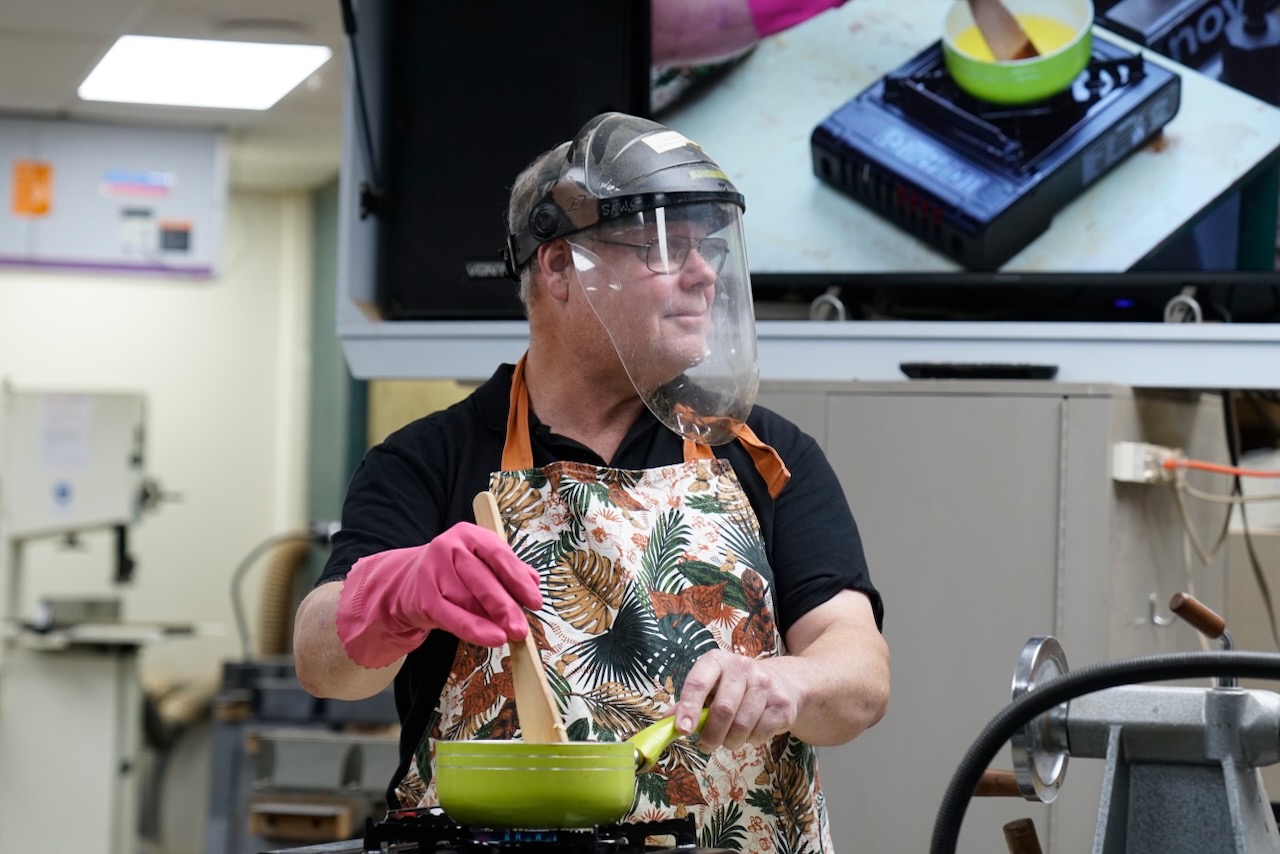
Cory then called upon Jon Pearse to act as his “stirrer” among much banter.
Recipe 1: Basic Beeswax Finish
Ratio 4 parts oil to 1 part beeswax. The demo batch used about 212 g mineral oil with about 53 g beeswax.
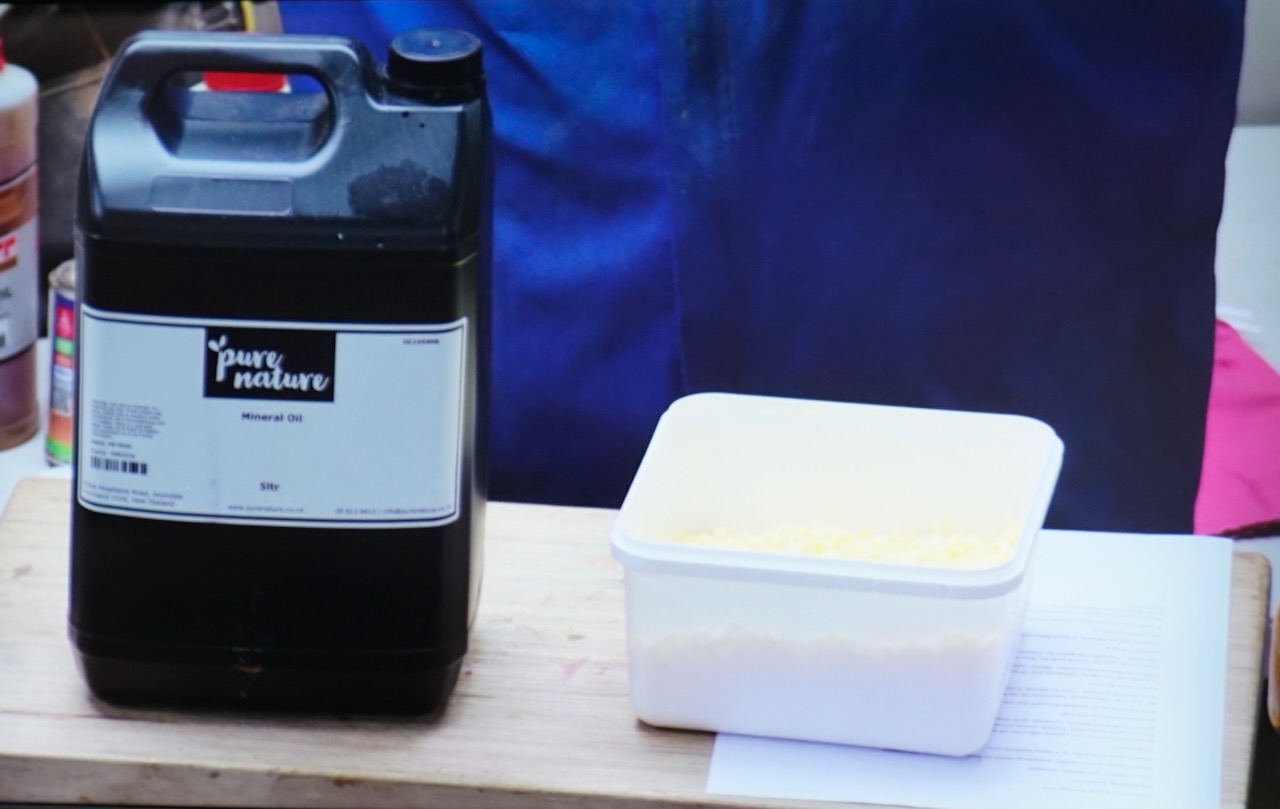
| Ingredient / item | Amount / note |
| Food-grade mineral oil | 4 parts (about 212 g in demo) |
| Beeswax | 1 part (about 53 g in demo) |
| Container | Glass or metal only, never plastic |
| Heat source | Low heat, double boiler or crock pot |
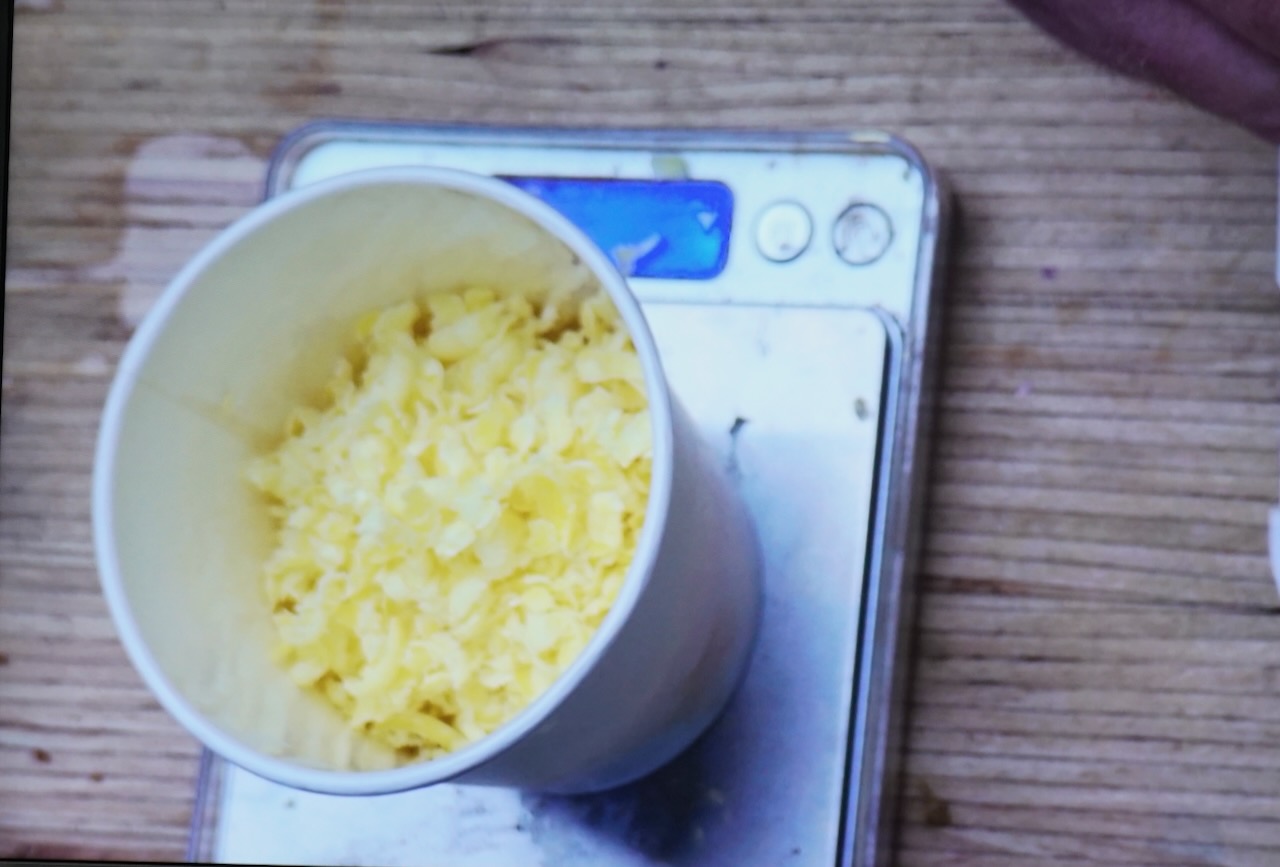
- Weigh. Weigh the oil and beeswax into a paper cup and put into a metal container.
- Melt. Heat gently in a double boiler or crock pot, or on very low heat. Beeswax flash point is high (about 450 °C), but keep the heat low regardless.
- Stir. Stir until the wax has fully dissolved into the oil.
- Set and use. Pour into a container preferably using a Pyrex jug for easy pouring and leave to set in the fridge. Apply with a cloth and buff.
Variations: about 5% wax makes a cutting-board oil, about 10% a conditioner, and about 20% a paste.
Recipe 2: Triple E Abrasive Wax
The basic 4:1 beeswax finish with 1 part diatomaceous earth added as a mild abrasive. It polishes as it is applied, and the mixture turns brown.
- 4 parts mineral oil, 1 part beeswax or carnauba wax, 1 part diatomaceous earth.
- If using tung or linseed oil instead of mineral oil, use 6:1 oil to wax.
- Diatomaceous earth is available from Mitre 10 or Pure Nature.
- Base. Make the basic beeswax finish as in Recipe 1.
- Add abrasive. Stir in the diatomaceous earth while the mixture is still liquid and mix thoroughly.
- Set. Pour into a container and let set.
Recipe 3: Beeswax Fire Starters
| Ingredient / item | Amount / note |
| Mineral oil | 100 g |
| Beeswax | 100 g (1:1 with the oil) |
| Filler | Wood shavings packed into cardboard tubes |
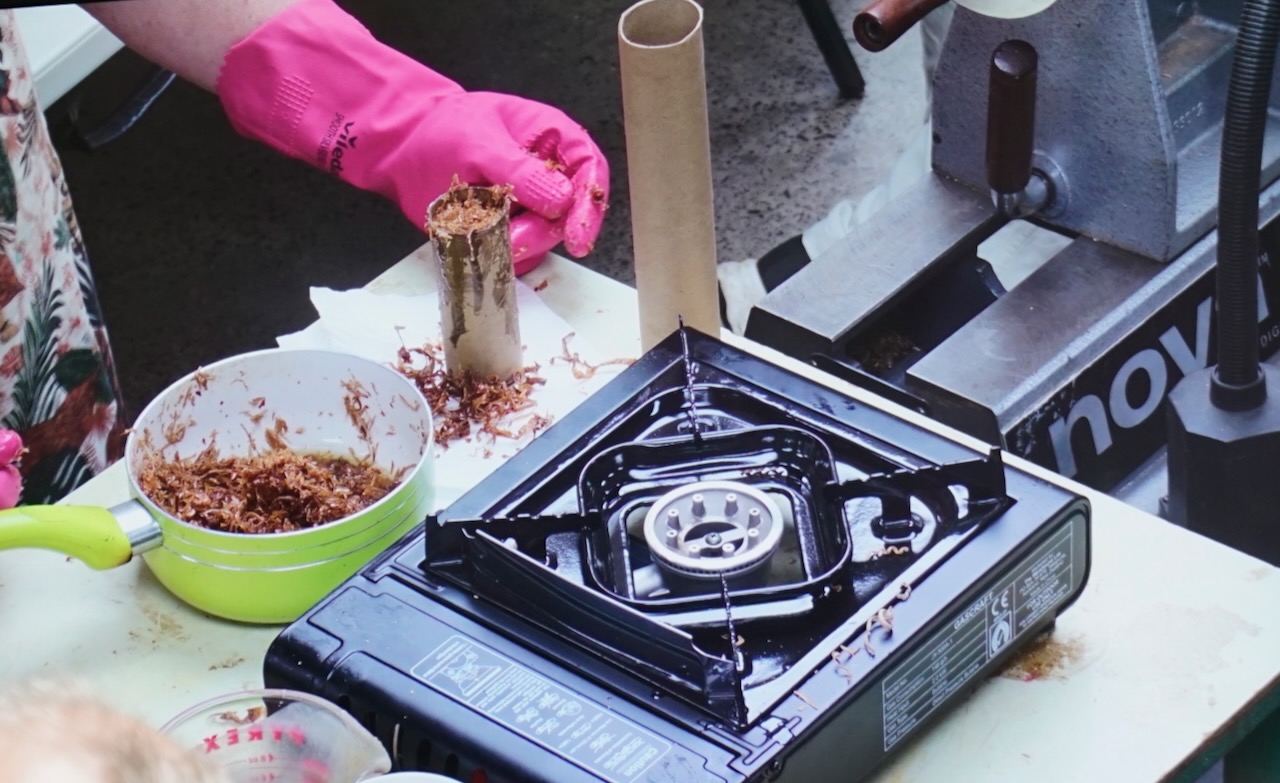
- Melt. Melt the oil and wax together at 1:1.
- Fill. Pack shavings into cardboard tubes and pour the wax mix over them.
- Cut. Allow to set, then cut into “cookies”. Each burns for about 10 minutes.
Recipe 4: Homemade Danish Oil
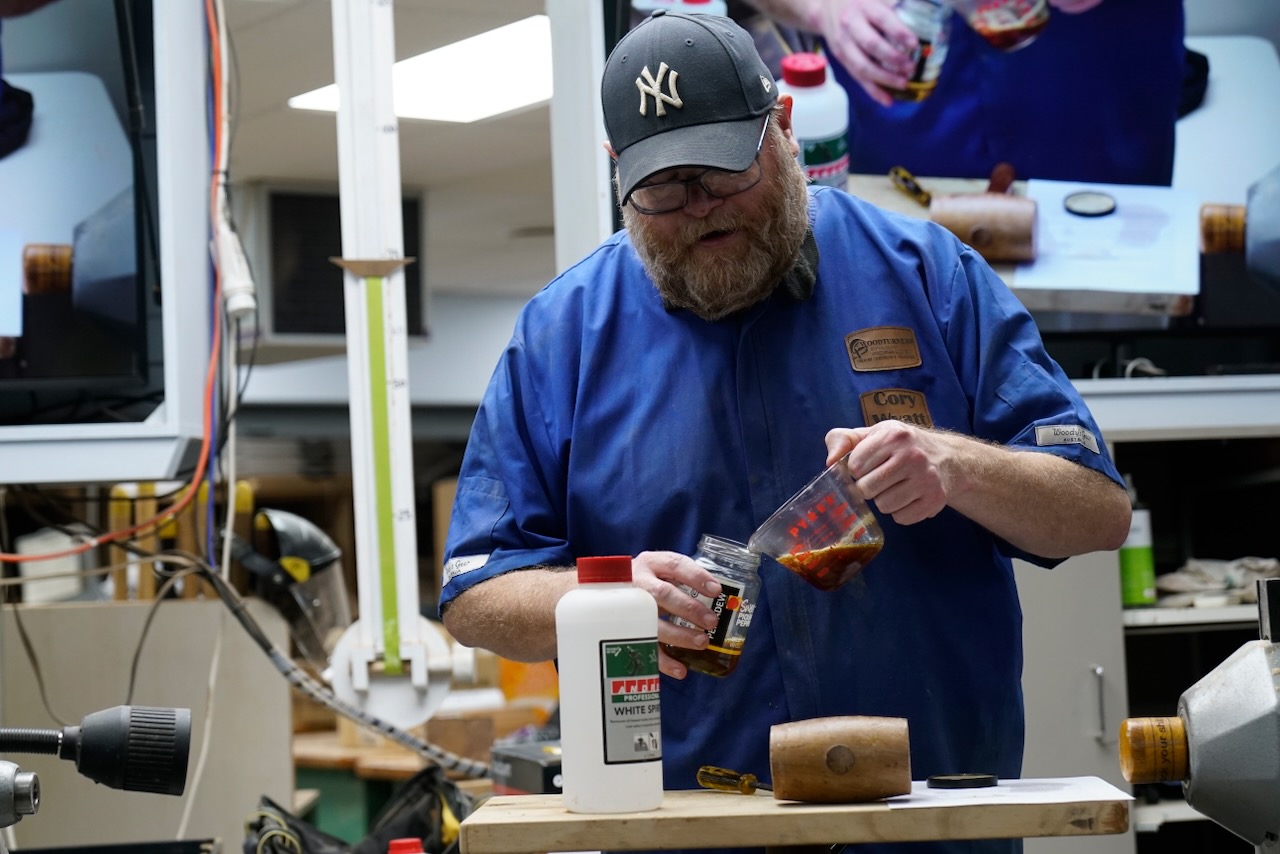
No heating is needed. Mix equal parts of three ingredients. The ratio of these parts is by volume.
| Ingredient | Ratio |
| Boiled linseed oil or tung oil | 1 part |
| Polyurethane varnish | 1 part |
| White spirits | 1 part |
- Mix. Combine the three ingredients in a sealed container and shake. Release the pressure after shaking.
- Store. Store away from direct sun.
- Apply. Apply with a rag, wipe off the excess, and allow to cure.
- Do not substitute acetone, turps or kerosene for the white spirits.
- Food-safe once fully cured, but Cory would not use it on Montessori-style toys.
- It can be thinned and sprayed.
- Cost: about $180 for 1.5 L to make, against about $60 per 300 ml commercial, so the saving is mainly in volume.
- Safety: oily rags can self-combust under the right conditions, so keep them separate from other rags.
Check: the cost figures were quoted from memory in the recording. Check your brand of Danish oil, as formulations vary.
Recipe 5: Charcoal
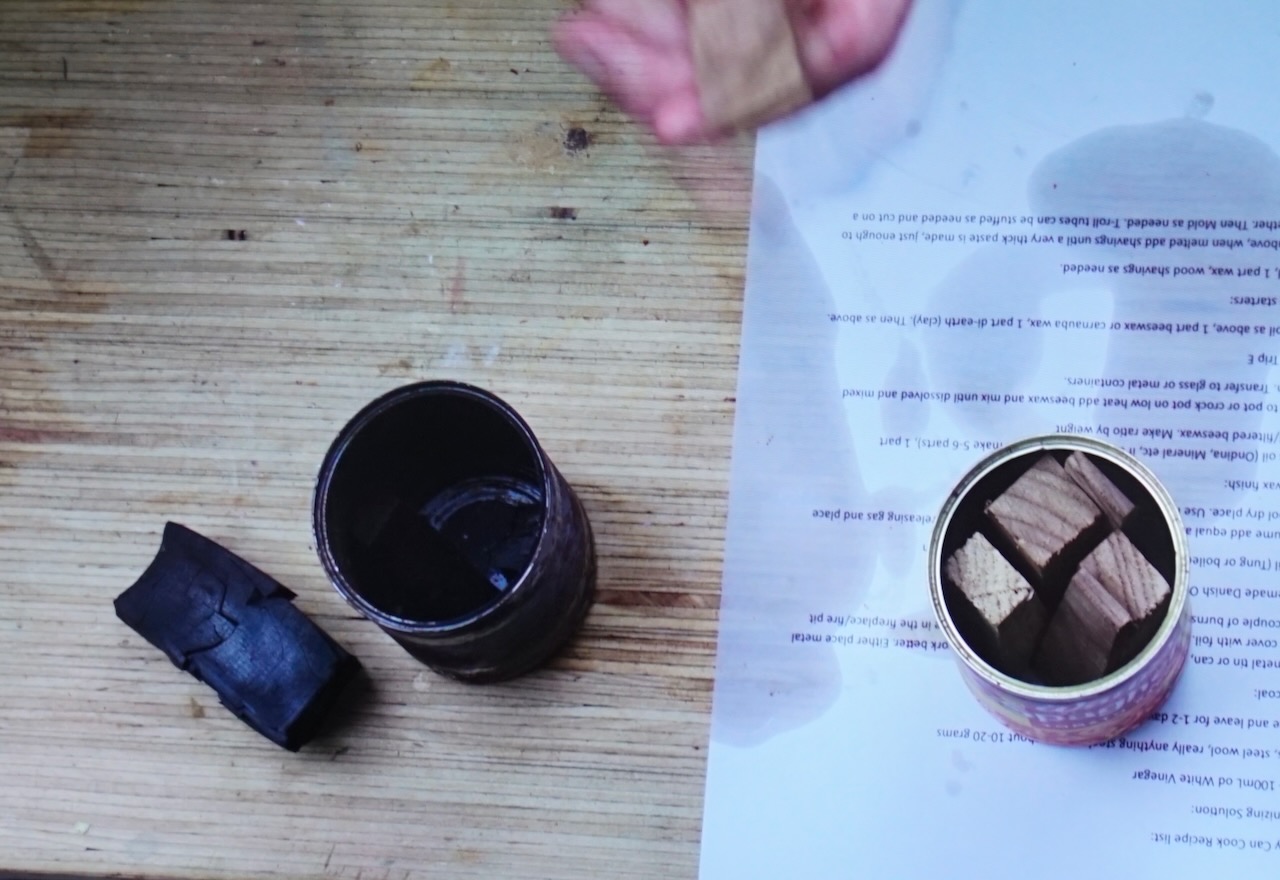
- Pack. Put scrap wood in a metal can (a big old coffee tin works well), cover the top with foil, and punch a couple of holes in the foil.
- Heat. Place the can in a fire pit, fireplace, kettle barbecue or brazier. The heat drives off the gases, oils and volatiles as flames from the holes; the wood itself does not ignite, leaving pure carbon.
- Cool. Once the flames at the holes die down, let the can cool before opening.
It works best with hardwoods and less well with small pieces of softer timber. Uses mentioned: art charcoal, and as an ingredient for glues and other mixes.
Recipe 6: Ebonising Solution (Iron Acetate)
This is a colour, not a finish. It reacts with tannins in the timber to turn it black. Apply a finish over it afterwards.
- Prepare. Burn the wax coating off steel wool first.
- Soak. Put the steel wool in 50-100 ml of white vinegar.
- Wait. Leave for 24-48 hours before use. It keeps for about ten years.
- Apply. Apply thickly to the timber, leave overnight, then buff off.
- Low-tannin timbers (the demo used a low-tannin hardwood) change colour only slightly. Cory added tannin by soaking the timber with strong brown tea first. Once the steel wool has fully dissolved the solution is ready; discard it if the steel wool crashes back out.
Tips and Safety Notes
- Hot or liquid oil and wax penetrate deeper into the timber.
- On chopping boards, use an oil undercoat then beeswax on top.
- Seal log ends with wax to slow splitting.
- Tung oil is cheaper in bulk.
- Carnauba wax can be substituted for beeswax, but check the ratio.
- Ammonia fuming on oak was mentioned as an alternative way to darken timber. It is toxic, so take great care.
- Liming wax was mentioned for highlighting open grain.
- Never melt wax in plastic containers.
Discussion and Questions
Questions from members (substitutions, food safety, spraying and the ammonia question) were answered during the demo; the useful points are folded into the sections above.
Addendum
A Recipe for a finish that the Northland woodworkers Guild call Kauream is as follows
1 Part Beeswax to 4 parts vegetable oil with 1 level tablespoon of Aluminium Oxide, prepared in the same way as described above. This is obviously very similar to the EEE recipe.