Club Meeting: 24 August 2026
Report by: Thinus Oberholzer
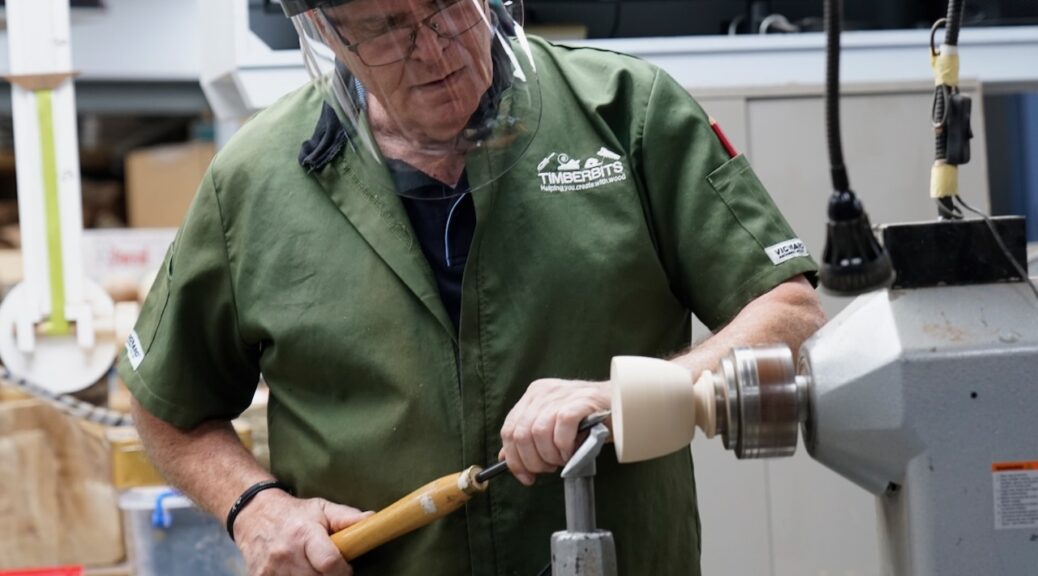
Our demonstrator for the evening was Tom Logan from Franklin, who opened with the comment that he felt a bit like “an Eskimo showing people how to build an igloo.” It was a fitting introduction from someone who has spent a lifetime learning, creating, and solving problems across a remarkable range of trades and professions.
Before retiring in 2019, Tom worked for 22 years as a telecommunications technician and also spent time in timber and hardware sales, canvas and vinyl manufacturing, signwriting supplies, engraving equipment, electrical wholesaling, rest home maintenance, and farm gate manufacturing. Describing himself as a “Jack of all trades”, Tom’s wide-ranging skills were evident throughout the evening’s demonstration.
A Late Start to Woodturning
Tom’s woodturning journey began only seven years ago after visiting the Franklin Woodturners Club display at the Waiuku Steel & Wheels event. Encouraged by Gavin French and other club members, he turned his first project, a small end-grain lidded box. Interestingly, he still has that first piece today and encouraged newer turners to keep some of their early work as a reminder of how much their skills improve over time.
Like many turners, Tom initially learned by reproducing ideas he admired before gradually developing his own style. Drawing inspiration from woodturning, pottery, decorative arts, and online sources such as Pinterest, he has developed a distinctive range of fruit-inspired boxes, with apples and pears becoming a particular speciality.
The Apple Box Demonstration
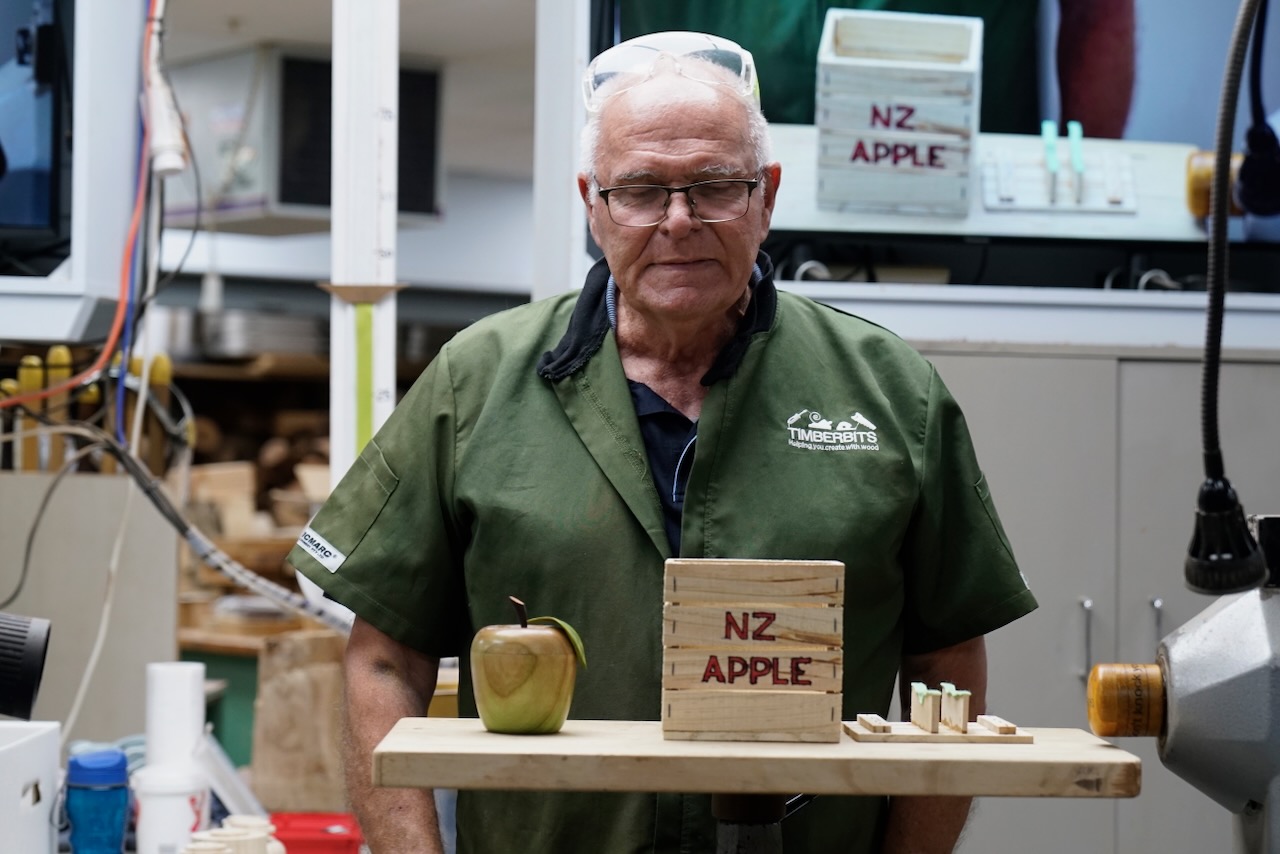
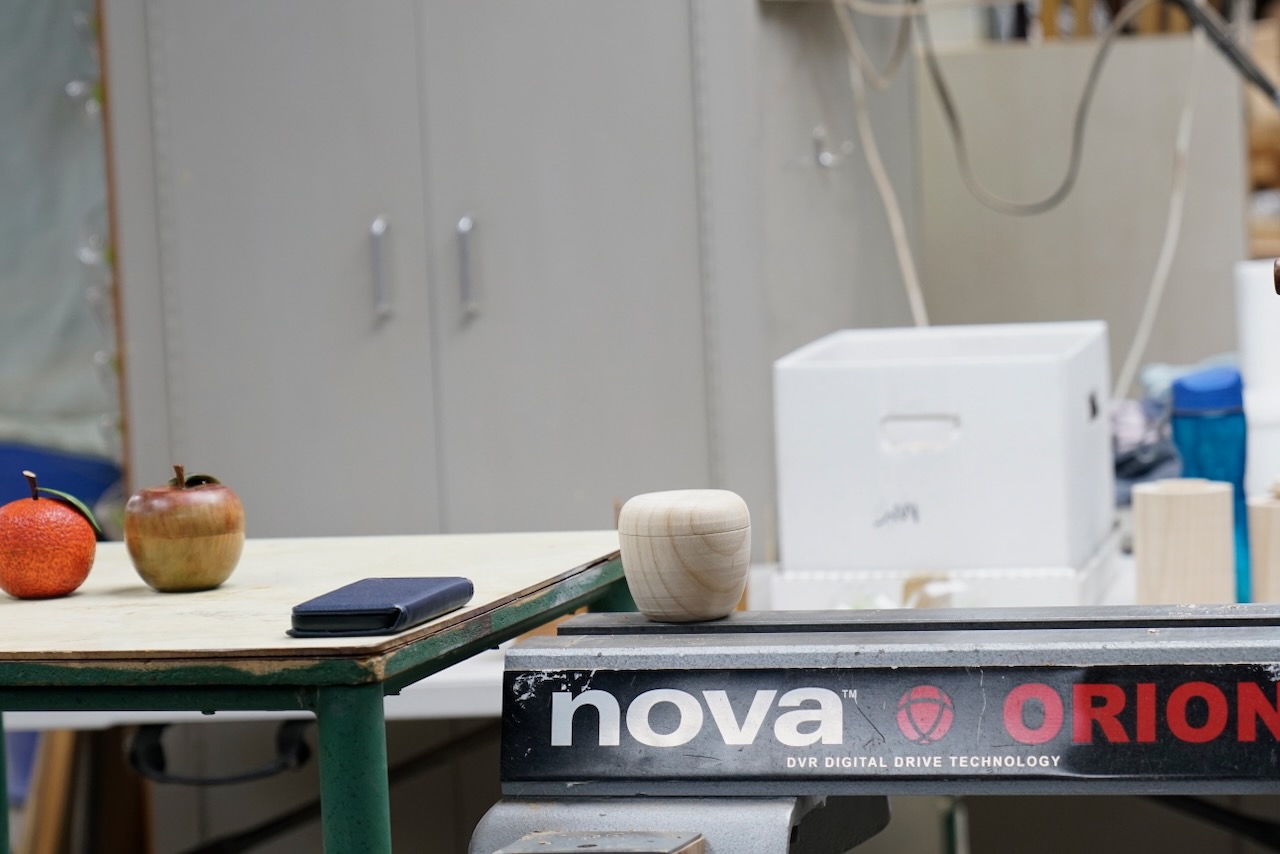
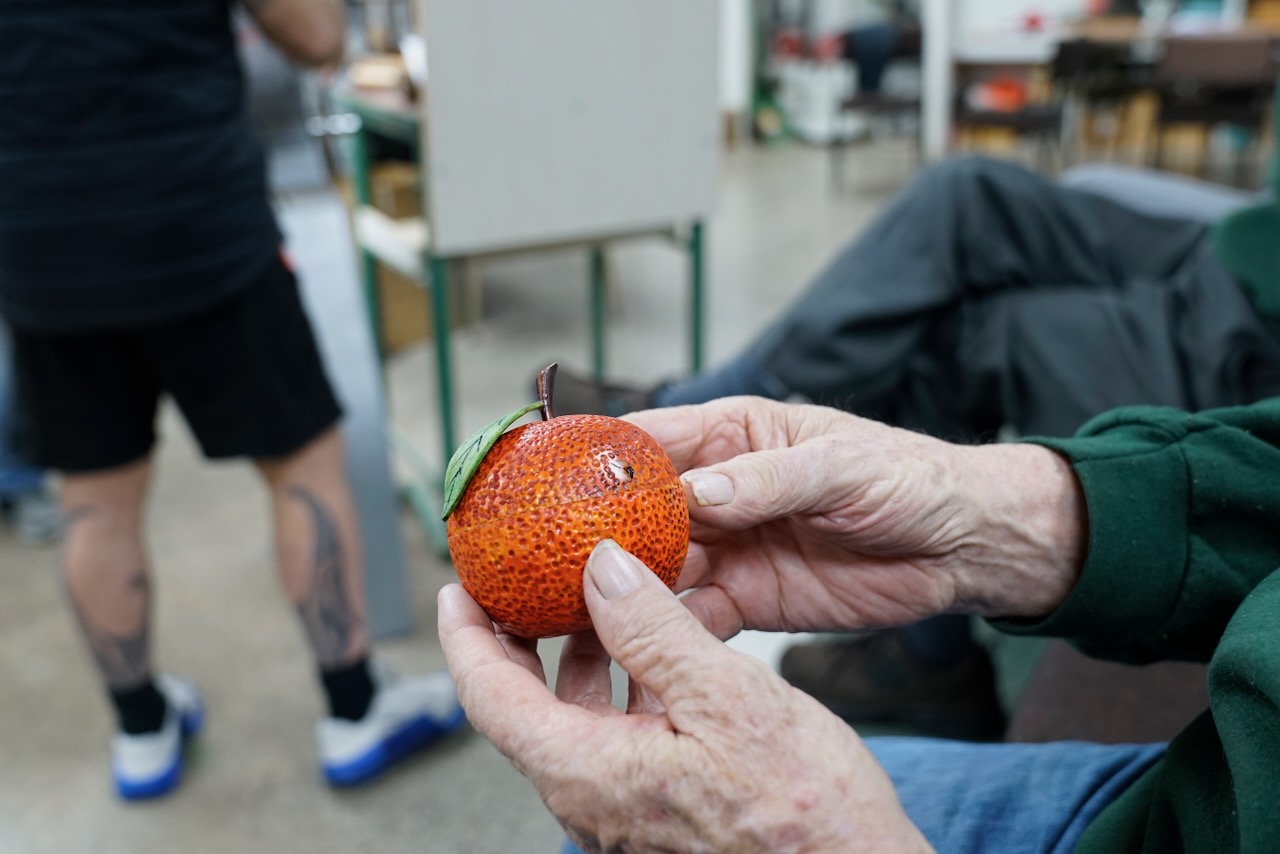
The evening focused on one of Tom’s popular Apple Lidded Boxes, a project that combines spindle turning, hollowing, decorative carving, colouring, and clever design details.
Starting with a square block mounted between centres, Tom turned the blank round and formed chucking tenons at each end before shaping the overall apple profile. Careful consideration was given to grain orientation to achieve the best visual effect in the finished piece.
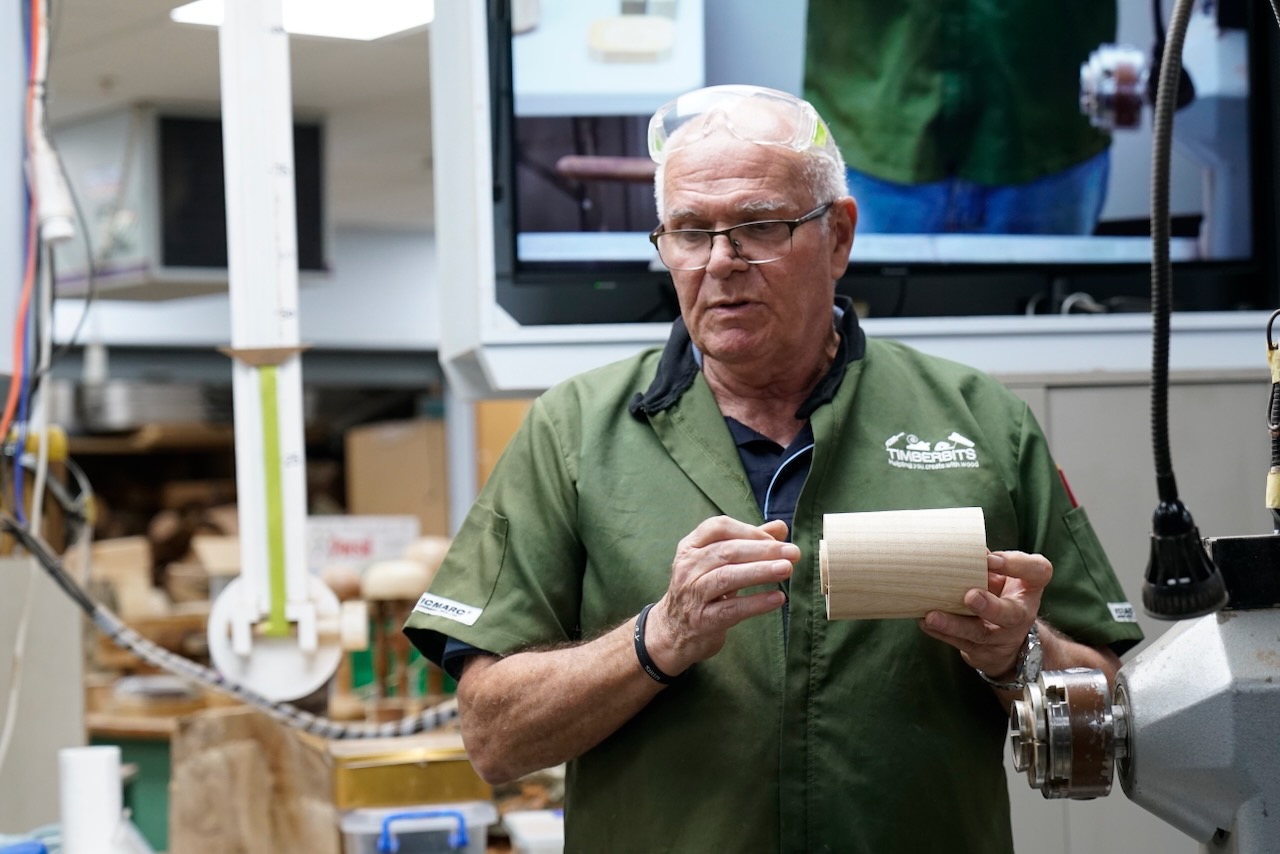
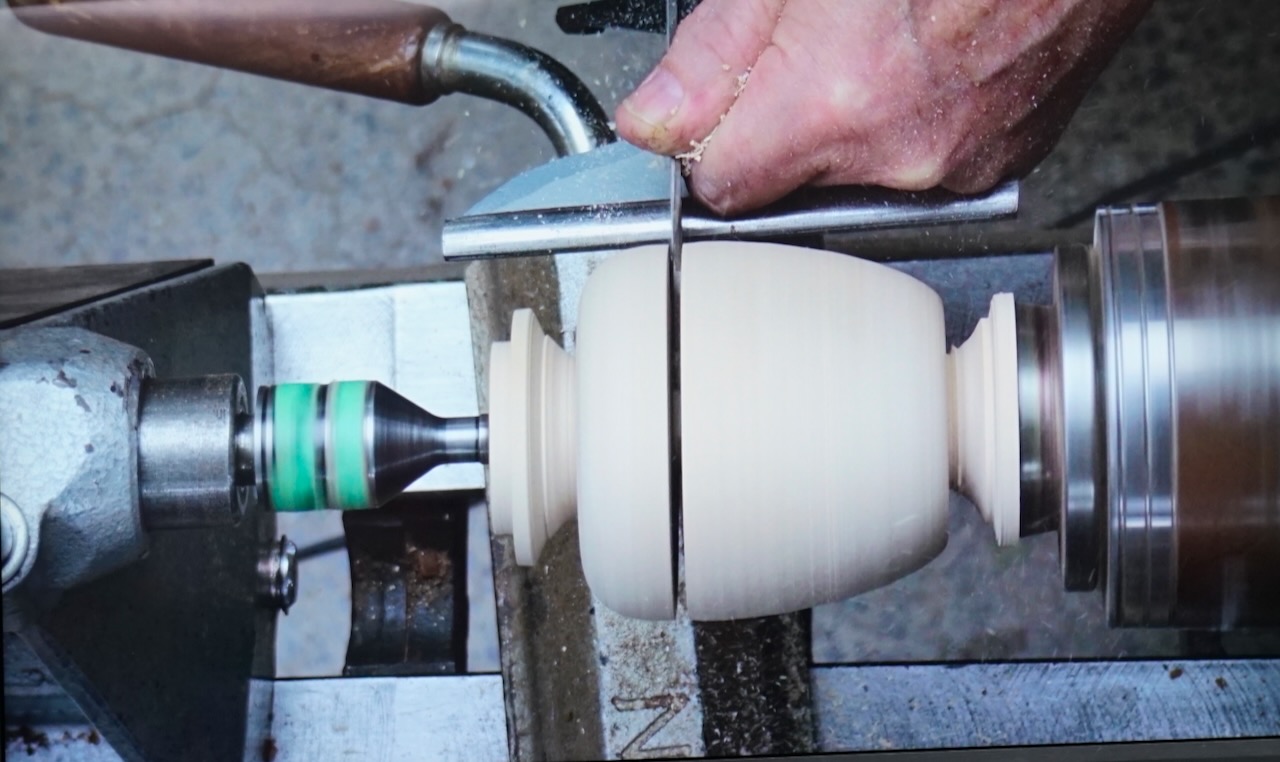
The lid was then parted off at the widest point of the apple to preserve the grain match and simplify the final shaping process. Both the lid and base were hollowed, maintaining an even wall thickness while leaving sufficient material for the decorative fittings that would be added later.
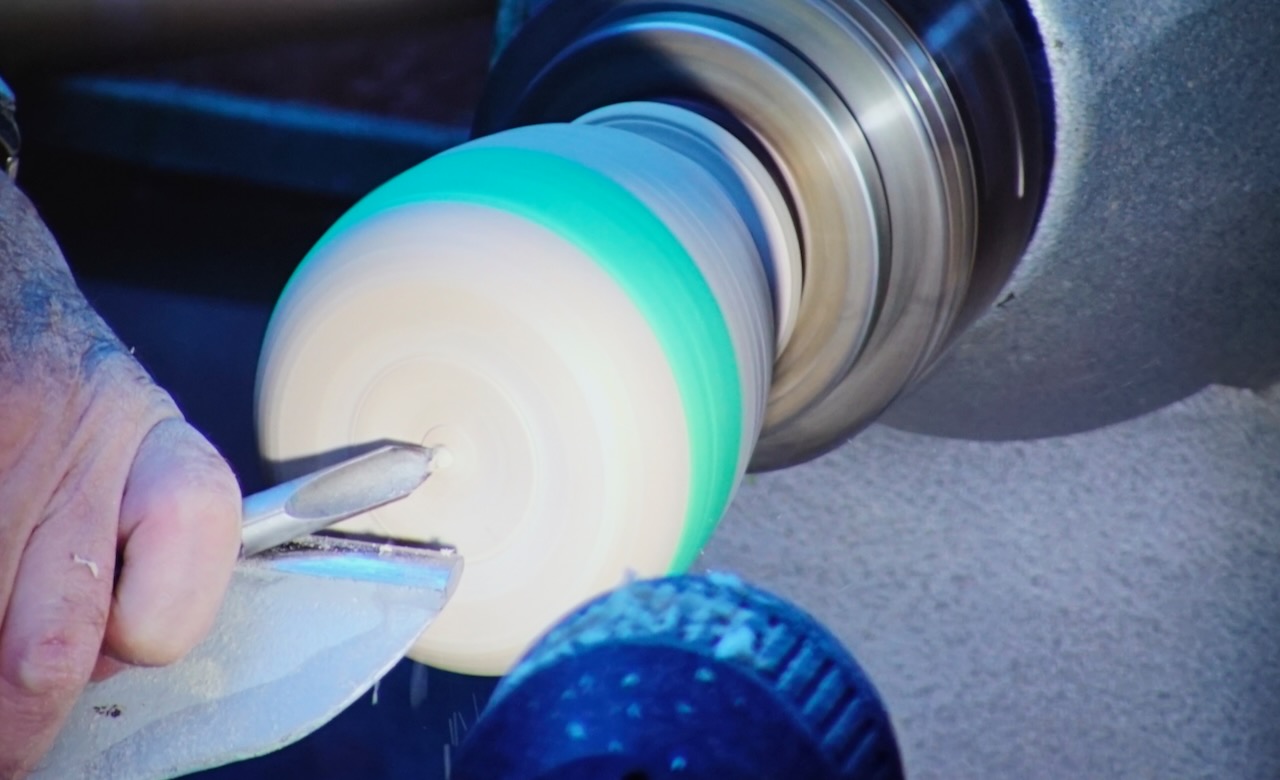
Once hollowing was complete, the lid and base were reassembled and carefully aligned to ensure the grain flowed seamlessly across the join. The exterior was then refined before drilling holes for the stalk and calyx. The remaining tenons were removed using jam chucks, followed by the final sanding and finishing of the box.
The Details Make the Difference
What elevates Tom’s apple boxes from a simple lidded container to an attractive display piece are the additional decorative elements.
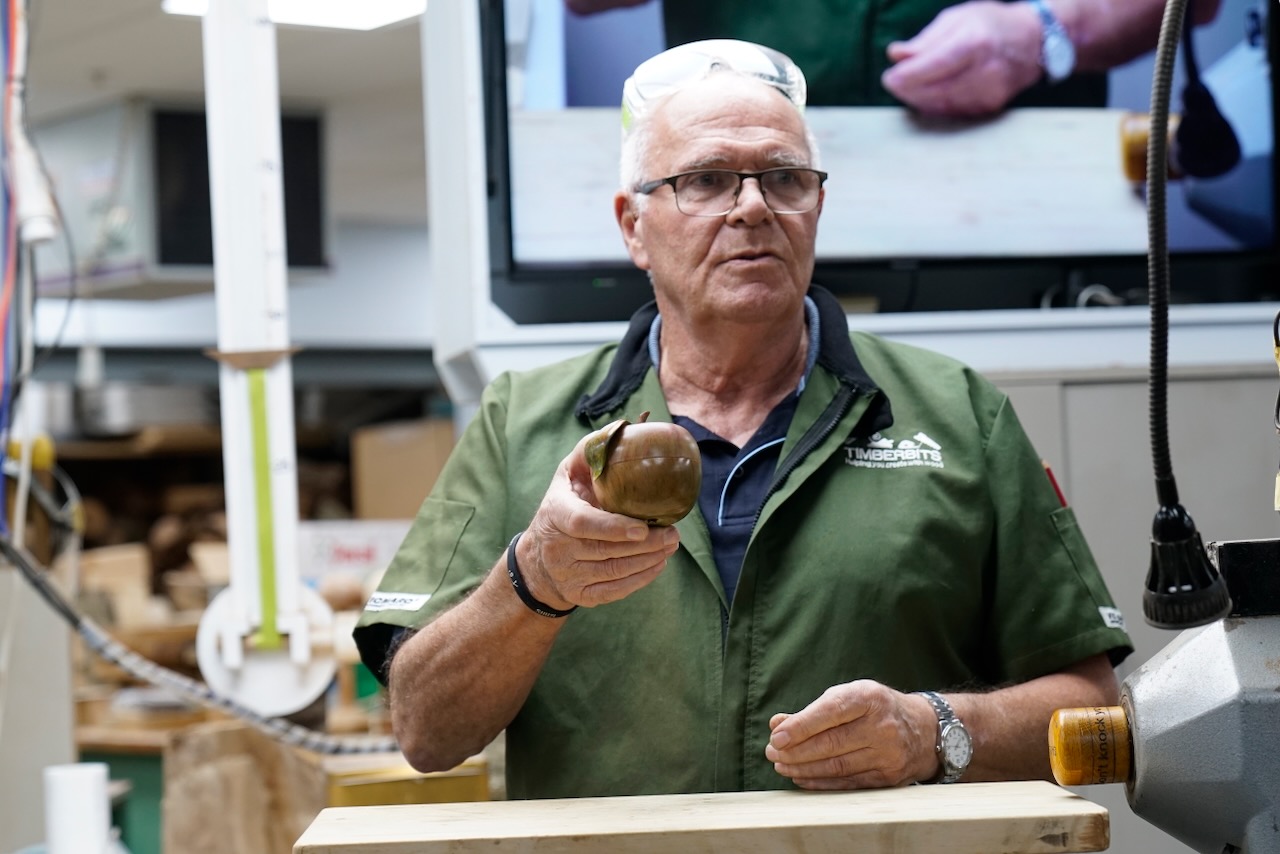
The calyx is turned separately from a darker timber and textured with pyrography to give it a natural appearance before being fitted into the base of the apple.
The peduncle, or stalk, is also turned separately. After turning, additional shaping and carving create the gentle curve found in a real apple stalk, adding an extra level of realism.
A decorative leaf is then cut, shaped, textured, and attached to the stalk area. Combined with the carefully shaped stalk and calyx, the leaf completes the illusion of a freshly picked piece of fruit.
Tom also discussed the use of dyes and colouring techniques to enhance the apple, stalk, and leaf. While the boxes look excellent in natural timber, subtle colour can further accentuate the fruit-like appearance and help draw the eye to the finished piece.
An Inspiring Evening
Tom’s demonstration showed how a relatively straightforward lidded box can be transformed into something unique through imagination, careful planning, and attention to detail. His practical approach, combined with his willingness to experiment and adapt ideas from many different sources, provided plenty of inspiration for members.
The finished apple boxes were greatly admired, and members departed with several new ideas for adding character and creativity to their own turning projects.