Club Meeting: 3rd December 2025
Report by Denise Donovan
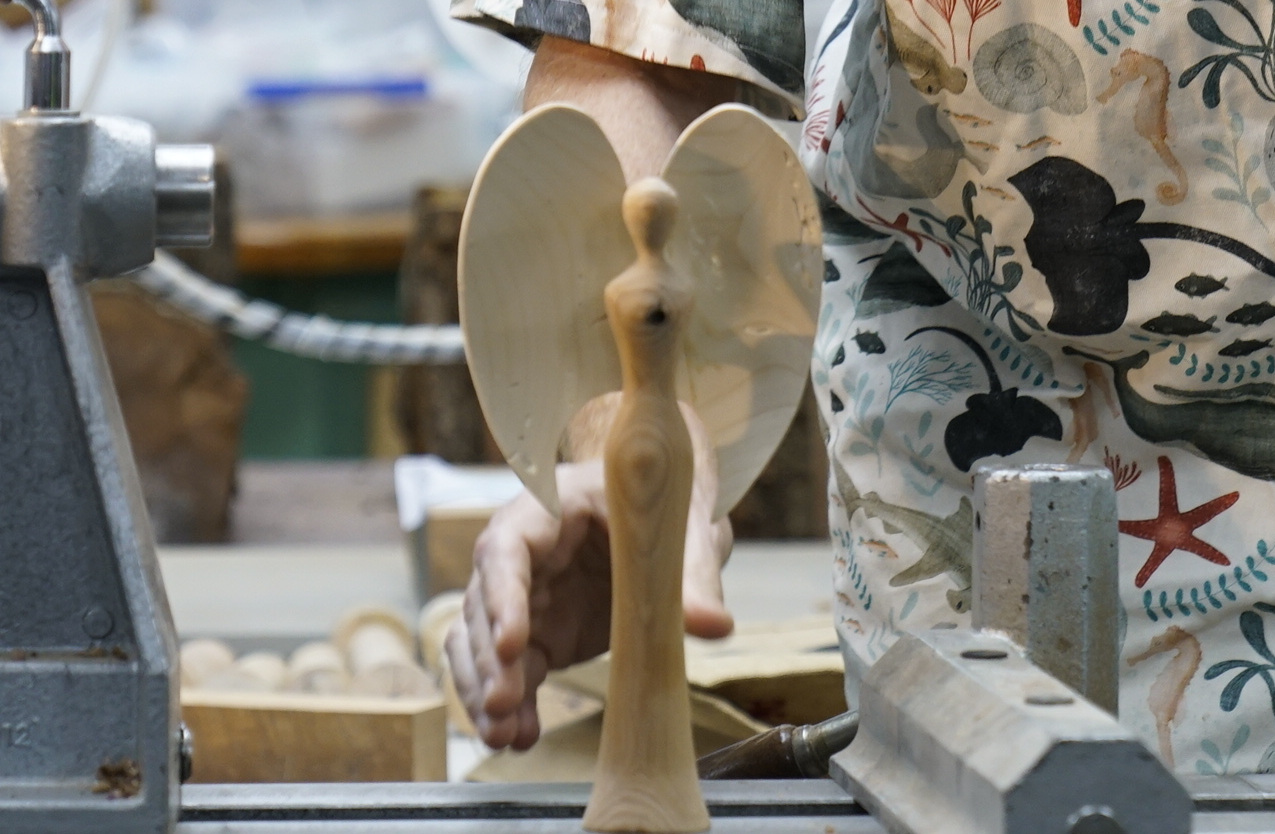
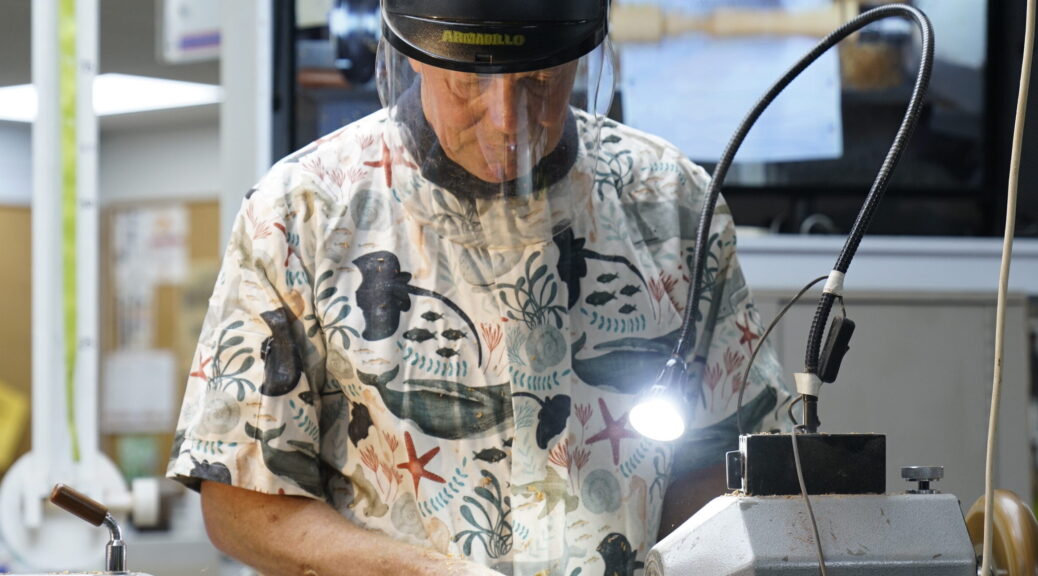
Holm was demonstrating the Wooden Angel originally done by Peter Clemett
You can find the full instructions and Plan on the Christchurch Woodturners Association website. https://www.woodturning.nz/projects/
Blank size for the body of the Angel: 55 x 55 x 280
Blank size for the wings: 160 x 160 x 30mm blank
It is important to remember head and foot placement, and also the front and back as you work, or you’ll get a deformed angel, Picasso style 😊
Mark where the front will be on the first blank (Body)
At the foot end mark the centre (P,B,N) mark. Place the next mark 8mm from centre towards the back (F) and label marks with appropriate letters shown in brackets.
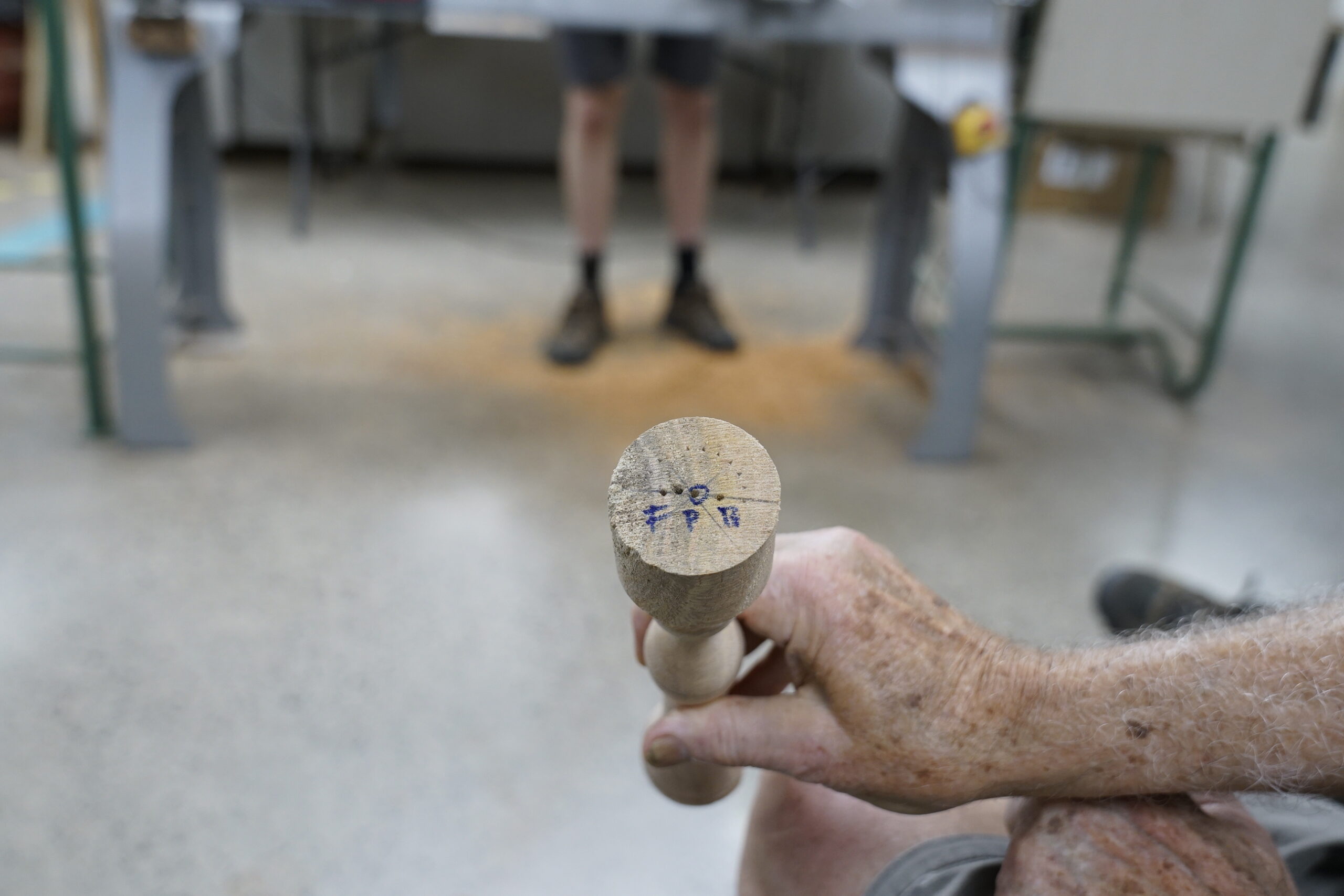
At the head end mark the centre at Head (P) end, Place the next mark 8mm from the centre towards the front (B) and then mark 8mm from centre towards the back ((F), then mark halfway between front and middle marks (N) label with appropriate letters shown in brackets
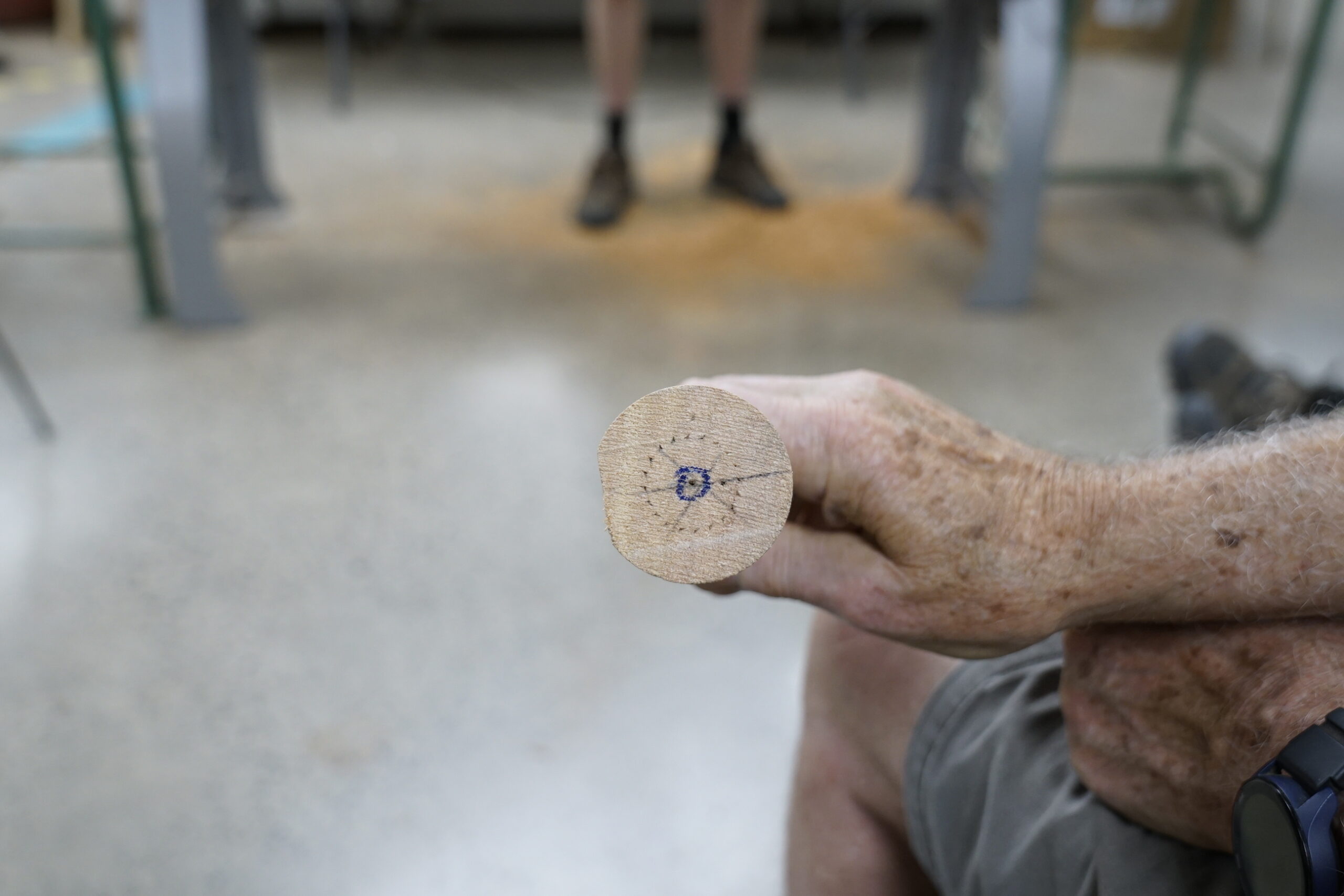
Round the blank to 50mm diameter (this is the widest measurement at the base) Turn speed approximately 1750-2000 rpm
Mark 10 mm up from the foot end. Using this 10mm mark as zero, measure and mark the following lines: 85mm, 136mm, 165mm, 195mm, 208mm, 227mm, and 240mm. (this should leave 30mm spare at the top of the form)
Turn down to the correct diameter at each point with a parting tool.
85 mm = 26mm diameter (knees)
135 mm = 36 mm diameter (hips)
165 mm = 20 mm diameter (Waist)
195 mm = 34 mm diameter (Shoulders)
208 mm = 20 mm diameter Will be narrowed off centre later
227 mm = 20 mm diameter
Define underneath the base with parting tool (10mm deep)
Using a spindle roughing gouge, shape the body from base to neck using these marks as a guide (refer to the Blue line on the plan)
Move centres to the F marks for turning the Front
Shape the front of the body – base to neck (refer to the green dotted line on the plan)
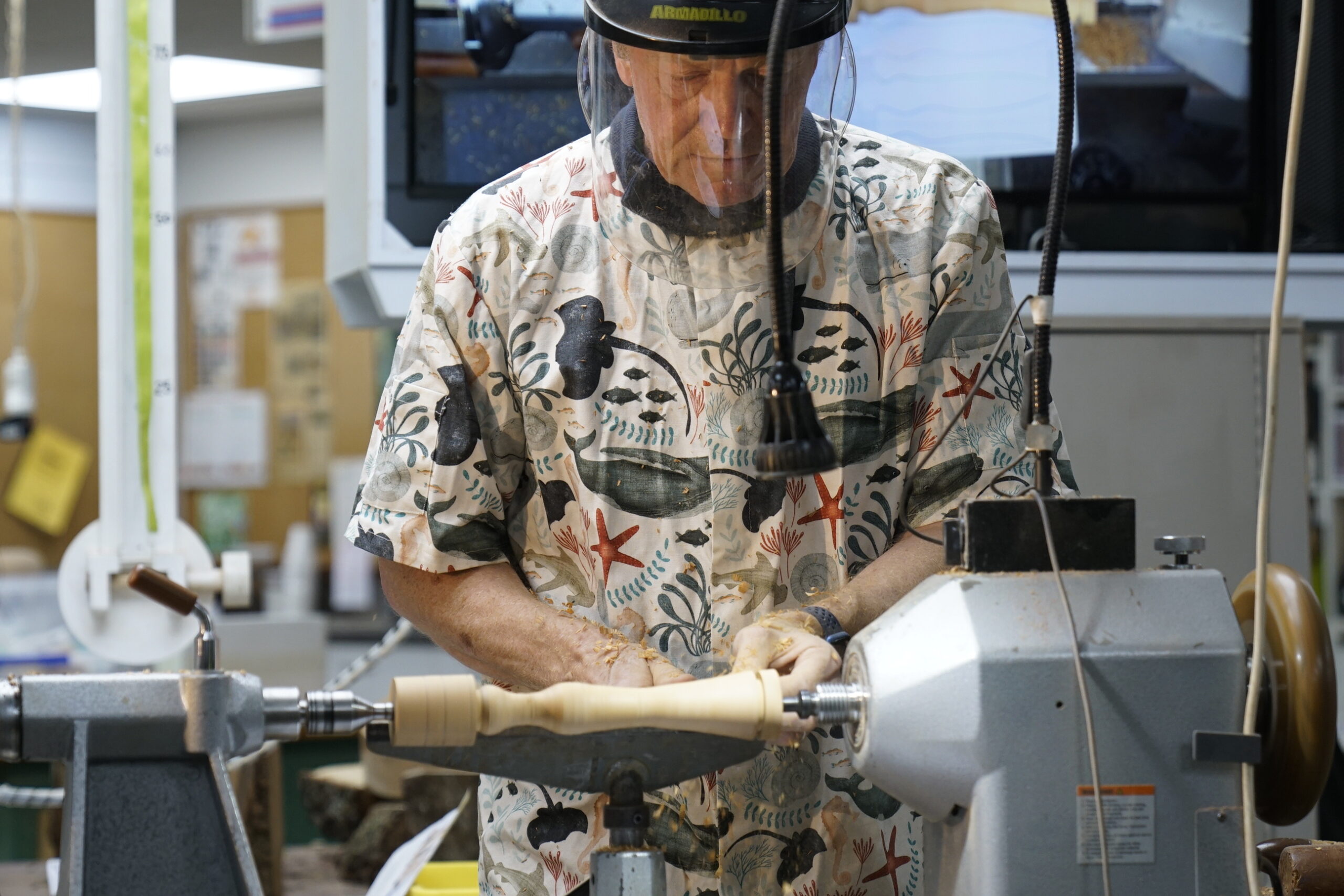
Place back between true centres to turn the head (the head is basically like making a large bead)
Now for the fun stuff – not much left to remove, but they are the narrow bits
Move centres to the B marks for Back – turning speed approximately 1250 rpm
Shape under the bum and take approx. 5mm off the shoulders as per the red dotted lines on the plan
Move centres to the N Marks for the neck (neck is turned as a cove to 10mm diameter)
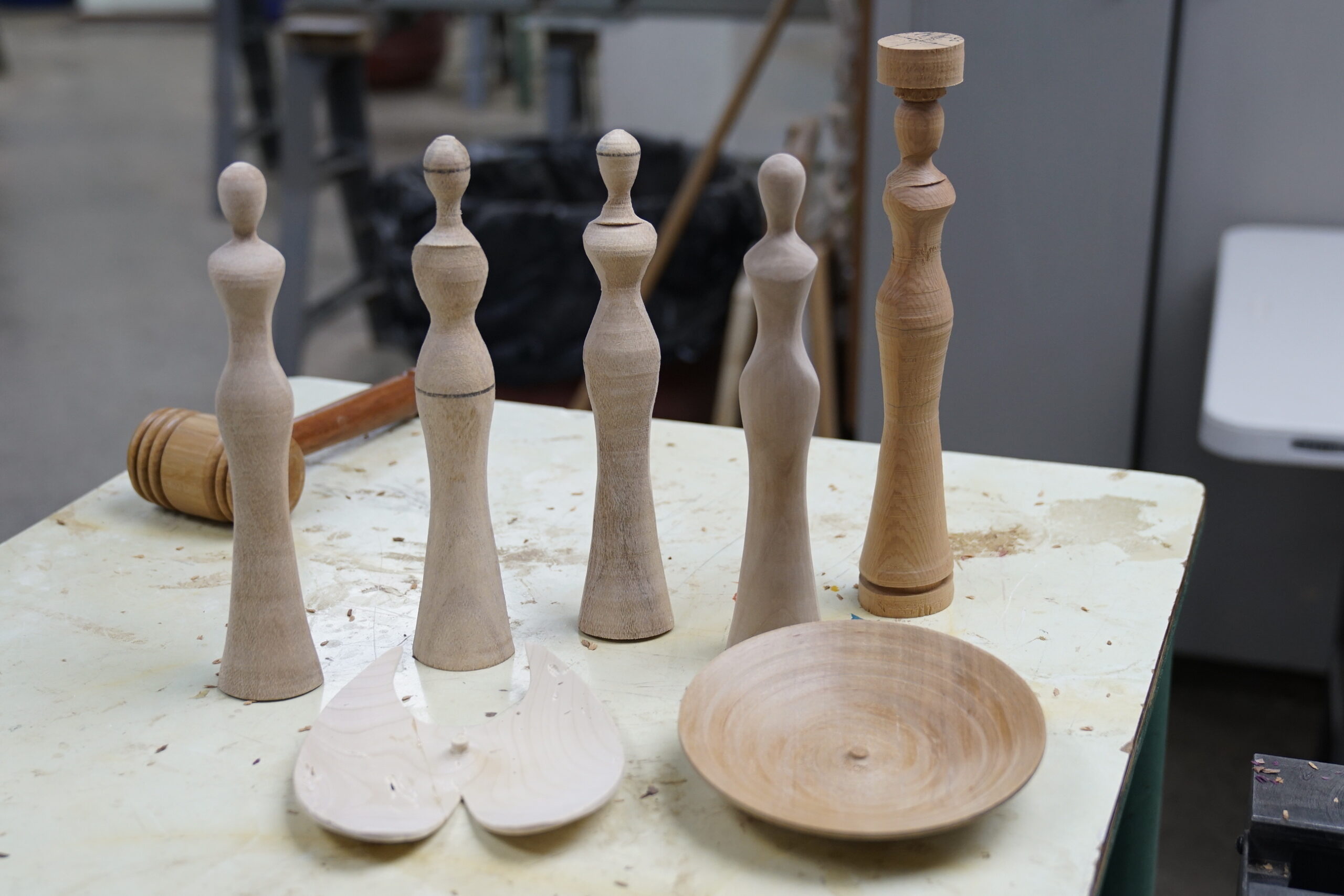
Next make the wings
For the wings turn a thin shallow plate with a thin dowel left at the centre for attaching the wings to the body
Create a 50mm spigot for chucking
Mount in the chuck and turn another 50mm spigot on the other side.
Shape the outside of a shallow bowl and round to approx. 150mm diameter
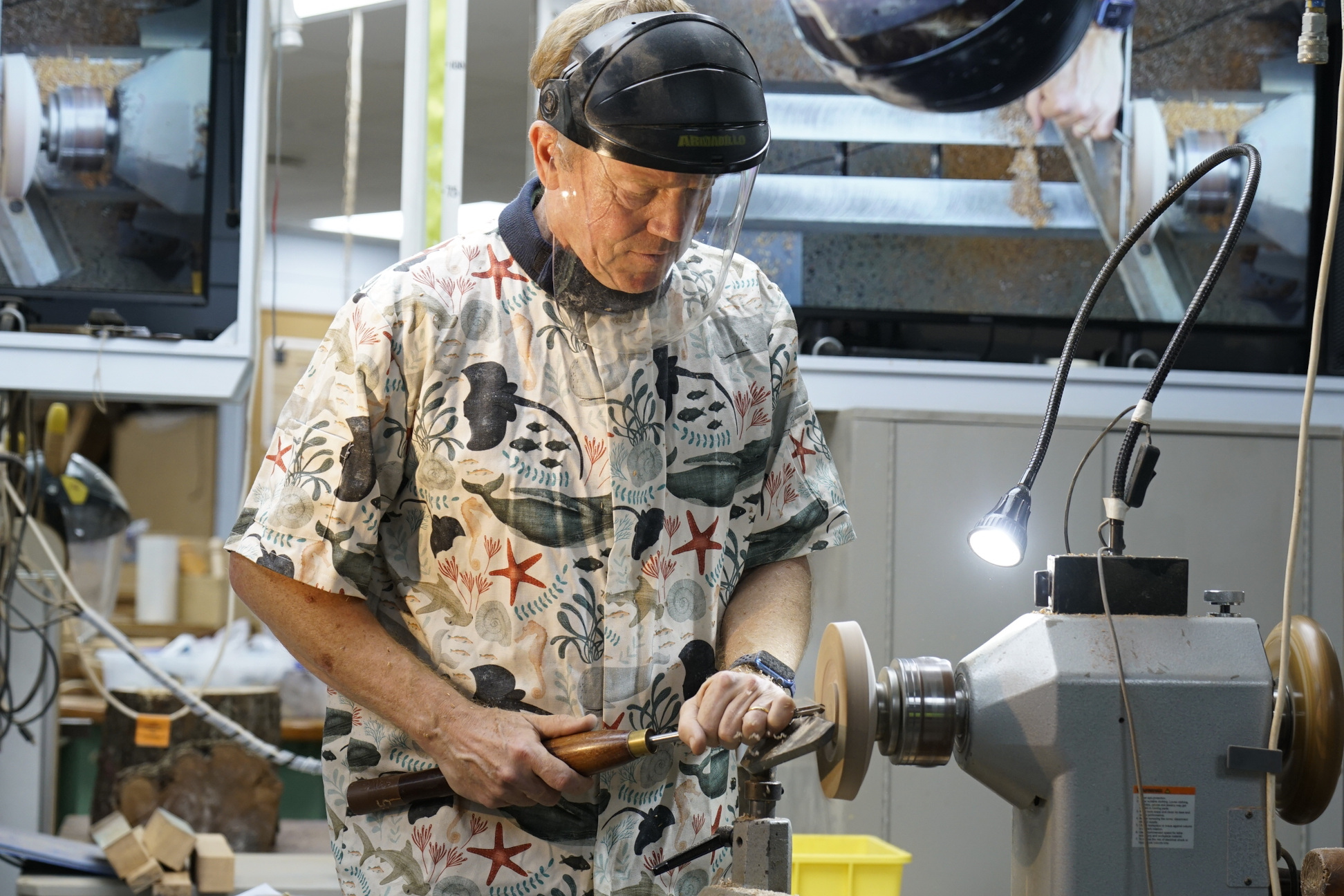
Remount on the second spigot and turn the inside of the bowl, turning to 4mm thickness, leaving enough thickness in the centre to make a dowel.
Cut out the wing shape either:
- on a bandsaw (this will need a narrow bandsaw blade),
- on a scroll saw
- with a coping saw or jigsaw.
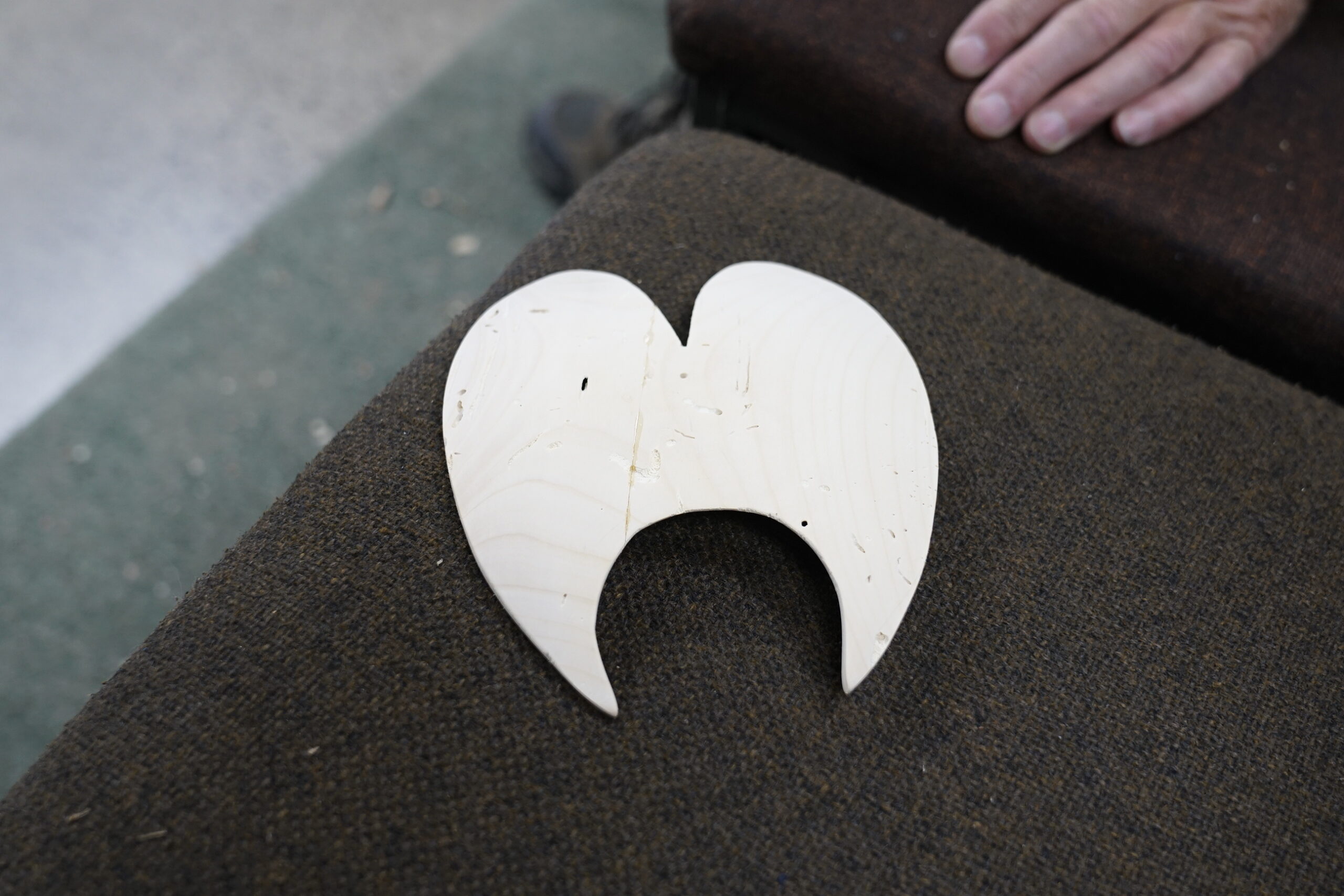
Drill a hole in the back of the body and attach the wings
This was an excellent demo from Holm, showing the precision required for Off-Centre Turning, while also demonstrating it’s fun and versatility.